An archive of histories/herstories/theirstories affecting and influencing the trans, gender diverse and intersex movements in Africa
This Timeline of our archive of histories/herstories/theirstories of the trans, gender diverse and intersex movements in Africa and in the Diaspora emerged through the grassroots experiences and memories of the contributing African activists and organisations.
It is often updated with new stories and the Timeline is continually growing.
How to navigate the Timeline
Categories are displayed alphabetically at the top of the Timeline and can be used to filter the results to focus on the research theme chosen. For example, ‘All’ will show you all topics, while ‘Intersex’ will display all entries related to intersex movements and moments.
Alternatively, use the search bar in the menu at the top and bottom of screen to find more specific information.
Categories relating to gender, sex characteristics and sexual orientation have flag icons and colour groups to visually distinguish them from one another:
As a result of an organisational strategic planning meeting, Gender Dynamix (GDX) resigned from Transitioning Africa (TA) on 7 August 2014. Not long thereafter, Transitioning Africa dissolved.
7 Agosti 2014 — Transitioning Africa Ilivunjwa Kama matokeo ya mkutano wa upangaji wa kimkakati wa shirika, Gender Dynamix (GDX) ilijiuzulu kutoka Transitioning Africa (TA) mnamo tarehe 7 Agosti 2014. Muda mfupi baadaye, Transitioning Africa ilivunjwa.
Kenya’s High Court issued a ruling on 7 October 2014 compelling the Kenya National Examinations Council (KNEC) to issue Audrey Mbugua with a new certification with her new name and without a gender mark after she filed a case in March 2013 through the trans rights NGO, Transgender and Education Advocacy (TEA).
The Court observed that,
“Human dignity is that intangible element that makes a human being complete. It goes to the heart of human identity. Every human has a value. Human dignity can be violated through humiliation, degradation or dehumanisation. Each individual has inherent dignity which our Constitution protects. Human dignity is the cornerstone of the other human rights enshrined in the Constitution.”
Further, the Court noted that
“the law does not require that a gender mark be imposed on a KCSE certificate. A KCSE certificate can therefore be completed without a gender mark. The Court takes judicial notice of the fact that examinations in this country are not administered based on the gender of the candidate. Marks are also not awarded based on gender. Removal of the gender mark will therefore not dilute the quality of the certificate.” High Court Judge Weldon Korir said, “These are the orders that will make the applicant complete as a human being.”
Kenya’s High Court issued a ruling on 7 October 2014 compelling the Kenya National Examinations Council (KNEC) to issue Audrey Mbugua with a new certification with her new name and without a gender mark after she filed a case in March 2013 through the trans rights NGO, Transgender and Education Advocacy (TEA). The Court observed […]
29 Oktoba 2014 — Usajili wa Mradi wa Kijamii wa Fairy Godmother na Trans Drag Queen, Sandra Dee, Afrika Kusini
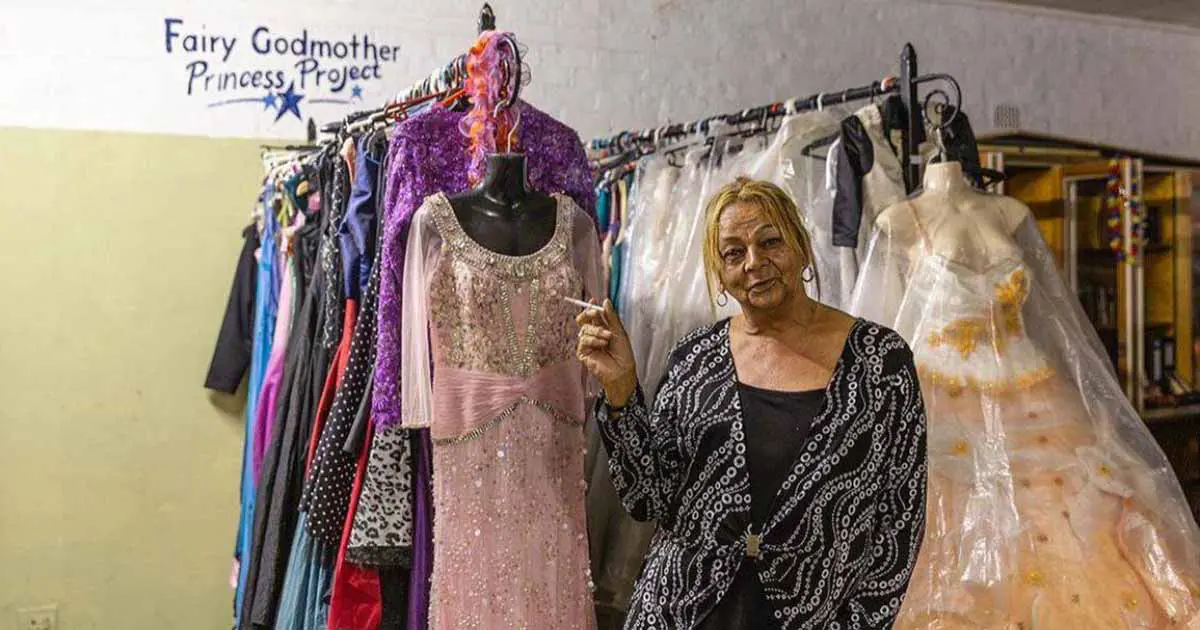
The Fairy Godmother Community Project was founded in Cape Town, South Africa by Sandra Lentoor, also known as Cape Town drag queen, Sandra Dee, and was officially registered on the 29th of October 2014.
Interview with Sandra Dee: From District 6 to District Royalty
We spoke to Sandra Dee Lentoor in December 2023 about the founding of the Fairy Godmother Community Project and her reasons for founding the Project.
The Fairy Godmother Community Project is involved with community upliftment in Hanover Park, one of the most gang-frequented areas in Cape Town. One way the project makes a difference is as a vital outreach to elderly citizens of her community living in one of Cape Town’s most gang-riddled suburbs. At weekly events, these vulnerable community members get treated to special luncheons hosted by Sandra. But it is a huge challenge because according to Sandra,
“The ladies have to cross busy streets and face the skollies on the way to the civic centre to attend.” (‘Skollies‘ is South African slang for gangsters, dangerous people or criminals). She says that fewer and fewer of the elderly attend due to the regular shootings in their area. “I believe that seniors must be treated with dignity and respect, not live in fear or fall victim to the next crossfire by the gangs”.
Princess Project
Another project hosted by the Fairy Godmothers is the Princess Project. In this programme, the project supplies matric farewell outfits to members of her community who cannot afford to buy or rent a gown for their special night. According to Sandy, people from all over Cape Town ask her to help their children and she is too happy to help:
“I even help them with their hair and makeup and I love the feeling of making them feel beautiful”.
Sandy runs the Princess Project from the Youth Impact and Sustainable Solutions (YISS) hub at the Crystal High School in Hanover Park.
Sandra Dee on the left, posing among some of the dresses with Nanushka Pearce, a model for the Princess Project
The clothes are donated by various organisations and by people with suits and dresses hanging unused in their cupboards at home. Regular contributions are made by Sandy’s ‘girls’, her endearing term for some of Cape Town’s other drag queens. The outfits are loaned free of charge to people who are unable to afford a fee for the use of the service, but if they can afford a small donation, it is used towards the luncheons and annual Christmas party held for the senior community members of Hanover Park.
When asked what the inspiration was for the Princess Project, Sandra said it was her own life experiences that prompted it:
“Because I’ve been a queen all my life I want to give back to the community. The boys and girls must be able to experience something like this at least once.”
Sandra’s story
Sandra Dee, one of Cape Town’s oldest living drag queens has been partaking in pageants since the late 1950sSandra Lentoor (Sandra Dee) in 2024
“You see, I was born like like this. I remember when I was about 5 years old, it was in the 1950s when we were still living in District 6 before my family was displaced by the Apartheid government. My mom was doing the washing, and when hanging up the laundry. I would steal one of my older sisters’ dresses when my mom was not looking and disappeared for hours until my mom realised the dress was gone. She would then send my cousin to look for me and find me in the dress in the street outside. My drag queen life started at the age of 11 years when I ran away from home after I had enough of years of sexual abuse by some people I knew. I was living on the street in Seapoint. And I was in drag, then and ever since.”
Since the 1960s, Sandra partook in various beauty pageants and was the first to be crowned unofficial Miss Gay Cape Town, now known as Miss Gay Western Cape. Her crown was not official, because being gay remained illegal in South Africa until 1989. Therefore, although the event started in the apartheid years, it has only gained visibility since the early 2000s and is now recognised as the largest and most popular gay pageant in South Africa.
When asked what it must have been to live a life in drag in the 1970s in South Africa, Sandy reminisced that she was accepted by her own community but that white people were not as accepting.
“Everything was fine as long as we did not go down to the main road. There we would be picked up for ‘masquerading as women’ and we would be thrown in jail. Sandra was arrested many times, sometimes the case would be thrown out of court but other times she was less lucky and she has spent a few stints in jail.”
According to Sandra, she once spent time in a holding cell with Nelson Mandela:
“I think Mandela always had an understanding of the suffering of us moffies. That’s probably why he has given us this constitution where we are all free.” (‘Moffies‘ is South African slang meaning ‘gay men’).
Sandra says,
“I went through hell in the 70s and 80s because of the Apartheid regime but it made me a strong woman today.”
Sandra is not only the founder of her own NGO, she also serves on the Community Advisory Board (CAB) of the University of Cape Town, and is a member of YES NGO.
Sandra Dee poses for photographer Jac De Villiers in 1976 in District 6
Miranda Trefoil, Sandy Lentoor (aka Sandra Dee), Tamara Dobson and Olivia de Havilland (aka Madame Two Swords). Image: Jac De Villiers
Sandra awarded 2025 Pride Heroes Award
In 2025, Sandra was one of the activists awarded with the 2025 Pride Heroes Award. Evan Tsouroulis, the Cape Town Pride Marketing, Sponsorship & Parade Coordinator, said this about the Awards:
“The Pride Heroes Awards are a way for Cape Town Pride as an organisation to shine the spotlight on the unsung heroes of our community as well as to honour and recognise their contributions.”
“Legendary Hanover Park activist and drag icon Sandra Dee (Sandra Lentoor) was honoured for her decades-long commitment to empowering youth and celebrating queer visibility through The Fairy Godmother Project. Founded a decade ago, the initiative provides underprivileged matric learners with dresses, hairstyling, and makeup for their Matric Ball, while also engaging local seniors as ‘Fairy Godmothers’ and mentors. A former resident of District Six, Sandra has survived violence, prejudice, and apartheid-era persecution to become a beacon of hope and glamour. Through fashion, mentorship, and joy, she continues to transform lives and uplift her community.”
29 October 2014 — Registration of the Fairy Godmother Community Project by Trans Drag Queen, Sandra Dee, South Africa The Fairy Godmother Community Project was founded in Cape Town, South Africa by Sandra Lentoor, also known as Cape Town drag queen, Sandra Dee, and was officially registered on the 29th of October 2014. Interview with […]
In November 2014, trans woman Audrey Mbugua won the case taken to the Kenyan High Court in March 2013 (JR Case No. 147 of 2013) to compel the Kenya National Examination Council (KNEC) to change the name on her high school diploma. In October, Audrey had won a case in the High Court to have her name changed and gender marker removed on her certificates.
In November 2014, trans woman Audrey Mbugua won the case taken to the Kenyan High Court in March 2013 (JR Case No. 147 of 2013) to compel the Kenya National Examination Council (KNEC) to change the name on her high school diploma. In October, Audrey had won a case in the High Court to have […]
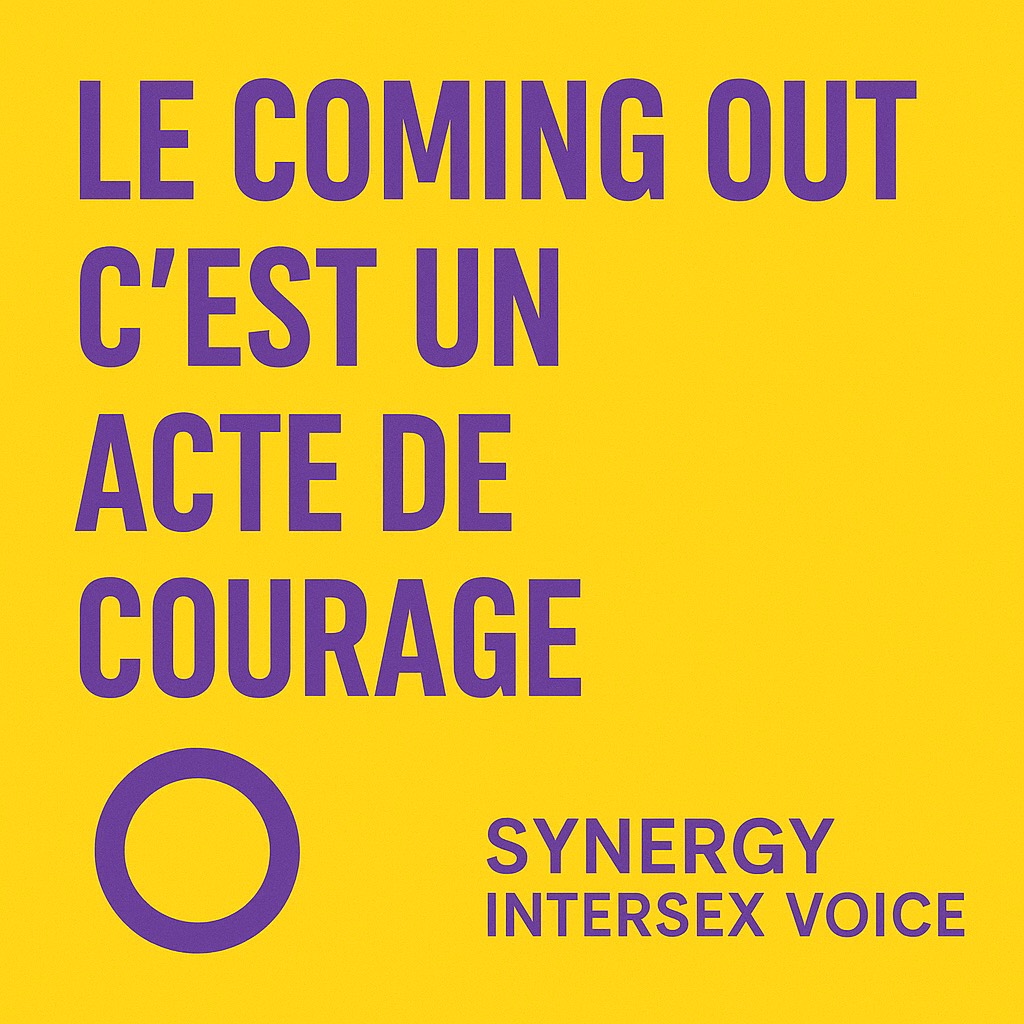
2015 — Uanzishwaji wa Synergy Intersex Voice (SIV), Benin
Ilianzishwa nchini Benin mwaka 2015 na Jude Akintola na wanaharakati wengine watatu (ambao majina yao yanafichwa kwa sababu za kiusalama), Synergy Intersex Voice (SIV) inalenga zaidi watu wenye hermafroditi wanaoishi nchini Benin na Afrika Magharibi, pamoja na washirika wanaofanya kazi kwa ajili ya kutambuliwa, kuonekana, na haki za binadamu za watu wenye hermafroditi.
SIV inafanya kazi ya kuongeza mwonekano, ulinzi na uwezeshaji kwa watu wenye jinsia mbili kupitia:
uhamasishaji wa umma na taasisi kuhusu uhalisia wa watu wa jinsia mbili;
kuimarisha uwezo wa jamii
uundaji wa nafasi salama kwa ajili ya kushiriki na ustawi wa watu wenye hermafroditi;
wito wa kutambuliwa kisheria na kijamii kwa watu wenye hermafroditi.
Ilianzishwa nchini Benin mwaka 2015 na Jude Akintola na wanaharakati wengine watatu (ambao majina yao yamehifadhiwa kwa ajili ya usalama wao), Synergy Intersex Voice (SIV) inalenga zaidi watu wenye hermafroditi wanaoishi nchini Benin na Afrika Magharibi, pamoja na washirika wanaofanya kazi kwa ajili ya kutambuliwa, kuonekana na haki za binadamu za watu wenye hermafroditi. Wako katika mchakato wa kusajili shirika hilo.
SIV inafanya kazi ya kuongeza mwonekano, ulinzi, na uwezeshaji wa watu wenye hermafroditi kupitia:
kuinua uelewa wa umma na kitaasisi kuhusu hali za watu wenye jinsia fiche;
kujenga uwezo wa jamii
kuunda maeneo salama kwa ajili ya kushiriki na ustawi wa watu wenye jinsia mbili (intersex);
kutetea kutambuliwa kisheria na kijamii kwa watu wenye jinsia bubu.
Maono Maono
Benini ambapo watu wote wa masaji ya jinsia wanaishi kwa utu, uhuru, na usalama, bila unyanyasaji au vurugu.
Benin ambapo watu wote walio-jinsia mbili wanaishi kwa heshima, uhuru na usalama, bila unyanyapaa au vurugu.
Dhamira
Kuimarisha taswira, ulinzi wa haki na ustawi wa watu wenye hermafroditi kupitia uhamasishaji, elimu, utetezi na mshikamano wa jamii.
Kuimarisha mwonekano, ulinzi wa haki na ustawi wa watu wenye jinsia mbili kupitia uhamasishaji, elimu, utetezi na mshikamano wa jamii.
Malengo / Malengo
Kupambana na unyanyapaa na ubaguzi dhidi ya watu wenye jinsia mbili.
Unda maeneo salama ya kubadilishana na kutoa msaada.
Kuimarisha uwezo wa watu wa jinsia hizo mbili kwa ajili ya uwezeshaji wao.
Kuendeleza utambuzi wa kisheria na kijamii wa watu wenye hali ya uanamume na uke iliyochanganyika.
Kukuza ushirikiano kati ya mashirika ya ndani na ya kimataifa.
Kupambana na unyanyapaa na ubaguzi dhidi ya watu wenye jinsia mbili.
Kuunda maeneo salama ya kubadilishana na kusaidiana.
Kuwawezesha watu wenye jinsia tofauti.
Kukuza utambuzi wa kisheria na kijamii wa tofauti za intersex.
Kukuza ushirikiano kati ya mashirika ya ndani na ya kimataifa.
Nyanja za utendaji Maeneo ya kuzingatia
Haki za binadamu na usawa wa jinsia.
Afya ya uzazi na jinsia
Elimu na ushirikishwaji wa kijamii.
Uhamasishaji na utetezi wa watu wenye hermafroditi.
Uimarishaji wa jamii.
Maandiko na kuonekana vyombo vya habari.
Haki za binadamu na usawa wa kijinsia.
Afya ya uzazi na ngono.
Elimu na ushirikishwaji wa kijamii.
Uhamasishaji na utetezi wa watu waliozaliwa na jinsia mbili.
2015 — Fondation de Synergy Intersex Voice (SIV), Bénin / Founding of Synergy Intersex Voice (SIV), Benin Fondée au Bénin en 2015 par Jude Akintola et trois autres militants (dont les noms sont tenus secrets pour des raisons de sécurité), Synergy Intersex Voice (SIV)s’adresse principalement aux personnes intersexes vivant au Bénin et en Afrique de […]
Tanzania Trans Initiative (TTI) was founded by the now Executive Director, Mwamba Nyanda, as anon-governmental organisation (NGO) in Tanzania in 2015. The organisation is a platform for the trans community working together with people who are gender non-conforming. TTI works with these groups as well as with health practitioners, law enforcement officers and policy makers, providing knowledge and a foundation for empathy and understanding for the needs of TTI’s constituency
According to TTI’s founder, Mwamba Nyanda,
“Throughout the years we have managed to serve, reach out and impact our constituency through different strategies, e.g. • Through capacity building, where we provide knowledge and tools for Trans persons to develop their Human rights work. • Movement building, working g intersectional with other organisation like women’s organisation to share feminist experiences and strategy to win has a collective. • Use of Creative Arts, to better tell our own stories, heal has queer person and shape our own future. This helps us to dive in our creative side and share it with the world around us e.g. Music that sends messages and heals peoples heart around us. • Sports, this tool created liberation for young diverse women seeking equality and freedom of expression, it helped trans persons in times of anti-rights movements, and escape from violent community. • All this provided us with strategies to go about our Advocacy on human right Issues. • Working intersectional and in the regional level has amplify our work and kept us on the map and face of the community, with challenges along the way, shaped our formation and demanded our work to strive harder for the Trans community.”
Maono
TTI envisions a transformed Tanzanian society where Young ITGNC persons have access to good health, education, equal opportunities in all sectors, enjoy gender equality and do not face any form of violence and discrimination.
Dhamira
TTI is a group of feminist, trans who aim to address the multiple and intersecting oppressions faced by its beneficiaries through:
Raising awareness on trans and women’s issues,
Empowering young women and trans youth on leadership.
Promoting gender justice and equality.
Collaborating with government, law enforcement officers, policymakers, Civil Society Organizations and other Community Based Organisations to address health issues, drive social economic stability for achievement of sustainable development goals.
Providing knowledge and a foundation for empathy and understanding of the needs of TTI’s constituency.
Goal
To ensure that ITGNC (intersex, trans and gender non-conforming) persons understand their human rights and how to fight for them for survival and for peaceful life without discrimination and that they are empowered and enabled to realize sustainable livelihood and are living in the country a peaceful life without discrimination and humiliation.
Tanzania Trans Initiative (TTI) was founded by the now Executive Director, Mwamba Nyanda, as a non-governmental organisation (NGO) in Tanzania in 2015. The organisation is a platform for the trans community working together with people who are gender non-conforming. TTI works with these groups as well as with health practitioners, law enforcement officers and policy makers, providing […]
2015 – Southern African Trans Forum (SATF) Established, Southern Africa
Established in 2015, the Southern African Trans Forum (SATF), is a pioneering regional alliance of trans-led and trans-centred organisations. Established in 2015, SATF is dedicated to building a unified, powerful movement for the rights and inclusion of trans and gender-diverse persons across Southern Africa. Their network provides a vital platform for collaboration, knowledge-sharing, and collective advocacy, amplifying the voices of our members at both regional and international levels. The SATF operates as a dynamic, membership-based regional network. Their network comprises 19 trans-led organisations from across 10 Southern African countries.
Maono
An Africa that represents freedom, equality, dignity, bodily autonomy, and self-determination for all people.
Dhamira
The SATF advocates for the rights of trans and gender-diverse people through movement building and capacity enhancement of partner organizations within the Southern African Development Community (SADC) region.
Maeneo ya kuzingatia
Afya
Legal and policy reform
Movement building
Data collection and research
In 2016, The Southern African Trans Forum, with the aid of Accountability International, undertook a situational analysis of the barriers faced by trans diverse people in Africa in accessing healthcare. Read the full report.
History
The Southern African Trans Forum (SATF) experienced rapid growth in its early years. What began in 2014 as a loose network of only three or four trans-led organisations expanded to approximately ten organisations by 2015 and has since grown to include around twenty member groups across the region. Around 2016, Gender Dynamix (GDX) played a central role in consolidating the Forum’s structure by serving as its first fiscal host and secretariat. This development occurred alongside the implementation of the Key Populations REACH Programme, which aimed to strengthen the organisational capacity and leadership of trans and gender-diverse communities while amplifying their voices across Southern Africa. SATF was envisioned as a regional platform led by trans and gender-diverse people themselves, bringing together emerging movements to exchange knowledge, advance advocacy, and coordinate collective efforts related to health access, legal and policy reform, movement strengthening, and research and data development.
The Forum articulated a shared aspiration for an Africa grounded in freedom, equality, dignity, bodily autonomy, and self-determination. Its core mission focuses on advancing the rights of trans and gender-diverse communities through movement building and by strengthening the capacity of member organisations across the Southern African Development Community (SADC). Through a consultative process with member groups, SATF established a set of strategic priorities in 2015. These included the creation of a representative regional assembly, the development of a joint advocacy platform, and the strengthening of national trans organisations so they could effectively engage in advocacy and public awareness initiatives. Additional goals involved producing regional guidance on gender-affirming healthcare services and contributing to knowledge generation and data collection on trans issues.
Membership in SATF was intentionally designed to include both established organisations and emerging groups that were in the process of transitioning toward trans-led leadership. To support leadership development across the region, the Forum adopted a rotational governance approach in which coordination and chairing responsibilities move between member organisations every two to three years. An Interim Committee was established to guide the Forum’s institutional development, including drafting foundational governance policies, facilitating engagement through country-based clusters, developing a regional database on transgender issues, mobilising resources, and strengthening the Forum’s collective identity.
From around 2016 onwards, SATF became an important catalyst for the expansion of trans-led organising throughout Southern Africa. Members frequently highlighted the emergence of new trans-led organisations as one of the Forum’s most significant achievements. Regional gatherings created spaces for activists to learn from one another, build solidarity, and collaborate on shared priorities. These convenings also inspired many activists—who had previously worked within broader LGBTI organisations or operated individually—to establish independent trans-led initiatives in their respective countries.
Rather than registering as a standalone legal entity, the Forum deliberately chose to remain an informal regional network. Members expressed concern that formal registration could centralise donor funding and unintentionally limit the development of national trans-led organisations. Consequently, SATF continues to function as a collaborative platform in which Gender Dynamix provides fiscal hosting and administrative support while maintaining the autonomy and leadership of the participating organisations.
2015 – Southern African Trans Forum (SATF) Established, Southern Africa Established in 2015, the Southern African Trans Forum (SATF), is a pioneering regional alliance of trans-led and trans-centred organisations. Established in 2015, SATF is dedicated to building a unified, powerful movement for the rights and inclusion of trans and gender-diverse persons across Southern Africa. Their […]
2015 — Utafiti, Elimu, Utetezi na Mafunzo Upekee wa Kijinsia (TREAT) Uanzishwa, Zimbabwe
Founded in 2015 by Rikki Nathanson, Trans* Research, Education, Advocacy & Training (TREAT) was the first trans-led, and gender-diverse focused organisation in Zimbabwe. TREAT’s mission is to inform and transform attitudes and address injustice and inequalities faced by the trans diverse population in Zimbabwe. After being arrested under charges such as criminal nuisance for using the “wrong” bathrooms in Bulawayo, Zimbabwe, Bulawayo, Rikki Nathanson realised the huge gap in the general public’s ignorance and miseducation about gender, transgender and gender diverse people. Rikki relocated to the US, claiming asylum. Sam Ndlovu has been the Executive Director of TREAT since 2019.
Maono
TREAT is an initiative that seeks to address the rights issues in the education, advocacy and training about and to, the basic violations of the human rights of the trans* diverse and gender non-conforming population of Zimbabwe. It envisions a Zimbabwe where everyone is free to express their gender within, across and beyond the male-female binary without fear of discrimination, stigma or victimisation.
Dhamira
To inform and transform attitudes and address injustice and inequalities faced by Trans diverse population in Zimbabwe.
Maeneo Yanayolengwa
Health: including the Sexual Reproductive health rights (SRHR), Hormone Replacement therapy (HRT) and psycho social support.
Justice: the protection by the law around issues such as abuse and violence in all forms.
Socio-economic: including among other things, discrimination faced in schools, workplaces, medical and other facilities, families and the general population at large.
2015 — Trans* Research, Education, Advocacy & Training (TREAT) Founded, Zimbabwe Founded in 2015 by Rikki Nathanson, Trans* Research, Education, Advocacy & Training (TREAT) was the first trans-led, and gender-diverse focused organisation in Zimbabwe. TREAT’s mission is to inform and transform attitudes and address injustice and inequalities faced by the trans diverse population in Zimbabwe. […]
4 Februari 2015 — Mahakama Kuu Yakataa Ombi la Shirika la Trans Dhidi ya Bodi ya Afya, Kenya
The Kenyan High Court dismissed Transgender Education & Advocacy (TEA)’s case, Misc. Civil Application 263 of 2014, filed on 10 July 2014, calling it premature, as the medical board had formed a task force to advise the Ministry of Health on the development of guidelines on the management of “transsexualism”*. TEA was ordered to pay the state’s legal fees.
The case was brought against the medical board as TEA’a Audrey Mbugua argued that the Board had failed to develop National Guidelines for the Management of Gender Identity Disorders**. Read more here.
* “Transsexualism” is a medical term, outdated in many countries.
** “Gender Identity Disorder” is no longer a term used in the Diagnostic and Statistical Manual of Mental Disorders (DSM), since 2013. The updated term is “gender dysphoria”.
4 February 2015 — High Court Rejects Petition by Trans Organisation Against Medical Board, Kenya The Kenyan High Court dismissed Transgender Education & Advocacy (TEA)’s case, Misc. Civil Application 263 of 2014, filed on 10 July 2014, calling it premature, as the medical board had formed a task force to advise the Ministry of Health […]
Agosti 2015 — Mradi wa Afya wa Watrans waanzishwa, Afrika Kusini
Protea Psychosocial Support Project for Transgender People (PPSTP) was officially registered in August 2015. It would change its name to the Trans Wellness Project (TWP) in 2016 during its first strategic planning session, which included board and community members. Formed by former Jinsia DynamiX (GDX) staff member, Whitney Quanita Booysen, TWP works with trans and gender diverse issues in the rural and remote areas of South Africa.
Maono
Trans Wellness Project envisions a South Africa where the needs and challenges of trans and gender diverse people in rural and remote areas are included in programming, research and policies and procedures.
Dhamira
To take a holistic approach in the health and wellness of trans and gender diverse people in the rural areas of South Africa.
Malengo
Putting energy into rural and remote areas of South Africa and focusing on trans and gender diverse people in a holistic way, focusing on: Research, Access to hormones and surgeries, HIV/AIDS and TB Management, Health and Productivity Management, Wellness Management, Partnership Development and Financially Viability.
August 2015 — Trans Wellness Project Founded, South Africa Protea Psychosocial Support Project for Transgender People (PPSTP) was officially registered in August 2015. It would change its name to the Trans Wellness Project (TWP) in 2016 during its first strategic planning session, which included board and community members. Formed by former Gender DynamiX (GDX) staff […]
August 2015 — Article: ‘Uganda Report of Violations to Children and People Born Intersex or with Differences of Sex Development’ Report Launched, East Africa
August 2015 — Article: ‘Uganda Report of Violations to Children and People Born Intersex or with Differences of Sex Development’ Report Launched, East Africa
In August 2015, a report on violations to children and people born intersex or with differences of sex development was launched by Support Initiative for People with Atypical Sexual Development (SIPD), airing the most revolting abuses and violations that intersex people experience. The Report is titled, ‘Uganda Report of Violations to Children and People Born Intersex or with Differences of Sex Development’. You can read the full report here.
The highlight of the Report was Intersex Genital Mutilation (IGM) which was then commonly referred to as surgery without consent. The Report shows that over 22 cases of intersex genital mutilation were recorded in that year alone not to mention that these are the only documented cases. Many go by behind closed curtains. The Report displays a picture of an intersex child whose surgery had gone wrong and the child was left in a state where they were oozing urine all day long. The mother needed to buy Pamper’s (nappies), which she could not afford, for a grown child who did not need them in the first place. This is only one of the countless side effects that IGM bears.
Intersex Genital Mutilation is commonly referred to as the non-consensual and medically unnecessary procedures performed on intersex individuals, often during infancy or childhood to alter their genitalia to fit societal norms. These procedures can include surgeries to modify genital appearances or remove reproductive organs. Typical forms of IGM include clitoral reduction, vaginoplasty and gonadectomy.
The launch had representatives from all the East African countries at that time besides Tanzania including Uganda, Kenya, Burundi and Rwanda. The launch was attended by over 30 key stakeholders including Intersex community members with their families, health service providers especially midwives and paediatricians, intersex human rights activists and activists from affiliated civil society organisations.
The launch of the report was attended by representatives of 30 East African countries
Female Genital Mutilation explained
The practice is not usually given the term female genital mutilation (FGM). In some parts of Africa, it is referred to as female circumcision. The tradition involves the partial or total removal of external female genitalia. The practice is still found in several African countries including Kenya, Uganda, Somalia, Tanzania, Ethiopia and many more. The practice is seen as part of a girl’s initiation into womanhood and hence a prerequisite for marriage. It is usually carried out to control women’s sexuality as it is also thought to ensure virginity before marriage and fidelity afterwards and to increase male sexual pleasure. Young girls are usually persuaded to accept the tradition with promises that it will bring riches to the family, and help them have children easily.
Are both IGM and FGM rooted in societal control?
IGM has in many circumstances been compared to FGM in discussions about nonconsensual genital surgeries and the violation of bodily autonomy. Both practices are rooted in societal control reflecting deep-seated norms and beliefs about gender roles, sexuality and appearance.
Gender norms
IGM: Procedures performed on intersex individuals often aim to enforce traditional binary gender norms by altering genitalia to fit societal expectations.
FGM: Often carried out to control female sexuality, FGM reflects cultural beliefs that link a woman’s virtue and modesty to the modification of her genitalia.
Power dynamics
IGM: Medical professionals and parents might make decisions about intersex children’s bodies, exerting control over their physical development without their consent.
FGM: Typically performed within specific cultural contexts, FGM is often driven by a desire to maintain power structures and control over women’s bodies within patriarchal societies.
Cultural and social expectations
IGM: Societal expectations regarding binary gender norms drive the urge to conform intersex individuals to these norms through medical interventions.
FGM: Embedded in cultural traditions, FGM is often seen as a way to ensure a girl’s marriageability and adherence to established cultural practices.
In both cases, societal control manifests through these practices, highlighting the importance of challenging harmful norms, promoting bodily autonomy and respecting the rights of individuals.
Impact of the practices on individuals
The practices have deep and lasting repercussions on the lives of the individuals who live these experiences. Both can lead to immediate and long-term physical complications including physical pain, scarring and chronic pain. The non-consensual surgeries cause profound psychological trauma leading to feelings of anxiety and depression.
A lived reality for Ronnie Zuze from Zimbabwe
Ronnie has undergone four unnecessary genital corrective surgeries since birth. Three of these happened in the early 1980s when Ronnie was still an infant. As a young adult, Ronnie was able to put a stop to any more of these surgeries as they were more aware of the harm they were causing them. Unfortunately, the harm that was done is irreversible and has resulted in lifelong medical complications which Ronnie refers to as extremely challenging to address. The surgeries also caused chronic pain, permanent scarring and emotional struggles. The medical record keeping in at hospitals at that time was also characterized by insufficient organisation and documentation posing challenges for comprehensive healthcare and forsaking Ronnie to having no medical history. Ronnie wishes that the doctors had waited to do the surgeries and given them a chance to be part of the decision to whether or not to have these surgeries done on them. They strongly advocate for patience and the need to prioritise informed consent when it comes to cosmetic surgeries on intersex individuals.
It’s time to end outdated and harmful practices of female genital mutilation (FGM) and Intersex genital mutilation (IGM)
The African community must unite against the harmful practices of female genital mutilation and Intersex genital mutilation. These outdated traditions not only infringe upon fundamental human rights but also perpetuate cycles of physical and psychological suffering. By fostering awareness, education, and advocating for legal measures, we can collectively work towards eradicating these practices, empowering individuals to make informed choices about their bodies, and ensuring a future where everyone can live free from the shadows of such practices. Focus on changing these roots of control to foster a world where every person regardless of gender can thrive in an environment that upholds dignity, equality and the right to bodily integrity.
Now is the time to end Intersex Genital Mutilation and Female Genital Mutilation.
This article was written by our Intersex Content Contributor,Delphine Barigye.
August 2015 — Article: ‘Uganda Report of Violations to Children and People Born Intersex or with Differences of Sex Development’ Report Launched, East Africa In August 2015, a report on violations to children and people born intersex or with differences of sex development was launched by Support Initiative for People with Atypical Sexual Development (SIPD), […]
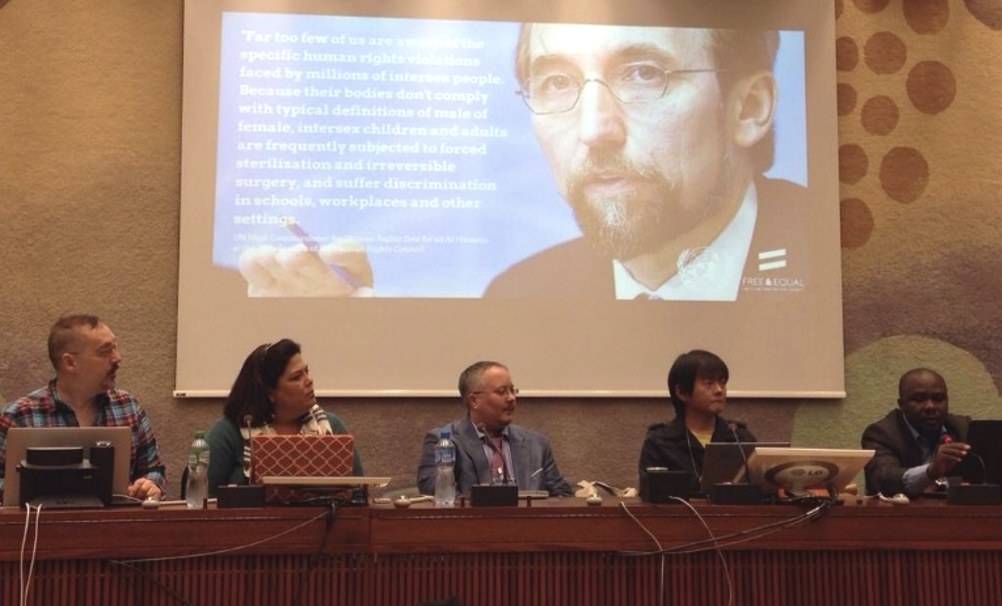
September 2015 – Historic African Intersex Representation at the 30th Session of the UN Human Rights Council, Geneva
In a groundbreaking moment for African intersex advocacy, Africa was represented in one of the earliest side events dedicated to intersex rights at the UN Human Rights Council, 30th session that took place in September 2015. The event, supported by ILGA (International Lesbian, Gay, Bisexual, Trans and Intersex Association) and COC Netherlands brought together voices from across the globe like Uganda, Australia, the United States, Europe and Taiwan to share insights on the lived realities of intersex people all over the world.
“Culturally, it is better to avoid the embarrassment of raising a ‘dysfunctional’ male child.”
The opportunity to share these stories and urgent needs of African intersex persons on such a prestigious global platform marked a pivotal step towards inclusion and visibility. For many of the intersex persons in Africa, this moment was not just symbolic – it was a beacon of hope that their stories matter on the world stage. 10 years later, awareness on intersex persons has grown significantly across Africa particularly in the East, South and West with emerging efforts also visible in the North. Africa has taken center stage on intersex rights globally and continues to do so especially at the United Nations with the recently adopted Resolution 55.
Right to left: Julius Kaggwa (Support Initiative for People with Atypical Sex Development, Uganda), Hiker Chiu (Oii-Chinese, Taiwan), Dan Ghattas (OII Europe, Germany), Kimberly Zieselman (Advocates for Informed Choice, US) and Morgan Carpenter (OII Australia), Photo: ILGA
September 2015 – Historic African Intersex Representation at the 30th Session of the UN Human Rights Council, Geneva In a groundbreaking moment for African intersex advocacy, Africa was represented in one of the earliest side events dedicated to intersex rights at the UN Human Rights Council, 30th session that took place in September 2015. The […]
28-30 September 2015 — The Other Foundation Hosts Inaugural Kopano Conference with Panel About Trans Issues, South Africa
Between 28-30 September 2015, The Other Foundation hosted its inaugural Kopano conference in Soweto, South Africa. (In Sotho, “Kopano” means “a gathering to address an important issue”). This first conference’s theme was “Freedom for All”, and provided a platform for activists, thinkers, human rights defenders from Angola, Botswana, Lesotho, Madagascar, Malawi, Mauritius, Mozambique, Namibia, Seychelles, South Africa, Swaziland, Zambia, and Zimbabwe. During this two-day gathering people across identities, lesbian, gay, bisexual, trans and intersex could dialogue and grapple with social topics. One panel stood out: “Prospects for Progress and Lessons from Setbacks”, tackling gender identity and challenges faced by trans individuals.
The panel was moderated by Eusebius McKaiser, featuring panelists Danilo Da Silva (LAMBDA), Fadzai Muparutsa (Coalition of African Lesbians), Rikki Nathanson (Southern Africa Regional Trans Forum”, Monica Tabengwa (independent activist), and Steve Letsike (National Task Team, South Africa, and Access Chapter 2).
Watch these videos from the panel highlighting some of the important issues faced by trans individuals.
28-30 September 2015 — The Other Foundation Hosts Inaugural Kopano Conference with Panel About Trans Issues, South Africa Between 28-30 September 2015, The Other Foundation hosted its inaugural Kopano conference in Soweto, South Africa. (In Sotho, “Kopano” means “a gathering to address an important issue”). This first conference’s theme was “Freedom for All”, and provided […]
October 2015 — Founding of Wings to Transcend Namibia (WTTN), Namibia
Jholerina B. Timbo (Madame Jholerina) founded Wings to Transcend Namibia (WTTN) in October 2015. WTTN is a non-governmental organisation that advocates and lobbies for equity and inclusion of trans people in Namibia.
Madame Jholerina said that the reason for founding WTTN was that
“there was no actual progress or investment into realising transgender people’s needs… So, my feeling was it is time that we, as trans people, organise ourselves and start a movement of our own.”
“Wings to Transcend Namibia will be a champion and pioneer that works for social reform, legal gender recognition, and medical justice, through leadership development and empowering of transgender individuals and communities while lobbying local government, civil society and policymakers in national and international spheres about the needs of the Transgender community in Namibia”.
In memoriam: Celebrating the life of Madame Jholerina (7 September 1985 — 9 October 2025)
We sadly bid farewell to and celebrate the life of Madame Jholerina. Jholerina Brinnette Theodora Timbo passed away last week on the 9th of October 2025. She had only turned 40 a few weeks before. She was a colourful person, proudly wearing her traditional attire and boldly claiming space everywhere she went. She claimed the name ‘Mama Trans’ as she was a mother, sister, ally and supporter to many young and newly out trans women, who came to her looking for a voice to speak their truth.
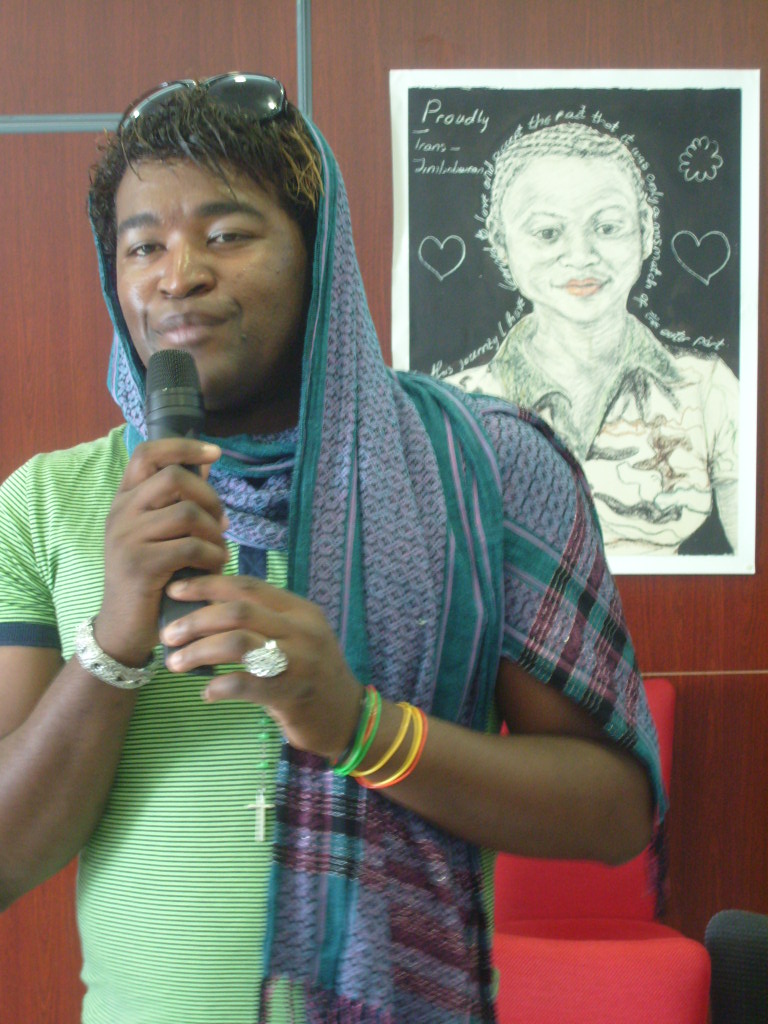
Jholerina was part of the emerging years of the early trans movement in Southern Africa. She attended the first trans- and intersex-specific workshop in Africa, hosted by IGLHRC (today known as Outright International) and Gender DynamiX, held in South Africa in December 2008. It was at this Eastern and Southern African Trans/Gender Identity Institute that she met art activist, Gabrielle Le Roux, and collaborated as a participant in the series of drawings, known as the “Proudly African & Transgender” project. She was also one of the participants in the first Intercontinental Trans Advocacy meeting, in Barcelona, Spain in June 2010, where the series of artworks was exhibited for the first time.
She founded Wings To Transcend Namibia (WTTN) in October 2015, because, as she put it: “there was no actual progress or investment into realising transgender people’s needs… So, my feeling was it is time that we, as trans people, organise ourselves and start a movement of our own.” To many, Madame Jholerina was so much more than the founder of WTTN. Apart from the lives she touched and the work she did outside of her role at WTTN while she was the Executive Director, she also served as a Grant-Making Panellist for the International Trans Fund (2023 – 2024), was a Mandela Washington fellow (2018), and part of the Young African Leaders Initiative (YALI, 2016), among many other accomplishments. She was an undeniable force, as her tireless and passionate work was only outshone by her warm heart, her endless generosity, and her naughty sense of humour.
Our co-founder, Liesl Theron, who knew Jholerina since 2008, shares her reflections on the news of Madame Jholerina’s death:
“My heart is still very broken after I heard the news Thursday about the passing of Madame Jholerina. The most recent time we saw each other was in June 2024, when I was organising logistics for the ITF and you attended the GMP meeting in Mexico City. The last day of GMP activities included attending the Mexico City Pride. You were boldly in bright colours as always, with a flower crown on your head! I remember those early years, way back in 2008 with our first regional trans projects, and you were part of it! We giggled every time, when you told me that you took over the name ‘Mama Trans’.”
The Trans & Intersex History Africa (TIHA) Digital Archive team mourns with her family, friends and colleagues, and we strive to honour her legacy by continuing to work for the rights of trans Africans. Rest in power, Madame J. Thank you for all that you did.
October 2015 — Founding of Wings to Transcend Namibia (WTTN), Namibia Jholerina B. Timbo (Madame Jholerina) founded Wings to Transcend Namibia (WTTN) in October 2015. WTTN is a non-governmental organisation that advocates and lobbies for equity and inclusion of trans people in Namibia. Madame Jholerina said that the reason for founding WTTN was that “there was […]
Oktoba 2015 — Serikali Yashtakiwa kwa Kukataa Kubadilisha Majina kwenye Kadi za Utambulisho, Kenya
Five transgender Kenyans sued the State of Kenya in October 2015 for refusing to process the change of names on their national identity cards. The state had processed their new passports but refused to do the same for their national identity cards. Some of these applications had been made in 2010. Audrey Mbugua of Transgender Education & Advocacy (TEA) was one of the clients represented at the trial. Read more here.
October 2015 — State Sued for Refusal to Change Names on Identity Cards, Kenya Five transgender Kenyans sued the State of Kenya in October 2015 for refusing to process the change of names on their national identity cards. The state had processed their new passports but refused to do the same for their national identity […]
2016 — Founding of TransSwati, Eswatini (Swaziland)
Founded in 2016 by Pinty Dludlu, TransSwati is a non-profit organisation providing services to the trans and gender non-conforming community. Officially registered in May 2018, TransSwati was born due to the lack of trans community representation in programmatic activities in the development sector in Eswatini (formerly Swaziland). A young feminist group, TransSwati works towards fighting social stigma faced by the trans and gender non-conforming community.
Maono
To create a future where all transgender and gender non-conforming individuals have equitable access to public services, are free from stigmatisation and feel safe and secure in a Swazi society.
Dhamira
To improve the livelihood of transgender and gender non-conforming individuals across Eswatini through intersectional approach to advocacy and programmatic activities that target health, law enforcement, education, economic empowerment, culture, religion and wider social attitudes.
Maeneo ya Kazi
The organisation is dedicated to supporting transgender people and advocating for their rights. TransSwati believes that everyone deserves to live their life authentically and without fear of discrimination or violence. The organisation is dedicated to providing resources and support to transgender individuals and their families, as well as to educate the public about transgender issues. Specific areas of work include:
Healthcare: TransSwati provides resources and support for transgender individuals and their families.
Education: TransSwati provides education and raises awareness about transgender issues in eSwatini.
Counselling: TransSwati provides support and counselling for people exploring their gender identities.
2016 — Founding of TransSwati, Eswatini (Swaziland) Founded in 2016 by Pinty Dludlu, TransSwati is a non-profit organisation providing services to the trans and gender non-conforming community. Officially registered in May 2018, TransSwati was born due to the lack of trans community representation in programmatic activities in the development sector in Eswatini (formerly Swaziland). A […]
2016 — Founding of The Fruit Basket (TFB), South Africa
The Fruit Basket (TFB), founded in 2016, is a trans- and migrant-led organisation based in Johannesburg South Africa. The organisation was founded by Thomars Shamuyarira, a trans migrant from Zimbabwe. TFB is a a Non-Profit Organisation that works to advance the welfare and rights of LGBTQI+ migrants, refugees, and asylum seekers who come to South Africa seeking protection. TFB hopes to have representatives in all countries that host LGBTQI+ migrants, refugees, and asylum seekers.
Context
From their website:
“The rights of LGBTQI+ persons on the African continent are severely constrained, leading many to leave their countries of birth and seek sanctuary elsewhere. South Africa is one of the few countries globally that grants refugee status on the basis of sexual orientation and gender identity, the system, however, does not work as it’s supposed to and many LGBTQI+ migrants, refugees, and asylum seekers find themselves undocumented. Without proper documentation, they cannot find employment or gain access to services and programs. The Fruit Basket helps restore the dignity of this marginalized community through assistance with the documentation process and information, skills development training, relief work, and, also working as a referral system, connecting the community with different service providers. We fight and will continue to fight for our region to be inclusive, where everyone regardless of nationality, immigration status, sexual orientation, gender identity, or beliefs has access to quality healthcare, meaningful education, and employment in their host country.”
Maono
To advocate and create a society and environment that allows for access to all services that are available to LGBTIQ+ migrants, asylum seekers, and refugees to be able to live up to their full potential and well-being.
Dhamira
To promote equality and opportunities in a safe and secure environment for LGBTIQ+ migrants, asylum seekers, and refugees.
To respect the gender, cultural and religious differences of all LGBTIQ+ migrants, asylum seekers, and refugees.
Tobe focused on the needs of all LGBTIQ+ migrants, asylum seekers, and refugees.
To keep absolute confidentiality on all matters relating to all LGBTIQ+ migrants, asylum seekers, and refugees.
First LGBTQI Safe House in South Africa
In September 2023, The Fruit Basket marked a historic milestone by opening the first LGBTQI+ Refugee Safe House in South Africa. This initiative came in direct response to the alarming passage of the Kill The Gays Bill in Uganda (Anti-Homosexuality Act, 2023), a law that has led to rampant persecution and violence against LGBTQI+ individuals. As news of the law spread, an influx of trans and queer persons from Uganda sought refuge in South Africa, looking for safety and security away from the oppressive environment of their home country.
Recognising the urgent need for support and safety, TFB took swift action to establish a safe haven for those fleeing persecution. The initial opening of the safe house provided accommodation for 10 trans and queer refugees, offering them not just shelter but a supportive community where they could begin to heal from the traumas they had endured. This was a groundbreaking moment, as no other organization in South Africa had undertaken such a significant step to directly address the needs of LGBTQI+ refugees.
Due to the overwhelming demand and the continued influx of individuals seeking refuge, TFB soon expanded the safe house to accommodate 16 persons. This safe space is not only a physical refuge; it represents a beacon of hope and a commitment to human rights for some of the most vulnerable members of the LGBTQI+ community.
At the safe house, residents have access to essential resources, including counseling, legal aid, and workshops aimed at empowerment and resilience-building. The sense of community fostered within the walls of the safe house has provided solace and support to those who have faced unimaginable hardships.
The establishment of the safe house is a testament to TFB’s dedication to championing the rights and dignity of LGBTQI+ refugees. It highlights the organisation’s pioneering spirit in addressing critical issues faced by marginalised communities and its unwavering commitment to advocacy and support. As TFB continues to grow and respond to the needs of LGBTQI+ refugees, the safe house stands as a symbol of resilience, hope, and the power of community in the face of adversity.
2016 — Founding of The Fruit Basket (TFB), South Africa The Fruit Basket (TFB), founded in 2016, is a trans- and migrant-led organisation based in Johannesburg South Africa. The organisation was founded by Thomars Shamuyarira, a trans migrant from Zimbabwe. TFB is a a Non-Profit Organisation that works to advance the welfare and rights of […]
In 2016, Sammie MacJessie founded the Ivy Foundation to create awareness especially for intersex persons to create a better environment which caters for their needs and is more understanding of their differences. The Foundation operates through the three major Cities in Malawi: Blantyre, Lilongwe and Mzuzu. The Foundation also advocates for the rights of young and old intersex individuals.
Maono
The Foundation strives to enhance sustainable development to improve social basic needs of and the inclusion of LBIQ persons in all spaces like education and health care. They seek to advance gender equality and the empowerment of all by promoting sexual and reproductive health as well as human rights.
Watch our interview with Sammie from the 12th of September 2025:
Text interview
In April 2024, our content contributor Delphine Barigye had an informal chat with Sammie, reflecting on the founding of the Ivy Foundation in Malawi, the events that led to the formation of the Foundation, and Sammie’s experiences growing up as an Intersex person in Malawi. As the Trans & Intersex History Africa Digital Archive sat down with them to unravel the threads of inspiration that led to the creation of the transformative organisation, their words painted a vivid picture of determination, resilience and unwavering passion.
Sammie is an intersex person born in Malawi to a Malawian mother and a South African father. They grew up mostly in Malawi but had a fair share of their life in South Africa. They are the Executive Director of Ivy Foundation and have been a human rights activist for over ten years.
Sammie MacJessie, founder of the Ivy Foundation
What motivated you to start the Ivy Foundation?
“What motivated me to start was the lack of inclusivity for intersex persons, the lack of conversations, and the lack of acceptance! For so long, people have always just pretended that we don’t exist. When I asked questions, no one could give me the answers and they made it look like I was crazy. I started this organisation so that intersex people can get answers to questions they have about their differences in sex development especially in a world where we are still considered a taboo.”
Can you share a personal story or experience that sparked the idea for your organisation?
“Growing up, I was pretty much like everybody else until I was 12 and joined a boarding high school. This was a place where we had to bathe in a community bathroom and that is when I noticed the difference between me and the other girls there. At 14, I noticed how everybody else had got their menstrual period besides me. But this didn’t throw me off because this (the period) is not something I was looking forward to anyway. But at 19/20 I realised how late it was. Sex conversations with friends also highlighted how different I was. I had no idea what they were talking about, especially the sexual experiences because I had never felt any sexual sensation. One of my friends pointed out how different my coochie [genitals] was as well. So I decided to look for answers again. The doctors’ immediate guess was always hormonal imbalance and they prescribed hormonal therapy for 2 solid years until a doctor in South Africa NOT Malawi, after a pap smear confirmed that I had gone through a surgical procedure as a child and this consequently affected my sexual feeling. On questioning my mum about it, she reaffirmed. According to her, I was born with an abnormally large clitoris that they had to cut off. A certified doctor who didn’t understand the implications of what they were doing or what they were cutting off had done this. And now I am a grown-up who has never felt any sexual sensation at all. This experience of not being able to get answers in a country that did this mutilation pissed me off and I surely had to do something to protect others from the same experience.”
Were there any specific events or issues in your community that drove you to take action?
“Yes, there is a specific event in 2016 where an intersex individual in a high school from the rural area of Malawi in Kliwawa was brutally raped by the guards and the head prefect using objects. On reporting to the police, they made fun by asking the victim to show them what was in between their legs because the perpetrators had reported that the individual had two private parts.
The police continued to mock me by asking if it was true! The story went viral but no Human Rights activists cared enough to take action. I then reached out to the individual who seemed broken and did not want to open up. A week or later the individual finally jumped into Shire, a crocodile-infested river because she was a laughingstock in the village. This event truly broke my heart. Seeing a young person at the age of 15 go through so much and only end up losing their life at such a tender age because society didn’t care enough.”
Did you encounter any challenges or obstacles when starting your organisation, and how did you overcome them?
“First of all, we were not allowed to register because the government was sceptical about registering an intersex organisation. They argued that there was no data or statistics and hence hardly believed that there was a substantial number of intersex people in Malawi but also asserted that the Intersex people were part of the LGBTIQ community. I pointed out that if you think that intersex people are part of the LGBTIQ community then it’s true we exist and this is something you cannot take away only because for the longest time we have only been visible under this umbrella. But it is also very true that not all intersex people identify as LGBTQ. It was a long process of back and forth but I finally got help from UNDP and UNAIDs and finally got registered.”
What long-term goals do you hope to achieve through the Ivy Foundation?
“We are hoping that in the next at least 5 years (considering the pace of the Malawian government) we will have legislation protecting intersex people from the human rights violations and abuses they go through. We hope that the law can hold the perpetrators accountable for their actions because according to our research last year, nobody has been prosecuted for violating or abusing the rights of intersex persons in Malawi. We have already drafted the model law and policy to assist us in this journey.
We are also hoping to see more intersex people in Malawi take up leadership roles like Tabitha and her sister in the sports fraternity. The goal is to normalise being intersex and create a more inclusive society.”
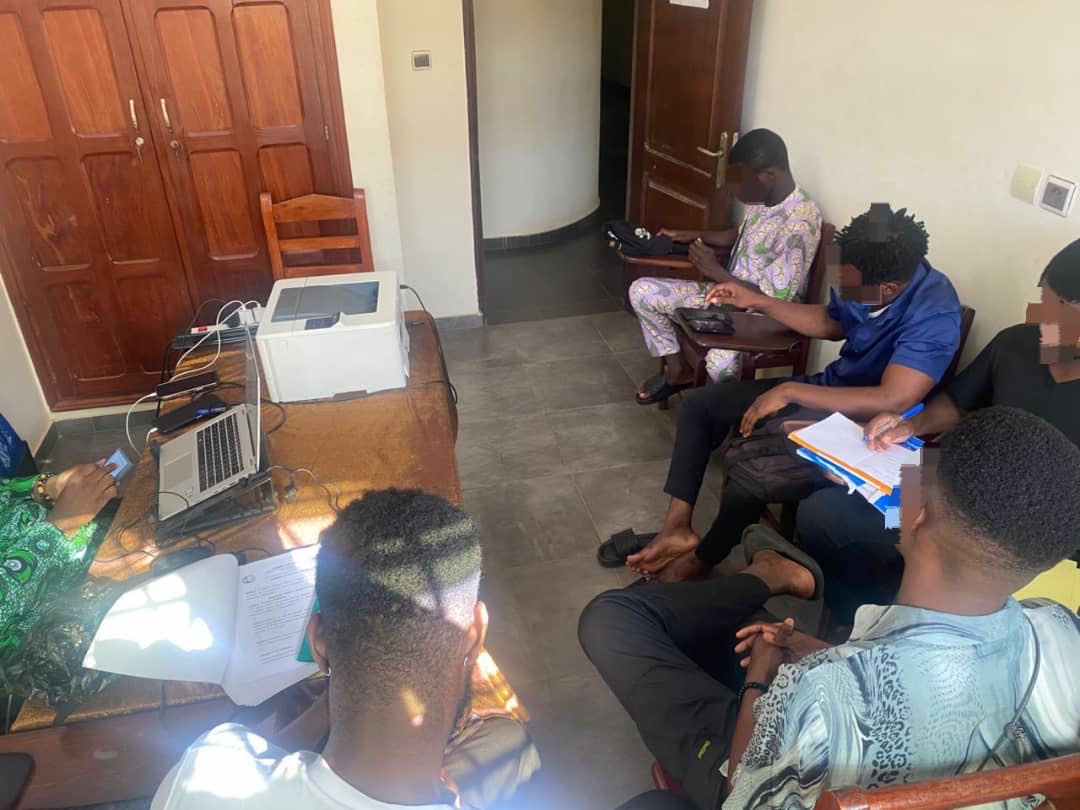
Safety and Security Training
Mental health awareness workshop
Have you seen any unexpected outcomes or benefits from Ivy Foundation’s initiatives?
“We have seen an increase in the number of intersex people who are willing to speak up about the violations they go through and also the number of allies that have come up to support our cause. It is heartwarming.”
What advice would you give to others who are considering starting their own grassroots NGOs?
“You will have more downs than ups. Motivated young founders usually expect everything to be rosy by getting so many funding opportunities and immediate acceptance from people in the first year which is not usually the case. The first few years, it will just be you making noise without anyone listening. However, over the years, more people have been willing to work with you creating more noise, I mean, I may be fat but there are plenty. Patience and resilience will eventually get you there.”
How do you stay motivated and passionate about Ivy Foundation’s mission?
“Am not going to lie, it is hard to stay motivated. We are one of the least funded organisations in Malawi and this is the trend with most intersex organizations across Africa. It is exhausting to stay motivated but when you look at how far we’ve come we can surely make one more step ahead every day.”
Interview with Sammie by our Intersex Content Contributor, Delphine Barigye
Mnamo Aprili 2024, mwandishi wetu mchangiaji Delphine Barigye alikuwa na mazungumzo rasmi na Sammie, akitafakari kuanzishwa kwa Ivy Foundation nchini Malawi, matukio yaliyopelekea kuundwa kwa Foundation, na uzoefu wa Sammie kukua kama mtu wa intersex nchini Malawi katika ...
Aprili 2016 — Uanzishwaji wa Synergie Trans Bénin / Synergy Trans Benin, Benin
En avril 2016, Synergie Trans Bénin (STB) a été créée. Première organisation trans nationale au Bénin, elle œuvre pour les droits et le développement des personnes transgenres dans le pays. STB est une organisation communautaire basée à Cotonou, au Bénin, issue de la fusion de deux associations regroupant des femmes transgenres (ACCEPTST BENIN) et des hommes transgenres (AFSP). Leur mission est de mieux faire connaître les besoins et les réalités des communautés noires d’Afrique francophone.
In April 2016, Synergie Trans Benin / Synergy Trans Benin (STB) was established as the first national trans organisation in Benin, intervening for the rights and development of trans people in the country. STB is a community-based organisation headquartered in Cotonou, Benin, formed from the merger of two associations bringing together transgender women (ACCEPTST BENIN) and transgender men (AFSP). They campaign to increase the visibility of the needs and realities experienced in Black communities of French-Africa (Francophone Africa).
La vision / Vision
STB a pour objectif de contribuer à la visibilité et à l’épanouissement des personnes trans au Bénin et dans la région, de mettre en lumière la vulnérabilité spécifique des personnes trans pour permettre leur inclusion dans les politiques de santé, et de mener des actions de plaidoyer pour défendre les droits des populations les plus vulnérables, notamment celles qui subissent des violences en raison de leur identité de genre et celles vivant avec le VIH/SIDA.
Le STB mène des activités de sensibilisation et de dépistage du VIH/SIDA, propose des groupes d’entraide et suit les cas de violence et de violation des droits. Il œuvre également à l’insertion sociale et professionnelle des jeunes victimes de rejet familial.
STB aims to contribute to the visibility and development of trans people in Benin and the surrounding region, to highlight the specific vulnerability of trans people to enable their inclusion in health policies, and to conduct advocacy actions to defend the rights of the most vulnerable populations, particularly those experiencing violence due to their gender identity and those living with HIV/AIDS.
STB conducts HIV/AIDS awareness and screening activities, offers self-support groups, and monitors cases of violence and violations of rights. It also works to promote the social and professional integration of peers who are victims of family rejection.
April 2016 — Création de Synergie Trans Bénin / Synergy Trans Benin Founded, Benin En avril 2016, Synergie Trans Bénin (STB) a été créée. Première organisation trans nationale au Bénin, elle œuvre pour les droits et le développement des personnes transgenres dans le pays. STB est une organisation communautaire basée à Cotonou, au Bénin, issue […]
From the introduction of the booklet, the goal of the publication
“is to create a basic, accessible and user-friendly tool for understanding the links between access to gender affirming health-care, human rights, depathologisation of trans and gender diverse identities, and the current review process of the International Classification of Diseases (ICD). The ICD is an international classification that has been developed by the World Health Organization (WHO). It contains a complex list of diseases, disorders, injuries, and factors influencing contact with healthcare services. Some of the diagnoses in the ICD directly affect trans, gender diverse, and intersex communities.
We hope that this publication serves as an accessible guide to understanding the importance of depathologising trans health-care:
Is used across communities; by clinicians, by activists, by trans and gender diverse persons, intersex persons, scholars, NGOs, etc.
Ignites a growing interest in the campaign to depathologise gender affirming healthcare, getting
More people and organisations from the region involved.
Challenges the power dynamics that exist in the access to gender affirming healthcare.
Highlights the intersection between depathologisation and the decolonisation of our identities.”
2016 — Publication of ‘Ending Pathological Practices Against Trans and Intersex Bodies in Africa’ In 2016, South Africa’s Iranti, as well as the Global Action for Trans Equality (GATE), Asia Pacific Transgender Network (APTN), Stop Trans Pathologization 2012 (STP) team, and Transgender Europe (TGEU), hosted a workshop to share knowledge and learning and to form […]
7 August 20147 October 201429 October 2014November 201420152015201520154 February 2015August 2015August 2015September 201528 September 2015October 2015October 2015201620162016April 20162016
You can include information about your African Organisation/Group
There are many African organisations and individuals who over the years have contributed in invaluable ways to the story of the trans, gender diverse and intersex movements who are not yet included on our Timeline.
Tunataka kutambua na kujumuisha michango yote inayoweza kuthibitishwa.
The Timeline is about your stories and voices. You can find out more about how to contribute by visiting our Contact Us page here.