

In 2011, co-hosts of the Programme d'échange régional trans et intersexe pour l'Afrique orientale et australe, Gender DynamiX (GDX) and their partner in East Africa (name withheld for security reasons), approached Transgenres et Intersexes Afrique (TIA) to form a 3-organisation coalition together with Initiative de soutien aux personnes présentant un développement sexuel atypique (SIPD) in Uganda, which would be known as Transitioning Africa (TA). The coalition would work together on future projects advocating for the human rights of transgender and intersex people in sub-Saharan Africa. The founding meeting was held in Nairobi, Kenya.

Genesis of Transitioning Africa (TA)
Transitioning Africa emerged from the partnership between SIPD and Gender DynamiX, through the exchange program for trans and intersex activists in Africa. In order to solidify the partnership, and strengthen it further, a third organisation Transgender and Intersex Africa (TIA) was invited to the table and a specific mission and vision for the new partnership, now named Transitioning Africa, was formulated. Transitioning Africa formed platform of all three organisation’s regional work, while retaining organisational autonomy locally and nationally. All three organisations were responsible for representing Transitioning Africa while doing regional and international work, thus mitigating the need for representation from all three organisations, and thus conserving resources. The partnership jointly decided upon the regional activities and the division of resources in pursuing its mission and vision.
Vision
With a vision to build “A strong transgender and intersex movement in Africa based on human rights principles”, the partnership of Transitioning Africa aimed to achieve the following strategic goals:
- Gender recognition within social movements in Africa.
- Build Trans & intersex leadership and capacity, by supporting both individual transgender and intersex activists, as well as transgender and intersex organisation on the continent.
- Advocate for Trans & intersex issues within regional and international platforms, directly, and support local advocacy efforts.
- Document the history of the transgender and intersex movement in Africa.
La mission
To heighten gender recognition within social movements in Africa. Aiming to build transgender and intersex leadership and capacity, by supporting both individual transgender and intersex activists, as well as transgender and intersex organisation on the continent. TA provided an advocacy platform for transgender issues within regional and international platforms, directly, and supported local advocacy efforts. One of TA’s initiatives was to document the history of the transgender and intersex movement in Africa.
Strategic goals
- Capacity building programs
- Research and Documentation
- Leadership development
- Alliances building
Pilot exchanges
First African Strategy Workshop for Transgender Activists, Cape Town, South Africa
In 2008, the first African Strategy Workshop for Transgender Activists took place in Cape Town, South Africa. This historic workshop was spearheaded by Victor Mukasa and facilitated by the International Gay and Lesbian Human Rights Commission (IGLHRC) and Gender DynamiX (GDX). It brought together 15 activists from 9 East and Southern African countries. Those represented included Burundi, Kenya, Uganda, Rwanda, Botswana, Namibia, South Africa, Zambia, and Zimbabwe brought together to address the very specific needs of transgender people on the African continent. It marked a key step in the process of defining and building the African transgender movement by African transgender people.
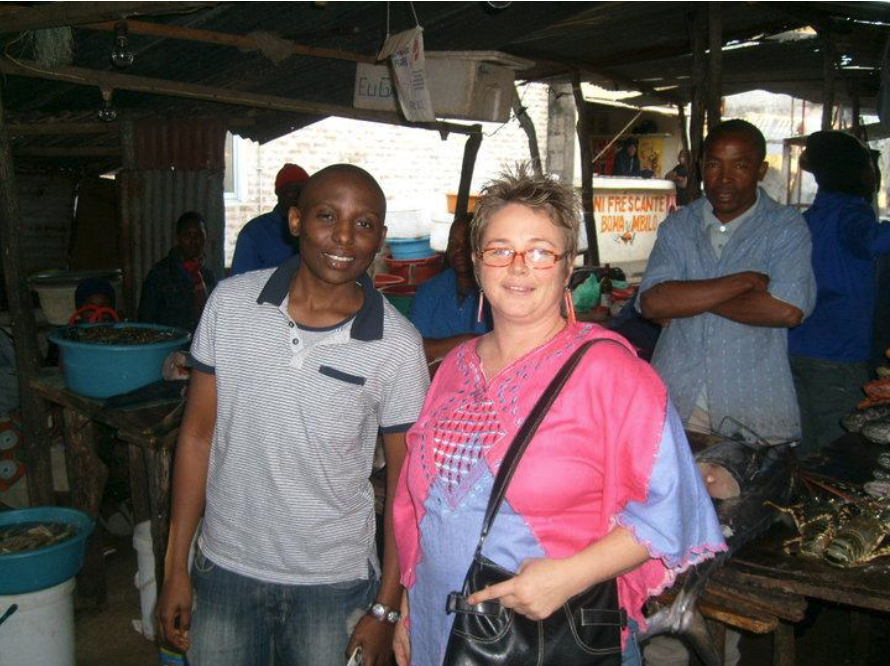
The Workshop was designed to help activists document human rights abuses against transgender people, derive best practices for human rights advocacy, and share information on gender identity, reassignment surgery and hormone treatment. It was acknowledged that up until this point in time transgender activists in Africa had lacked the space to exchange experiences and information, leaving many working in relative isolation. The African sexual rights movement had mostly confined itself to addressing the concerns of lesbians, gay men, and sporadically the concerns of bisexuals. Participants at the workshop gave moving and painful testimonies revealing the wide range of human rights abuses—from arbitrary arrests and detention to assault, rape, and murder—that African transgender people regularly encountered. Their stories also described frequent violations of the rights to property, housing, expression, privacy, health and employment. Sadly, even in this memorable and historically safe space, intersex voices were still diminutive.
At the time, a singular organization addressing transgender needs existed on the continent – Gender DynamiX. An organization based in Cape Town, South Africa, committed to promoting freedom of expression of gender identity and advocating for the rights of transgender, transsexual and gender non-conforming people. Through providing help, advice and information in order to support transgender people, their partners, family, employers and the public.
The Workshop provided a forum for the different activists present to discuss the ‘what and how’ of the emerging Trans* movement in Africa. They established a set of priorities for future work, including education, healthcare access (including basic healthcare services, which are often denied to transgender people, as well as hormones and gender reassignment surgery), and working to prevent arbitrary arrests and unnecessary bodily searches. Those present arrived at two key realizations. Firstly they identified a massive need for capacity and skills building across the continent. Secondly, noting the lack of West and North African participants present, this capacity and skills building was understood as essential to future efforts to assist in outreach to these areas.
These and subsequent informal meetings facilitated by Victor Mukasa while serving at the South African office for the then International Gay and Lesbian Human Rights Commission (IGLHRC), presented an opportunity for what would turn out to be a powerful alliance to propel African Trans* and intersex activism out of the shadows of invisibility to what we see today. The partnership between Gender DynamiX and SIPD was upheld by the help of Trans* and intersex activists in South Africa, Botswana, Zambia, Namibia, Kenya, and Uganda.
May 2010 — Africa Regional Exchange Programme for Transgender and Intersex Activists, Namibia
In May and October 2010, the first stage of the cumulative outcome of the initial Strategy Workshop, the Africa Regional Exchange Programme for Transgender and Intersex Activists, came into being. Steered largely by Gender DynamiX (GDX) along with their partner, Support Initiative for People with atypical sex Development (SIPD) SIPD, an organization based in Uganda, dedicated to advancing the rights of intersex children and people through public education and awareness, medical and social support services referrals and advocacy.
The ultimate goal, of the Exchange, building on from the Workshop, was to create an environment where transgender advocates from Africa could meet, receive greater advocacy training and begin capacity building for a stronger transgender and intersex movement on the continent. The Exchange aimed to do this by facilitating two gatherings per year where the activists would be able to come away and learn together. Their hope was that the project would empower activists, both new and old, in their work, and cultivate a stronger movement. They believed that the positive effects of this capacity building would be two fold, namely it would establish other expert voices on the continent, putting less pressure on both organizations. Secondly it would assist in equally distributing skills, creating allies and sources of peer support.
The first stage of the Exchange saw 15 activists from 5 countries, in Africa come together to learn, share and grow. The program ran for four weeks, one week was spent in Namibia and three in South Africa. From the outset the program had to cater for two divergent groups of activists. Some of those in attendance had been involved in LGBTI activism for a number of years whilst others were new and had very little knowledge regarding key issues. The program needed to speak clearly to both groups, whilst providing the relevant information and tools coupled with a need to maintain sustained interest over a long period of time. Due to these understandings, the program was approached as an open-ended project.
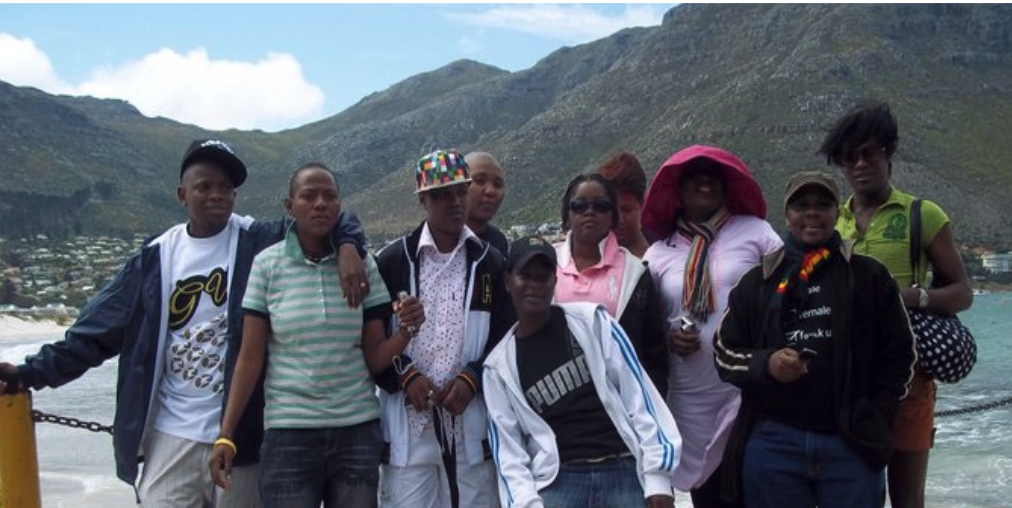
Participants spent a week in Namibia; during this time they attended a number of workshops dealing with a variety of issues. They also took part in a number of group sessions focused on movement building and the establishment of positions on certain trans* related issues. Workshops were far more structured, guided and coordinated, with the expectation of a set of tangible outcomes clearly established beforehand. Group sessions were far more relaxed with regards to structure and expectations. They were often participant driven providing a space for discussion and debate. The mixture of the two was important to the Exchange as it allowed certain flexibility. New, yet pertinent, issues such as the case of Steven and Aunt Tiwo in Malawi overlapped with the Exchange program and a session was spent discussing the way the case had been handled and what the correct reaction from the Exchange should be. Time was also spent discussing HIV research and the place of transgender people within the paradigm of Men having Sex with Men (MSM) and Women having Sex with Women (WSW).
September 2011 — Final Exchange Programme, Uganda & South Africa
Participants arrived in South Africa in September 2010. Time in Cape Town allowed for the production of ‘Exquisite Gender’, a DVD and teaching tool widely used in advocacy work by organizations currently. The program focused largely on imparting digital skills such as those used to create the DVD and training in online media for the activist participants. Other topics included were patriarchy, feminism and power, strategic planning for regions, the needs of the transgender movement in Africa, HIV and intersections of vulnerability.
Building on what had been learnt in 2010, the Exchange saw phenomenal growth within the movement in Africa. By the time participants from 2010 returned in 2011 some had begun to form their own organizations and others, growing already established organizations, implementing ideas learnt in the previous year and establishing stronger inter-organizational relationships with each other and further afield. Due to this, 2011 was defined by the focus on personal growth and reflection and a wider focus on the meaning of leadership within organizations.
Again there were two legs to the Exchange, the first taking place, over two weeks, in Uganda and the second, over one week, in Cape Town, South Africa. The focus of the Ugandan visit was to allow participants to interact with organizations working on the ground in very trying circumstances. The participants spent the vast majority of their time making organizational visits and mapping out the work being done addressing transgender issues within the country.
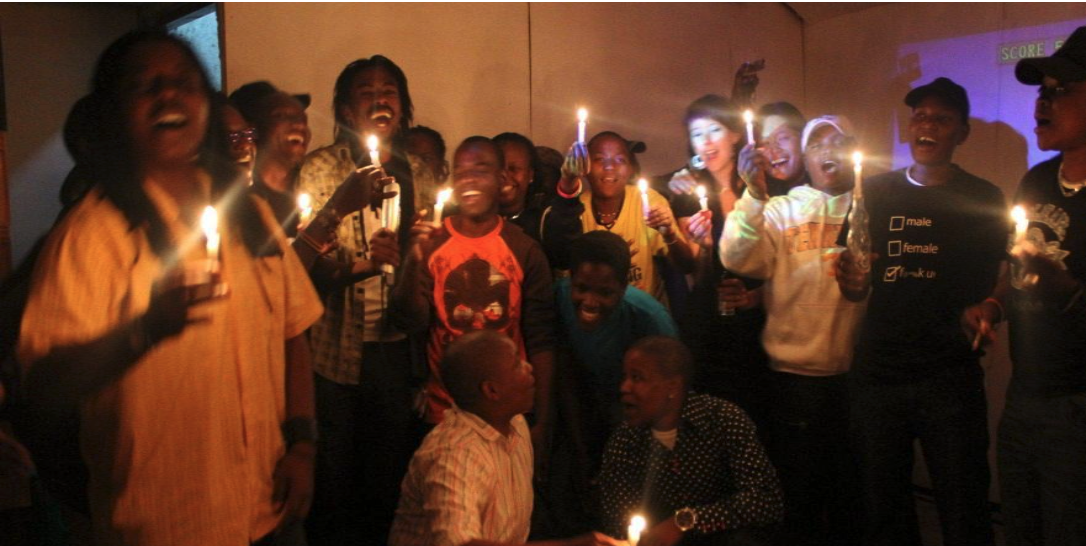
The visit to Uganda coincided with the of widespread media attention around the proposed Anti-Homosexuality Bill, commonly known as the ‘Bahati Bill’.
The document proposed a new offence be created in Uganda namely ‘aggravated homosexuality’ and that this would be punishable as a capital offence. Since the surfacing of the proposed bill members of Uganda’s LGBTI community had seen increased public visibility coupled with increased threats to their personal safety. Uganda was educational in terms of exposure to innovative forms of functionality under pressure and sometimes invisibility. One of the greatest outcomes of the Ugandan trip was the relationships and friendships formed among the activists. This is very important in a sense of mentoring. Towards the end of the program, the general feeling amongst the group was to be more inclusive of transgender women’s issues.
The program visited human rights organizations such as the Refugee Law Project (RLP), Human Rights and Promotion Forum (HRAPF), Human Rights and Peace Centre Faculty of law Makerere University (HURIPEC), Women’s Organisation Network for Human Rights Advocacy (WONETHA) and AkinaMamaWaAfrika (AMwA). Uganda provided the opportunity for the group to take what they had learnt thus far and begin to teach and in a way, recruit allies. Significantly The Exchange was invited to teach a group of Human Rights Lawyers on issues effecting transgender and intersex people in Africa and how best to serve them.
Whereas Uganda had been organizationally focused and very busy and stressful, Cape Town was the exact opposite. The group was taken to a retreat type environment in order to provide some solitude for the group and the opportunity to have discussion and really reconnect. It was hoped that this would be a space where they could focus on themselves and learn from each other.
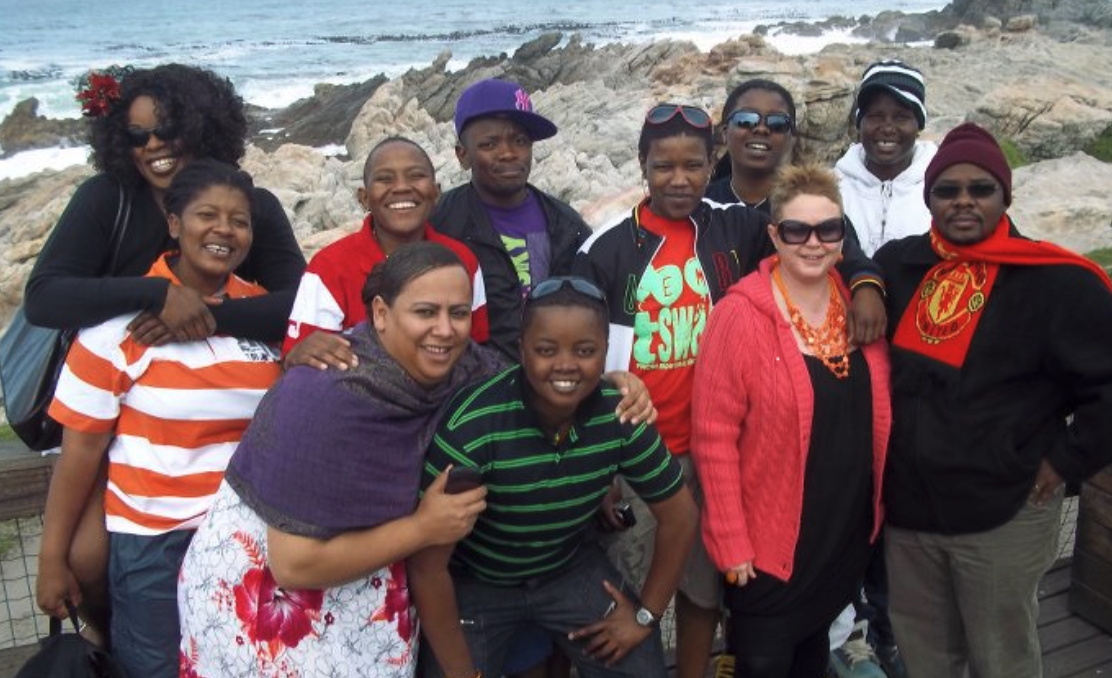
Sessions were devoted to really getting to grips with concepts such as feminism and patriarchy. Organizational mapping was high on the agenda and integrated with mapping the needs of the transgender community at both individual, organizational, community and country levels across the continent. Time was also spent addressing the role of HIV and the specific needs of transgender people in relation to prevention and education. The Cape Town leg really tried to bring together individual and organizational needs and provide for wider strategic planning for the future of the movement on the continent.
Uganda had shown that the Exchange had reached a critical stage where the growth of the movement required that some of its structure evolve. In thinking about the developments of the Exchange and the longevity of the Program, it had become evident to both GDX and SIPD that there was also a need for their own personal development. In order to strengthen and increase their capacity, Transgender and Intersex Africa (TIA) was added to the Exchanges organizational committee and “Transitioning Africa” was adopted as the new name of this new and broader partnership. In this way, TA was truly an organic growth clearly coming out of the work that had been initiated by the Workshop in 2008. Continuing with the work done thus far, it was the hope and belief of the three partners that the mission of TA to build transgender and intersex leadership and capacity, by supporting both individual transgender and intersex activists, as well as transgender and intersex organization on the continent, will be taken forward by other impassioned Trans* and intersex activists on the continent. Furthermore, that the history in this chronicle would enhance and positively inform greater advocacy for transgender and intersex issues within local, regional and international platforms.
With the first group of participants, establishing the core of the movement, moving off into their separate organizations and groups, space again became available for a new set of participants to begin the Exchange in 2012. The moving off of the first group also allowed for the establishment of a second stream of focus for Transitioning Africa looking at organization or group specific opportunities for capacity building and growth.
The developments within the region, between 2008 and 2011, were phenomenal with a major upsurge in organizations, activism, advocacy, and visibility of African transgender and intersex people both regionally and internationally. Whereas in 2008 it was evident that the transgender and intersex movement in Africa was an emerging one, which by rights could not yet fully claim the terminology ‘movement’. Now, it would be impossible to call it anything else. There has been overwhelming evidence of this in the presence of Trans* and intersex voices in almost all critical advocacy spaces, such as the Changing Faces, Changing Spaces (CFCS) conference, United Nations, African Commission on Human and Peoples’ Rights, ICASA, ILGA World conferences, WPATH. Yet, the need to augment this presence and participation is even more critical now than then, because in coming out, more and more Trans* and intersex Africans have been mistaken for being gay or lesbian and are targets and victims of trans phobic and homophobic crimes than they were in 2008. In addition, many pioneers of this struggle have slid into the shadows for lack of proper exit plans aimed at taking care of forerunner of the movement. It is a sad reality that this movement that cost blood and untold sacrifice has not paid much attention to the importance of heritage and is expected to proceed without the consciousness of its beginnings.
A key challenge to an undertaking such as Transitioning Africa was – and many that follow – is the continued struggle to locate funds that address both the political and the personal in pursuit of justice. This age old challenge also speaks to the many times Transitioning Africa tried to shift focus – to as far as prioritizing HIV interventions – to access funding and stay afloat. Retrospectively, some of the tensions we encountered in this movement building undertaking was always finding the right “pitch” to bring in money instead of actually concentrating on improving and empowering Trans* and intersex people. This was not specific to TA, it was also personal as we witnessed valuable contributors to the struggle succumb to depression, substance abuse, and even death due to lack of financial will from donors to invest in Trans* and intersex organizing just for what it is and in leadership development for this movement.
In all its five years of existence, TA had the ARCUS Foundation as the only major and consistent funder. In the second year of the exchange programs, OSISA and UHAI contributed to enabling more participation from Southern and Eastern Africa, and in the final year, 2014 the Sigrid Rausing Trust also contributed to rebuilding and rebranding of the movement. Even then, available funds only permitted the participation of less than 20 activists, making it very difficult to reach and bring on board a critical mass of Trans and intersex people – even within the Eastern and Southern Africa regions where activism had started to take root. The lack of Trans* and/or intersex specific funding is still a huge challenge to date to Trans* and intersex movement building in Africa.