An archive of histories/herstories/theirstories affecting and influencing the trans, gender diverse and intersex movements in Africa
This Timeline of our archive of histories/herstories/theirstories of the trans, gender diverse and intersex movements in Africa and in the Diaspora emerged through the grassroots experiences and memories of the contributing African activists and organisations.
It is often updated with new stories and the Timeline is continually growing.
How to navigate the Timeline
Categories are displayed alphabetically at the top of the Timeline and can be used to filter the results to focus on the research theme chosen. For example, ‘All’ will show you all topics, while ‘Intersex’ will display all entries related to intersex movements and moments.
Alternatively, use the search bar in the menu at the top and bottom of screen to find more specific information.
Categories relating to gender, sex characteristics and sexual orientation have flag icons and colour groups to visually distinguish them from one another:
All
Activistas
Todos
Arte
Requerentes de asilo/Migrantes/Refugiados
Áudio e vídeo
Ballroom
Comunidade
Conferências
Travesti
Depathologisation
Diáspora
Drag
Films
Diversidade de género
Não-conformidade de género
Gender-Affirming Healthcare
Healthcare
HIV/AIDS
Homeless people
In Memoriam
Intersexo
Entrevistas
LBQ
LBTI
LBTQ
Legislação
LGBTQIA+
Media
Não binário
Organizações
People living with HIV
Persons with Disabilities
Publicações
Trabalho sexual
Desporto
SRHR
TIHA Articles
Trans
Trans e intersexo
Transfeminista
Transmasculine
Transsexual
Transvestite
Youth
9 December 2017 — Création de l’Association Transgenres et Droits, Côte d’Ivoire / Association Transgenres et Droits Founded, Ivory Coast
9 December 2017 — Création de l’Association Transgenres et Droits, Côte d’Ivoire / Association Transgenres et Droits Founded, Ivory Coast
Fondée le 9 décembre 2017 par Orneill Latiyah, l’Association Transgenres et Droits a été fondée à Abidjan, en Côte d’Ivoire. Elle œuvre au service de la communauté trans ivoirienne (hommes, femmes et personnes non binaires) et se concentre sur la promotion des droits humains et le plaidoyer politique pour la reconnaissance juridique des identités trans. L’organisation n’a pas pu s’enregistrer en raison des contraintes et restrictions légales en vigueur en Côte d’Ivoire concernant les identités trans et les droits humains.
Founded on 9 December 2017 by Orneill Latiyah, Association Transgenres et Droits (translated as Transgender and Rights Association) was founded in Abidjan, Ivory Coast, serving the Ivorian trans* community (trans men, trans women and non-binary people), focusing on the promotion of human rights and political advocacy for the legal recognition of trans* identities. The organisation has not been able to register, given the legal constraints and restrictions in Ivory Coast regarding trans identities and their human rights.
A visão Visão
La reconnaissance juridique des personnes Trans* pour une insertion socio-politique légale.
Legal recognition of trans* people for legal and socio-political integration.
La Mission / Missão
Promouvoir la justice pour tous en vue de l’amélioration des conditions de vie des personnes Trans* dans un monde sans Discrimination/Stigmatisation liés aux stéréotypes du Genre.
Promoting justice for all with a view to improving the living conditions of trans* people in a world without discrimination/stigmatisation based on gender stereotypes.
Les objectifs / Objectivos
Promouvoir l’égalité des GENRES
Favoriser la prise de conscience des Droits humains liés aux personnes Trans* par la population cible (Trans*) et les acteurs étatiques (hommes politique, Juristes, Officiers de l’ordre public, Journalistes…).
Mettre fin à la Discrimination, la Stigmatisation mais surtout aux Violences basées sur le Genre.
Promouvoir l’accès aux Droits Fondamentaux de l’Homme, Valoriser ceux-ci et promouvoir leur Respect pour les personnes Trans*.
Favoriser la visibilité et la reconnaissance juridique des personnes Trans*.
Promote gender equalitythrough:
Promoting awareness of the human rights of trans* people among the target population (trans*) and state actors (politicians, lawyers, law enforcement officers, journalists, etc.)
Ending discrimination, stigmatisation, and, above all, gender-based violence.
Promoting access to fundamental human rights, and valuing and respecting trans* people as part of the community
Promoting the visibility and legal recognition of trans* people.
Domaines de travail / Areas of Work
Education aux droits humains.
Renforcement de capacités sur les questions de système de Droits Humains.
Utilisation des systèmes de droits humains (CADHP, ONU – Conseil des droits humains).
Plaidoyer politique et institutionnel.
Human rights education.
Capacity building on human rights system issues.
Use of human rights systems (ACHPR, UN Human Rights Council).
9 December 2017 — Création de l’Association Transgenres et Droits, Côte d’Ivoire / Association Transgenres et Droits Founded, Ivory Coast Fondée le 9 décembre 2017 par Orneill Latiyah, l’Association Transgenres et Droits a été fondée à Abidjan, en Côte d’Ivoire. Elle œuvre au service de la communauté trans ivoirienne (hommes, femmes et personnes non binaires) […]
11 December 2017 — ‘National Engagement on the Promotion and Protection of the Human Rights of Intersex Persons’ Meeting, and the Publication of ‘National Intersex Meeting Report’, South Africa
11 December 2017 — ‘National Engagement on the Promotion and Protection of the Human Rights of Intersex Persons’ Meeting, and the Publication of ‘National Intersex Meeting Report’, South Africa
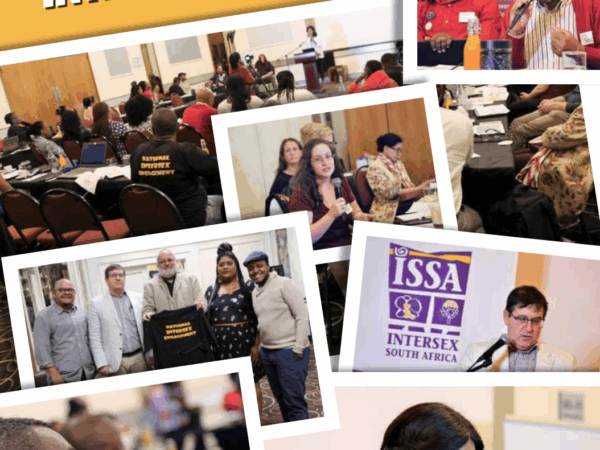
Following the National Engagement on the Promotion and Protection of the Human Rights of Intersex Persons meeting organised by Irantiwith South African intersex activists, community members and stakeholders on the 11th of December 2017, the National Intersex Meeting Report was published in 2018, entitled ‘National Dialogue on the Protection and Promotion of the Human Rights of Intersex People.’
The Report focuses on female genital mutilation (FGM), intersex genital mutilation (IGM), circumcision, the language and framing of intersex in South Africa, infanticide, healthcare, the South African legal structure, social and cultural marginalisation (in sport, movement funding, state and civil society approaches and awareness, research, educational environments, and official documents and sex status), and the responsibility of Chapter 9 Institutions (State institutions supporting constitutional democracy in South Africa).
From the conclusion of the Report:
“On the 16th September, 2015 was the first time that UN convened a discussion specifically to discuss the human rights of intersex people. The High Commissioner noted ‘When I started as High Commissioner a year ago, I knew little about intersex people. I don’t think I was alone in this: it reflects a general lack of awareness. Too many people assume, without really thinking about it, that everyone can be fitted into two distinct and mutually exclusive categories: male or female.’
This, unfortunately, continues to be the case both globally and in South Africa specifically. Addressing the rights of intersex people means both acknowledging the diversity of human bodies and shifting language. It means ensuring that infants are not subject to invasive and unnecessary surgical procedures to ‘normalise’ their bodies. Moreover, intersex people have the right to be informed about their intersex status and to make their own choices regarding their bodies, the right to determine their own identities. In essence, we are talking about the right to bodily integrity and self-determination. The notion that human beings are born into one of two distinct and separate sexes is deep-rooted and contributes to an ongoing taboo and stigma regarding intersex lives. This culture of silence perpetuates a legacy of shame and secrecy along with the invisibility of intersex lives. It also prevents families and individuals from pursuing a model of full, free and informed consent.
Addressing the needs of intersex South Africans means recognising diversity, understanding the history of medical gatekeeping particularly with its relationship to Apartheid notions of race and class and advancing legislation to address IGM and indeed the murders and death of intersex infants. As Rebecca Steinfeld and Brian Earp argue, and this is particularly true for Constitutional democracies, founded on a legacy of equality ‘Whatever specific policies are implemented, however, what is clear is that fundamentally different treatment of female, male, and intersex children —with respect to the preservation of their bodily integrity — will become increasingly difficult to justify in the coming years’.”
11 December 2017 — ‘National Engagement on the Promotion and Protection of the Human Rights of Intersex Persons’ Meeting, and the Publication of ‘National Intersex Meeting Report’, South Africa Following the National Engagement on the Promotion and Protection of the Human Rights of Intersex Persons meeting organised by Iranti with South African intersex activists, community […]
12 December 2017 — Tshepo Ricki Kgositau Wins Case to Change Gender Marker, Botswana
In 2017, Batswana trans woman, Tshepo Ricki Kgositau (former Executive Director of Dinâmica de Género) won her 2011 case against the Civil and National Registration office in Gaborone, Botswana to change her documentation in the national register from male to female. Ler mais.
12 December 2017 — Tshepo Ricki Kgositau Wins Case to Change Gender Marker, Botswana In 2017, Batswana trans woman, Tshepo Ricki Kgositau (former Executive Director of Gender DynamiX) won her 2011 case against the Civil and National Registration office in Gaborone, Botswana to change her documentation in the national register from male to female. Read more.
2018 — Founding of Intersex Community of Zimbabwe (ICoZ), Zimbabwe
In 2018, the Intersex Community of Zimbabwe (ICoZ) was founded by Ronnie Zuze. The organisation was registered in 2021. ICoZ is a developmental intersex-led organisation based in the community that focuses on intersex people in an environment where there is limited appreciation and acknowledgment of the existence of intersex people. ICoZ Trust works to promote the identification, inclusion, integration, and assimilation of human rights issues affecting intersex people in Zimbabwe. ICoZ seeks to realise a society that has an appreciation of human rights inclusive of intersex people as a minority group appreciated by the larger population where service providers and policymakers have a limited understanding of intersex issues. Protection of dignity and bodily integrity through the elimination of Human rights violations at all levels. To date, the organisation is continuously working on improving Health, Human rights, Life Skills, Capacities, and participation in governance processes through creating awareness and gathering data, and presenting evidence in establishing the existence of intersex people recognised by the law in Zimbabwe.
Visão
Intersex people thriving in all facets of life in an environment where diversity and equality are key to human development.
Missão
To empower the intersex community through innovative participatory strategies to enhance development and build capacity in responding to their developmental needs.
Objectivos
Empower intersex individuals, families, and communities by providing intersex knowledge.
Advocate for the legal recognition and inclusion of intersex people in all social and economic development platforms in Zimbabwe.
Create platforms for integration and collaboration.
Support intersex persons in accessing education, healthcare, decent employment, economic empowerment, and opportunities.
Values
Accountability — Guiding transparent stewardship and ensuring our actions align with our mission for positive change.
Inclusivity — Promoting diversity, equity, and a respectful culture that fosters innovation and well-being for all intersex persons.
Integrity — Guiding principle, fostering transparency, ethics, and accountability to build trust and positive impact.
Sustainability — Our central commitment of guiding practices for a more equitable future for intersex persons.
Empathy — Central to our community, guiding inclusive decisions, fostering compassionate communication, and celebrating diversity for a supportive environment.
Áreas de incidência
ICoZ provides:
Legal advocacy — ICoZ works to ensure that intersex people have legal recognition and protection. They engage with the government, policymakers, judiciary, and the community to promote the rights of intersex individuals. Their goal is to create policies that are responsive to the protection and advancement of intersex people’s rights. They also educate both the intersex community and the public about their human rights.
Life skills and empowerment — ICoZ focuses on building skills needed by intersex people to regain self-worth and confidence. This program aims to alleviate challenges such as poverty, unemployment, and gender-based violence.
Health and wellbeing — ICoZ works to ensure access to quality sexual and reproductive health services for intersex individuals and they strongly advocate for an end to unnecessary intersex genital mutilations (IGM) in both public and private healthcare settings. They provide comprehensive education and mental health support services to address the stigma and discrimination faced by intersex people, which can lead to mental health issues and suicidal tendencies.
2018 — Founding of Intersex Community of Zimbabwe (ICoZ), Zimbabwe In 2018, the Intersex Community of Zimbabwe (ICoZ) was founded by Ronnie Zuze. The organisation was registered in 2021. ICoZ is a developmental intersex-led organisation based in the community that focuses on intersex people in an environment where there is limited appreciation and acknowledgment of […]
2018 — Founding of Pride Sierra Leone (PSL), Sierra Leone
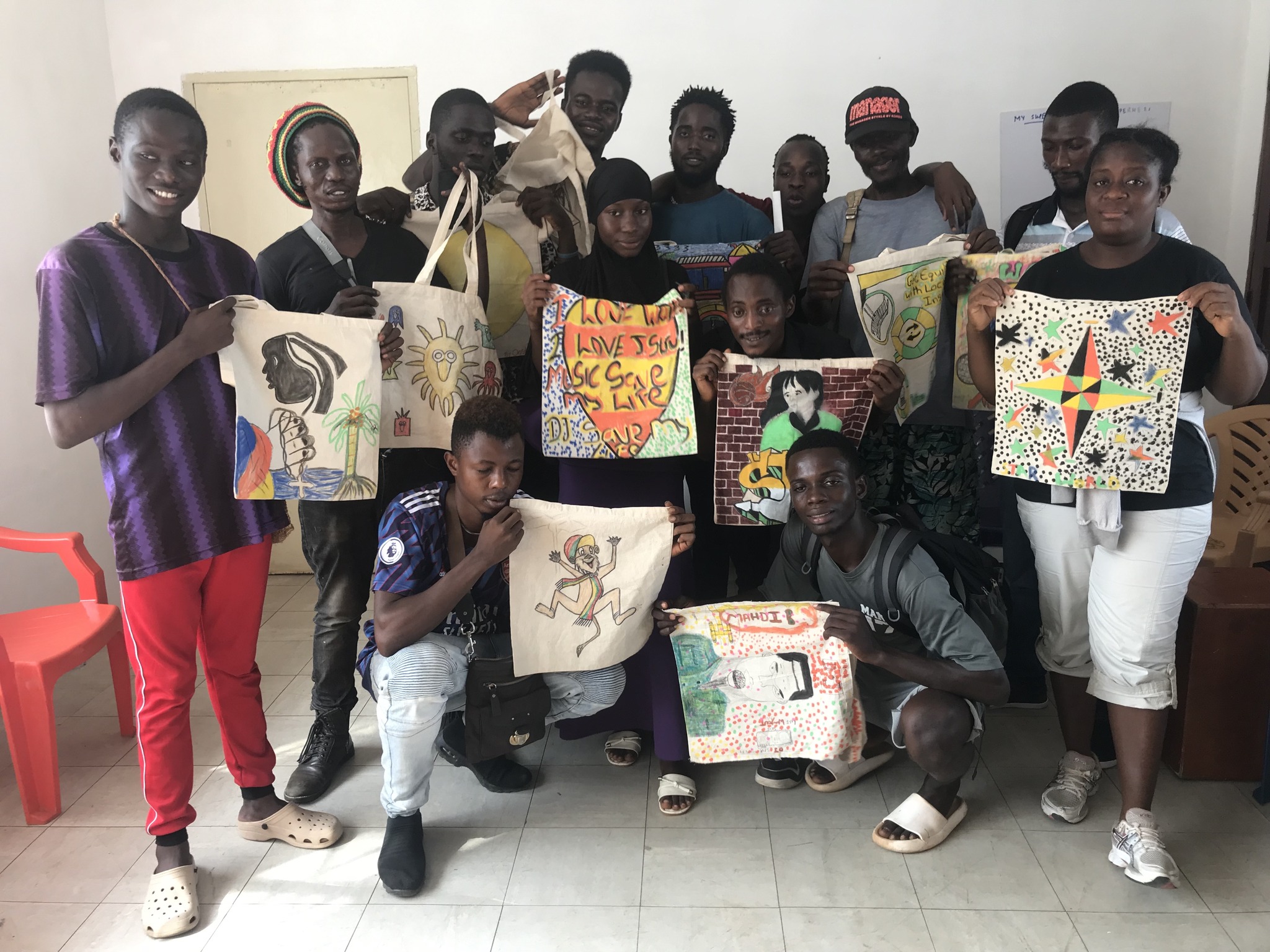
Founded in 2018 by Roy Robinson, Pride Sierra Leone (PSL) works with LGBTQI people in Sierra Leone and promotes and protects the human rights of this community living in Sierra Leone and in the diaspora in Europe. The organisation strives to educate and raise awareness for both LGBTQI and non LGBTQI people within society on human rights, gender, sexual diversity, sexual orientation, gender identity and expression through training, seminars, debates, campaigns, street theatre, story telling, on information sharing and dissemination. PSL advocates through strategic engagement with government officials, religious leaders and law makers to end human rights violations against African LGBTQI people, asylum seekers and refugees to achieve structural changes within the legal system. Of the 237 registered members (as at May 2026), 60 are intersex, 50 are lesbian, 45 are gay, 35 are trans, 25 are queer, and 22 are bisexual. The organisation was registered in 2020.
Visão
Ensuring a world where equal rights are guaranteed regardless of sexual orientation, gender identity and expression.
Missão
To work for improved health, ending violence and all forms of discrimination for the attainment of equal rights based on sexual orientation, gender identity and expression.
Goals/Objectives
The organisation
advocates through strategic engagement with government officials, religious leaders and lawmakers to end human rights violations against African LGBTQI people, asylum seekers and refugees to achieve structural changes within the legal system.
strives to educate and raise awareness for both LGBTQI and non LGBTQI people within society on human rights, gender, sexual diversity, sexual orientation, gender identity and expression through training, seminars, debates, campaigns, street theatre, story telling, documentaries, information sharing and dissemination.
Áreas de incidência
Pride Health Monitoring Exercise is sexual health programme that provides educational training, seminars, conferences, peer to peer training, dialogues and sensitizations on sexual reproductive health and rights issues for LGBTQI people, this project will provides referral and follow up support on sexually transmitted infections including HIV prevention, counselling and testing for LGBTQI. This project will be advocate through strategic engagement and visits to public and private health facilities, health care providers and other relevant stakeholders to strengthen to enabling policy environment in the provision of non-discriminatory services to LGBTQI people, and to ensure increased access to comprehensive treatment free from stigma and discrimination.
2018 — Founding of Pride Sierra Leone (PSL), Sierra Leone Founded in 2018 by Roy Robinson, Pride Sierra Leone (PSL) works with LGBTQI people in Sierra Leone and promotes and protects the human rights of this community living in Sierra Leone and in the diaspora in Europe. The organisation strives to educate and raise awareness […]
2018 — Founding of National Transgender Advocacy Network (NTAN), Kenya
Established in 2018, the National Transgender Advocacy Network (NTAN) is a consortium that supports trans, gender diverse and intersex movements in Kenya through action, freedom, power, and knowledge-building approaches that focus on building socio-cultural support networks among trans movements to voice their concerns and to stimulate capacity building that inform organisational learning that is strategic, authentic, visible and trans-led. NTAN has several core functions that support trans organisations to prepare for and respond to the complexities they face in different regions. Members include Jinsiangu, Trans* Alliance (TA) as co-chairs, and Pwani Transgender Initiative (PTI), Muamko Mpya, Malindi Desire Initiative, Trans Sisters Network Nakuru, Trans Support Organization (TSO), Lake Basin Initiative for Transgender Empowerment (LABASITE), OutStar Busia, Bungoma Life Ambassadors, Tula Self Help Group, and Youths for Equality Forum Homabay
Visão
To see a society that upholds gender equality, dignity, respect and fairness for all trans people.
Missão
To uphold gender equality, dignity, and rights for all trans people in Kenya.
Work
Key focus areas:
Advocacy for legal gender recognition and documentation rights
Movement building and participatory grantmaking
Public awareness and political engagement
NTAN’s gender-affirming healthcare-related advocacy and service-delivery learning is focused on contributing to expanding trans, non-binary and intersex people’s participation through in-country global partnerships with healthcare systems advocating for deliberate inclusion of gender identity, gender expression, and bodily diversity issues in the work of donors, health systems, and with local, national, regional and international organisations working on primary healthcare needs of trans, non-binary and intersex persons grounded in international human rights practice standards.
Advocacy
NTAN’s involvement in local, national, and International Human Rights systems aims to end human rights violations based on gender identity, gender expression, and bodily diversity issues, including those of criminalisation, exclusion, violence, stigma, and discrimination holding governments accountable to social justice indigenous issues.
Community at the centre
NTAN is working to create a radical expansion of political organising by formally plugging trans organisations in different sectors to harness their specific input and expertise on gender identity, gender expression, and bodily diversity issues at the local, national, regional, and international levels so that activists can participate in all decision-making processes affecting their communities.
Knowledge management
The network’s approach to knowledge management aims to promote an integrated approach to identifying, capturing, evaluating, retrieving, and sharing NTAN’s information assets. These assets include databases, documents, policies, procedures, and previously un-captured expertise and experience in Network membership organisations.
2018 — Founding of National Transgender Advocacy Network (NTAN), Kenya Established in 2018, the National Transgender Advocacy Network (NTAN) is a consortium that supports trans, gender diverse and intersex movements in Kenya through action, freedom, power, and knowledge-building approaches that focus on building socio-cultural support networks among trans movements to voice their concerns and to […]
2018 - Fundação da Refugee Trans Initiative (RTI), Quénia
Founded in 2018, Refugee Trans Initiative (RTI) is a trans-led community based organisation that aims to create visibility for trans refugees and the local trans community. The organisation was founded by Vanilla (Tcheugoue) Hussein, a trans refugee woman, along with the help of Doreen Andrews and Purity Paige Tumukwasibwe, and other trans refugees who believe in the rights of trans women by creating awareness of the issues faced by trans refugees and ensuring empowerment of trans women through advocacy, safe housing, livelihood development and seminars amongst others.
Challenges faced by trans refugees in Kenya include:
Trans refugees are faced with discrimination because of their gender
Trans refugees face gender based violence from their partners and torture most of the times from the transphobic community
Trans refugees face a lot of depression and low self esteem
Trans refugees are faced with low income jobs and joblessness because of their gender and end up in the harsh conditions of sex work.
Visão
A free trans refugee community, the freedom to be one’s true self, and an empowered trans community.
Goals
To ensure trans refugees are self-sufficient and able to run their day-to-day activities without fear of prosecution.
To fight for trans refugees through activism and advocacy to ensure that they are able to be independent and have the freedom to be their true selves.
Objectivos
To create awareness and advocate for trans refugees’ rights.
To create a safe space for trans refugees and trans sex workers.
To empower trans refugees on social and economic growth.
To carry out health forums on trans refugee health and well-being by distributing condoms and lube and encouraging the use of PrEP/PEP.
To train trans refugees to obtain a high level of high self esteem and through psycho-social support.
2018 — Founding of Refugee Trans Initiative (RTI), Kenya Founded in 2018, Refugee Trans Initiative (RTI) is a trans-led community based organisation that aims to create visibility for trans refugees and the local trans community. The organisation was founded by Vanilla (Tcheugoue) Hussein, a trans refugee woman, along with the help of Doreen Andrews and […]
“the Tunisian judiciary systematically refuses requests to change gender markers in cases in which people have undergone sex reassignment surgery because of gender identity disorder, citing various sources from the Qur’an as well as Tunisia’s cultural positioning in the Arab-Muslim world as grounds for their decisions. The same study indicates that the judiciary is more inclined to allow legal gender recognition for intersex people than for transgender people.
Judicial authorities’ reliance on the misconceived pathologization of transgender identities forces transgender people who seek legal recognition of their gender to endure humiliating medical examinations by judicial forensic authorities. Judicial authorities also require transgender people to undergo all surgical and hormonal treatments before reviewing their applications.”
Source: ‘Tough Territory for Transgender People in Middle East and North Africa’, by Nora Noralla
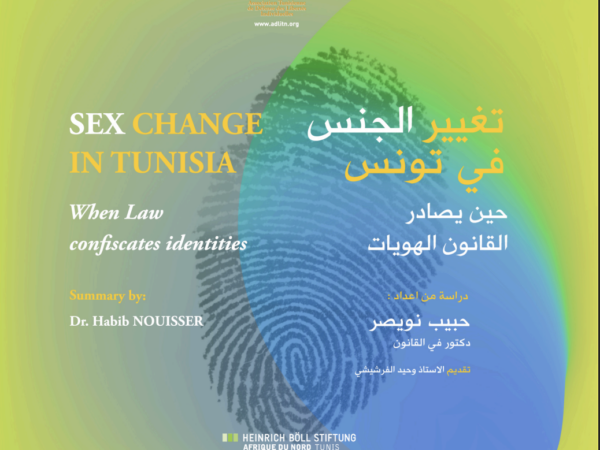
The study looked at Tunisian legislation regarding gender identity. The author writes that Tunisian law views gender as a binary, meaning it does not cater for people who undergo gender-affirming surgery, condemning them to discrimination based on identity documents that do not reflect their bodily realities and gender identities (pages 4-5).
The author continues, the law
“confines the person concerned to a legal status which restricts his/her most fundamental rights as an indication and not limited to his/her basic right to identity, his/her right to enter marriage and found a family, his/her right to individual liberty, his/her right to respect for the dignity of his/her person [… and] his/her body” (page 6).
According to the study, legislation allows changes to legal sex if it is “justified by a vital necessity, with a curative purpose” and not on the basis of “modifying the initial sex” (page 7). This would seem to indicate, although the study does not explicitly say so (possibly due to the article being written in Arabic and translated into English), that Differences of Sexual Development, or intersex characteristics, would be a legally acceptable reason to amend one’s legal sex as it would be “curative” in removing any sexual physical ambiguities and make it easier to place an individual in the legal binary of male and female.
The study also discusses the reliance on religion within the justice framework, with gender identity being seen as a Western world “cultural identity”, and contrary to the teachings of the Quran (pages 7-8).
“There are no doctors who can do the surgeries for us here, maybe some plastic surgeons would do the top surgery [breast augmentation or removal], but it is very costly. I traveled to Egypt in 2015 after some friends there connected me with doctors who did the operation for me in their private clinic.”
Noralla also writes that access to general healthcare is often denied to trans people, and that they have been harassed by healthcare workers. A trans man interviewed by Noralla said,
“When I get sick, I would rather sleep it away than go to a hospital. Every time I go I either get mocked or cursed at and often do not even receive the treatment I need.”
Noralla reports that trans people not being able to access identity documents that reflect their gender leads to discrimination. A trans man said that
“For me, the biggest problem is the mismatch between my papers and my gender identity. I cannot get a job, and this impacts all the other aspects of my life.” He added, “The basis of our problems is the lack of economic empowerment. If we get jobs, we can make money and then undergo the operations or travel abroad.”
In concluding the article, Noralla writes:
“Tunisia [is party] to international human rights treaties, including the International Covenant on Civil and Political Rights (ICCPR), and the International Covenant on Economic, Social, and Cultural Rights (ICESCR), which emphasize the protection of human rights regardless of gender identity or sexual orientation. The UN Human Rights Committee, which monitors compliance with the ICCPR, and the Committee on Economic, Social and Cultural Rights have made clear that countries are prohibited from discriminating based on sexual orientation or gender identity in upholding the rights set forth in the respective treaties. CESCR General Comment No 14 states that the right to healthcare is fundamental and calls on member states to ensure access to healthcare without discrimination. CESCR General Comment No 4 emphasizes the right to adequate and safe housing.
In view of the documented violence transgender people face by security forces, the authorities in Egypt, Lebanon, and Tunisia should ensure that transgender people have equal access to legal protections and complaint mechanisms to report violations against them.”
2018 — Study on Trans Rights Published, Tunisia In 2018, Heinrich-Böll-Stiftung published a report on trans rights in Tunisia by Dr Habib Nouisser, titled ‘Sex Change in Tunisia: When Law Confiscates Identities.’ According to the study, “the Tunisian judiciary systematically refuses requests to change gender markers in cases in which people have undergone sex reassignment […]
20 January 2018 — Founding of Dynamique Trans (Trans Dynamics), Morocco
Founded on 20 January 2018 by Salma Alaoui, Adam Cherifi and Zeyne Oulmakki, Dynamique Trans (Trans Dynamics) works primarily with trans people in Morocco, including non-binary, gender non-conforming, and intersex individuals — especially those from underrepresented communities. This includes trans migrants and refugees living in Morocco, who are among the most affected by systemic marginalisation, legal precariousness, and social violence.
Visão
Dynamique Trans envisions a world where all trans, non-binary, gender non-conforming, and intersex individuals — especially in Morocco and across the Global South — can live in safety, dignity, and freedom. The organisation believes in full bodily autonomy, gender self-determination, and the collective right to thrive beyond systemic oppression, colonial legacies, and gender-based violence. Their vision is rooted in intersectional feminist, anti-imperialist, and anti-capitalist politics. Dynamique Trans is committed to building non-mixed, self-organised spaces led by the most marginalised. They draw strength from our histories of resistance and honour the struggles of those who came before us.
Missão
The organisation’s mission is to affirm the right of every person to define their identity, access care without stigma or discrimination, and participate in building liberatory futures. Dynamique Trans exists to strengthen the self-organised power, safety, and wellbeing of trans, non-binary, gender non-conforming, and intersex individuals in Morocco. They work to build autonomous, non-mixed spaces by and for those most affected by gender-based oppression and systemic injustice. Through peer-led accompaniment, community care, legal and psychological support, knowledge production, and grassroots advocacy, they aim to resist marginalisation and reclaim collective agency.
Objectivos
To create safe, non-mixed community spaces for trans, non-binary, and intersex individuals to organise, heal, and thrive.
To provide accessible and stigma-free legal, psychological, and gender-affirming support services tailored to the needs of trans communities in Morocco.
To reduce health and safety risks for trans people through harm reduction practices and peer-led accompaniment.
To promote collective wellbeing and mental health within trans and intersex communities through care-centred, trauma-informed approaches.
To strengthen community knowledge and resistance through popular education, training sessions, and critical knowledge production led by those directly impacted.
To engage in grassroots advocacy against legal, institutional, and societal transphobia, and to support campaigns for justice, dignity, and systemic change.
Áreas de incidência
Gender-affirming healthcare and hormone journey accompaniment, with a focus on harm reduction and peer-led support.
Providing peer-based support, follow-up, and harm reduction strategies around gender-affirming care and hormone journeys.
Sexual and reproductive health and rights (SRHR), including safe and informed access to trans-inclusive SRH services.
Legal support and documentation assistance for trans people facing discrimination, administrative barriers, or violence.
Psychological and mental health support tailored to trans and intersex realities.
Community care and collective wellbeing, including healing spaces and emotional solidarity.
Popular education and political training through workshops, community gatherings, and knowledge-sharing sessions.
Research and critical knowledge production centering trans and intersex voices from Morocco.
Grassroots advocacy and campaigning for gender justice, bodily autonomy, and systemic change.
20 January 2018 — Founding of Dynamique Trans (Trans Dynamics), Morocco Founded on 20 January 2018 by Salma Alaoui, Adam Cherifi and Zeyne Oulmakki, Dynamique Trans (Trans Dynamics) works primarily with trans people in Morocco, including non-binary, gender non-conforming, and intersex individuals — especially those from underrepresented communities. This includes trans migrants and refugees living […]
17 February 2018 — Historic Meeting with Trans Members of the Deaf Community and Publication of ‘(Trans)lation?: Experiences of the Deaf Transgender Community in South Africa’ Report, South Africa
17 February 2018 — Historic Meeting with Trans Members of the Deaf Community and Publication of ‘(Trans)lation?: Experiences of the Deaf Transgender Community in South Africa’ Report, South Africa
On 17 February 2018 by Iranti hosted a historic meeting with trans members of the South African Deaf community. The resultant report, ‘(Trans)lation?: Experiences of the Deaf Transgender Community in South Africa’, aimed to fill the gap in research on and knowledge about Deaf trans and LGBTQIA+ members of South African society. The Report covers the following Deaf trans advocacy issues in South Africa:
Healthcare
Sexual and mental health
Trans-specific healthcare
Access to justice and the State
From the Report:
“The emergence of Deaf people as visible members of the transgender community is relatively recent. In light of this very little research is available. Much of the work in this report then draws on work with transgender people; work with Deaf people and Deaf LGB/gay research, in an effort to fill some of this gap. It must be noted from the outset that this is far from ideal and that much more work needs to be done globally to address the absence of knowledge regarding the needs of LGBTIQA+ people who are deaf and/or have disabilities. It is widely agreed, as this report will attest to, that there is a distinct lack of visibility of Deaf transgender people globally. In turn, this has meant a limited availability of what is referred to as ‘survival literature’ -‐ any form of published academic, creative or visual material that validates existence. This is particularly severe when it comes to the public visibility of Deaf transgender people of colour.
This report begins by outlining Deaf transgender advocacy as it currently stands globally, followed by a mapping of the situation as it currently stands for Deaf LGBTQIA+ and transgender South Africans. With this background in place the report unpacks the Saturday meeting between Iranti and members of South Africa’s Deaf transgender community. This is followed by an overview of Deaf advocacy in Africa and then Deaf transgender advocacy in South Africa specifically. The report then provides an overview of key issues, possibilities for future advocacy efforts and suggestions for immediate changes that might be made. Finally the report highlights some key concerns at the intersections of transgender and Deaf advocacy particularly regarding language and depathologisation.”
17 February 2018 — Historic Meeting with Trans Members of the Deaf Community and Publication of ‘(Trans)lation?: Experiences of the Deaf Transgender Community in South Africa’ Report, South Africa On 17 February 2018 by Iranti hosted a historic meeting with trans members of the South African Deaf community. The resultant report, ‘(Trans)lation?: Experiences of the […]
22 March — August 2018: First Exhibition of Work By and About Trans Sex Workers in a National African Gallery — InterseXion Exhibition, Iziko National Gallery, South Africa
22 March — August 2018: First Exhibition of Work By and About Trans Sex Workers in a National African Gallery — InterseXion Exhibition, Iziko National Gallery, South Africa
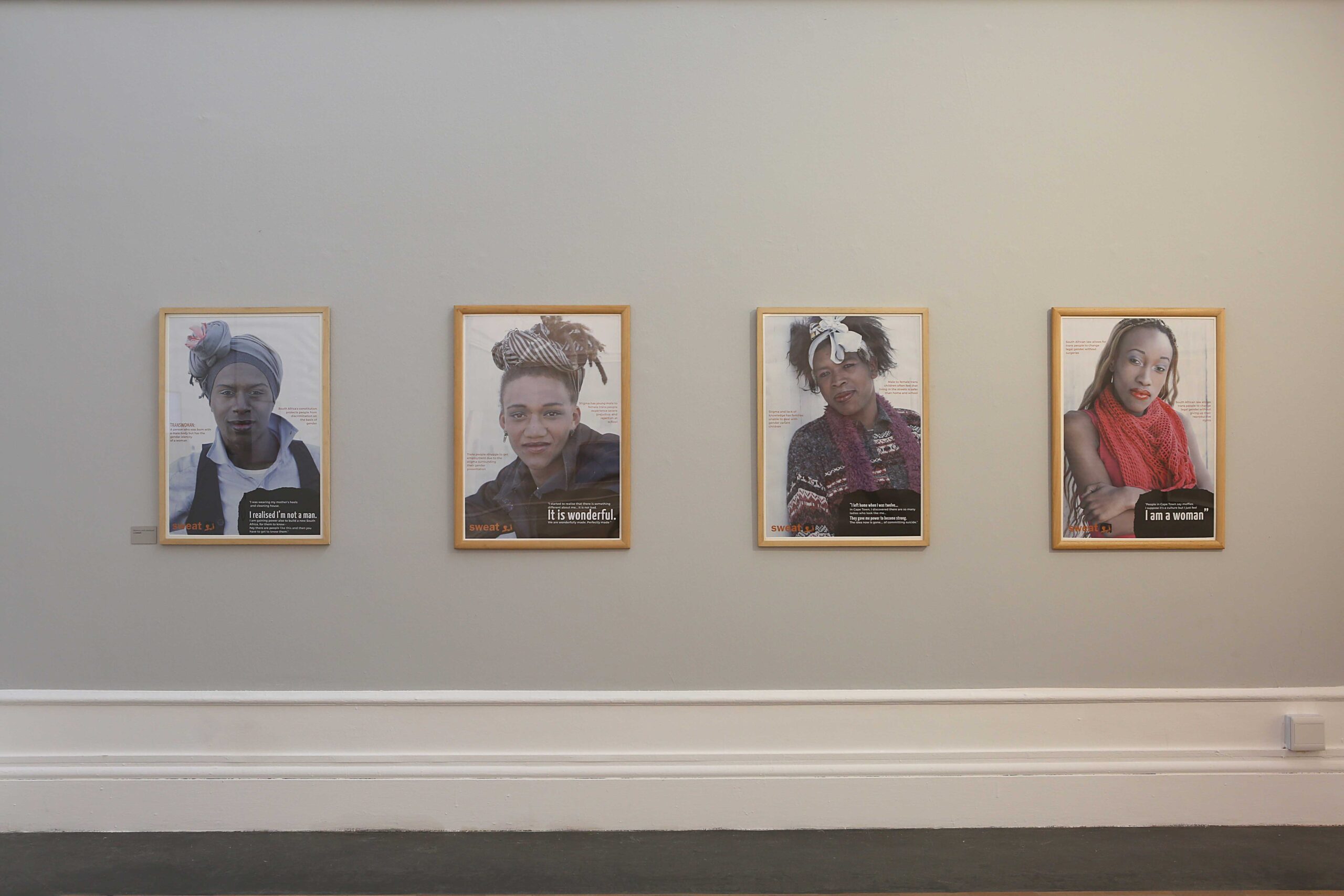
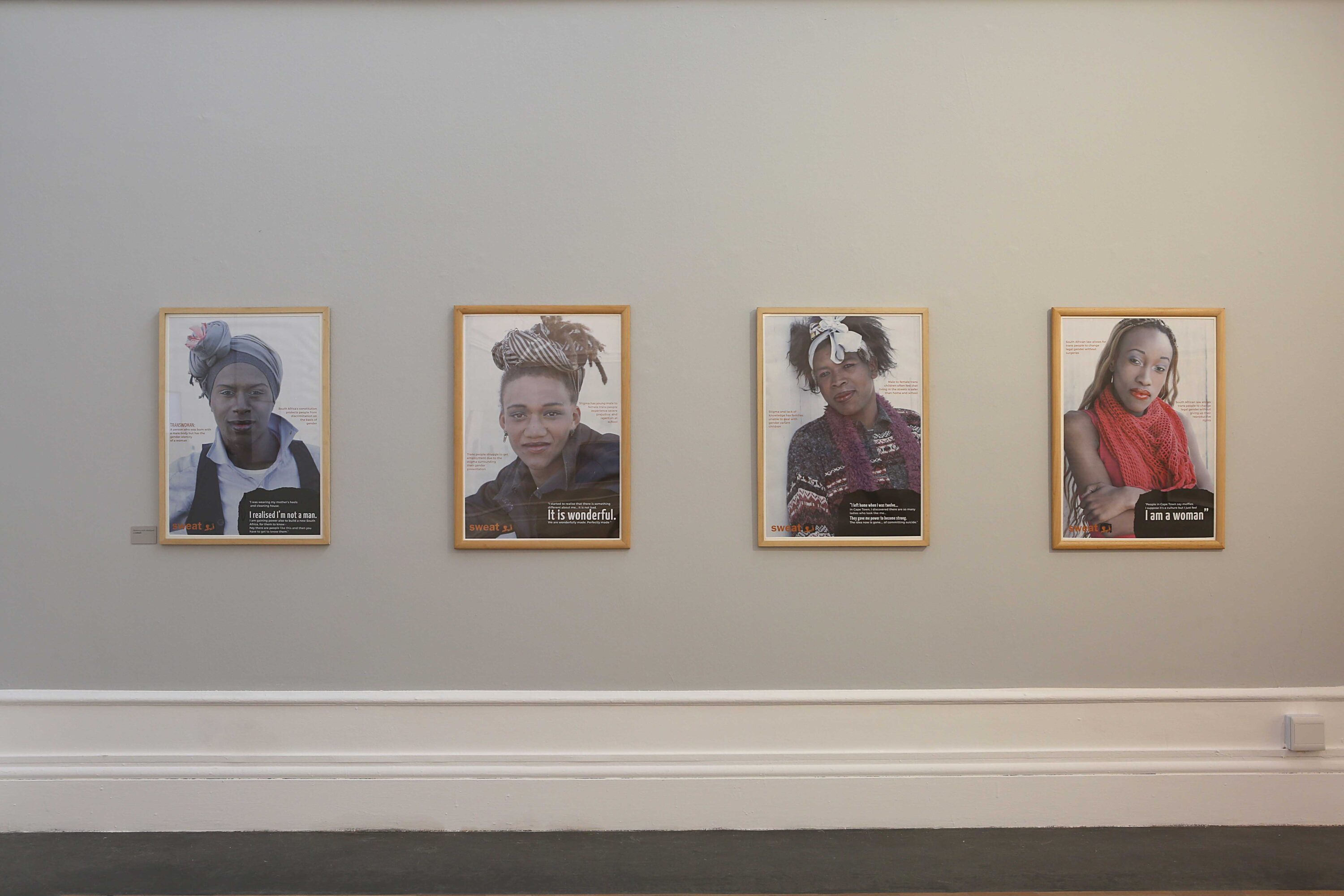
Robert Hamblin, in collaboration with Leigh Davids and members of SistaazHood, held the InterseXion exhibition, which opened at the Iziko South African National Gallery on 22 March 2018. This was a landmark event and a pivotal moment in the South African art world as it was the first time that a National Gallery showed work by and about trans sex workers. The exhibition was on show for five months from March through to August 2018 and consisted of voice and video installations as well as photographic images.
“InterseXion was a body of work consisting of performance photographs and voice works created with The Sistaaz Hood support group for trans sexworkers at the organisation SWEAT. It took almost seven years of support group meetings, explorations of feminisms and making decisions on how to work in ways that decolonised methods traditionally used to document communities. In that work I had to explore my own identity in contrast to the group members. The work was personal in the storytellings but we also looked at ourselves as representing the divides that existed between myself as a white male presenting privileged person and their own range of feminine and black identities also framed by class.” – Robert A. Hamblin
“InterseXion is a body of photographic images, voice and video installations pertaining to sex workers in South Africa, in particular feminine identified transgender sex workers. Photographer Robert Hamblin has collaborated with sex work activist Leigh Davids to photograph and interview transgender women who sell sex. To engage with the subject from multiple perspectives, Hamblin pertinently inserts himself into some of the works with Davids. Presenting the intersection of gender, sex and class from the perspective of trans people acts as a lens to consider the power consequences of how bodies present in society.” — Iziko Museum
“Hamblin’s InterseXion unfolds in three series’, The SistaazHood, Diamond Town Girls and the installation Intersections. This exhibition is centred on the artist’s photographic images, voice and video installations pertaining to sex work in South Africa, in particular work with transgender women (male to female) who sell sex. Through this thought provoking and compelling exhibition, Hamblin joins an active and ongoing debate around the decriminalisation of sex work in South Africa and the social-political issues surrounding individuals in the industry, wherein transgender women are described as the most vulnerable populations.
A narrative that Hamblin continues to explore through his work is that of the complexities around sex work in South Africa. Since 2011, Hamblin has been producing bodies of photographic work with trans women sex workers. He has done so because of an interest in the subject matter, but also in an attempt to present their experiences as a macro reflection of the fault lines in society. How do we as privileged persons intersect with sex worker’s lives and how are we directly and inadvertently implicated in their struggles? How does his own trans identity as a privileged person contrast with that of a homeless trans sex worker?
His interest in the conceptual potential of the subject matter was evoked by his involvement at the organization SWEAT (Sex Workers Education & Advocacy Task Force) in 2011. Before volunteering at SWEAT, Hamblin was a founder member and advocacy manager at Gender DynamiX, an organisation concerned with transgender rights. At SWEAT he was asked to assist a group of transgender women who worked as sex workers, to form a support group. Delving into his own knowledge and experiences as a trans person and advocate, he could assist the group with advocacy planning. Being a volunteer relieved him somewhat of the constraints of pure advocacy and during the work with these women he found the intersection for his art practice and activism. The Sistaaz Hood support group was born and their first goal was to create an art project with Hamblin. The first series of works with them carries the same name. The works aims to elicit an interest with viewers to review contrived notions of sex workers and trans people. During the collaborations with The Sistaaz Hood (Cape Town), and later the Diamond Town Girls (Kimberley), Hamblin allows his models to become co-creators of the works. “In a process of consultations with the participants, their frustrations became the portal, or the lens through which I approached this project. There was a range of issues; I came to realise that if you ever want to glean society’s perception of trans issues, or even gender issues, these participants’ lives provide a space within which such matters are severely concentrated. It is the space where gender, class and race intersect and leaves an indelible mark on the lives and bodies of these participants” Hamblin explains.”
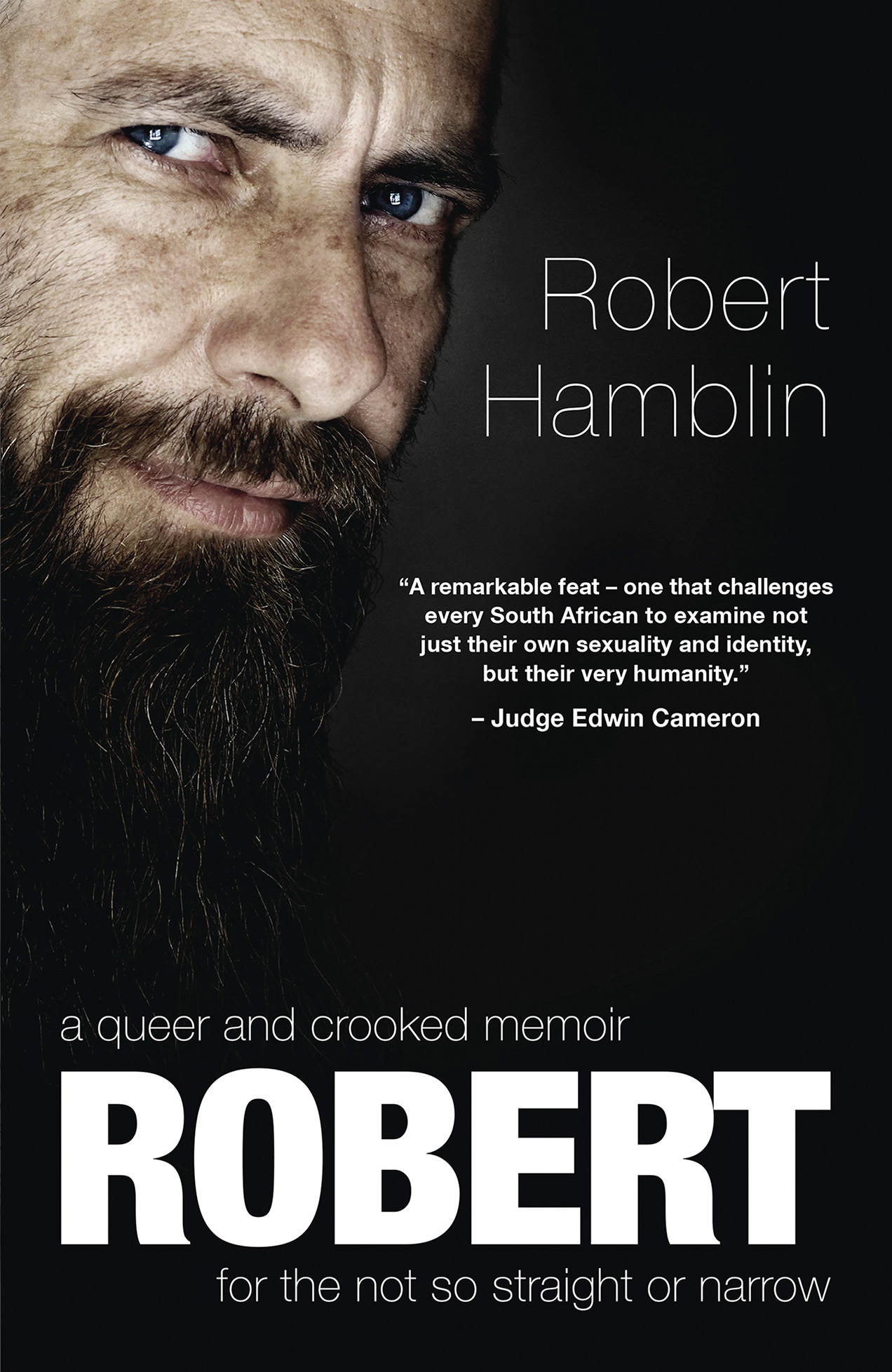
Robert A. Hamblin is an artist, published author, afab-feminist and parent. His art flounces around gender and bodily things. He seeks a reconnection with nature for queer people. His fine art work is concerned with masculinity, power, whiteness and the performance of these constructs. Hamblin’s conceptually driven, painterly photographic works have been exhibited locally and internationally. He has received critical acclaim for his compelling works that contribute to debates around body politics in a post-apartheid era. He is the published author of “Robert: A Queer and Crooked Memoir”, which Supreme Court Justice Edwin Cameron described as “A remarkable feat that challenges people to examine not just their own sexuality and identity but their very humanity.” Robert was a founding board member of Gender Dynamix, and later years the Advocacy Manager.
Watch our interview with Robert Hamblin, 27 March 2026
22 March — August 2018: First Exhibition of Work By and About Trans Sex Workers in a National African Gallery — InterseXion Exhibition, Iziko National Gallery, South Africa Robert Hamblin, in collaboration with Leigh Davids and members of SistaazHood, held the InterseXion exhibition, which opened at the Iziko South African National Gallery on 22 March […]
2 May 2018 — Founding of Intersex Society of Zambia (ISSZ), Zambia
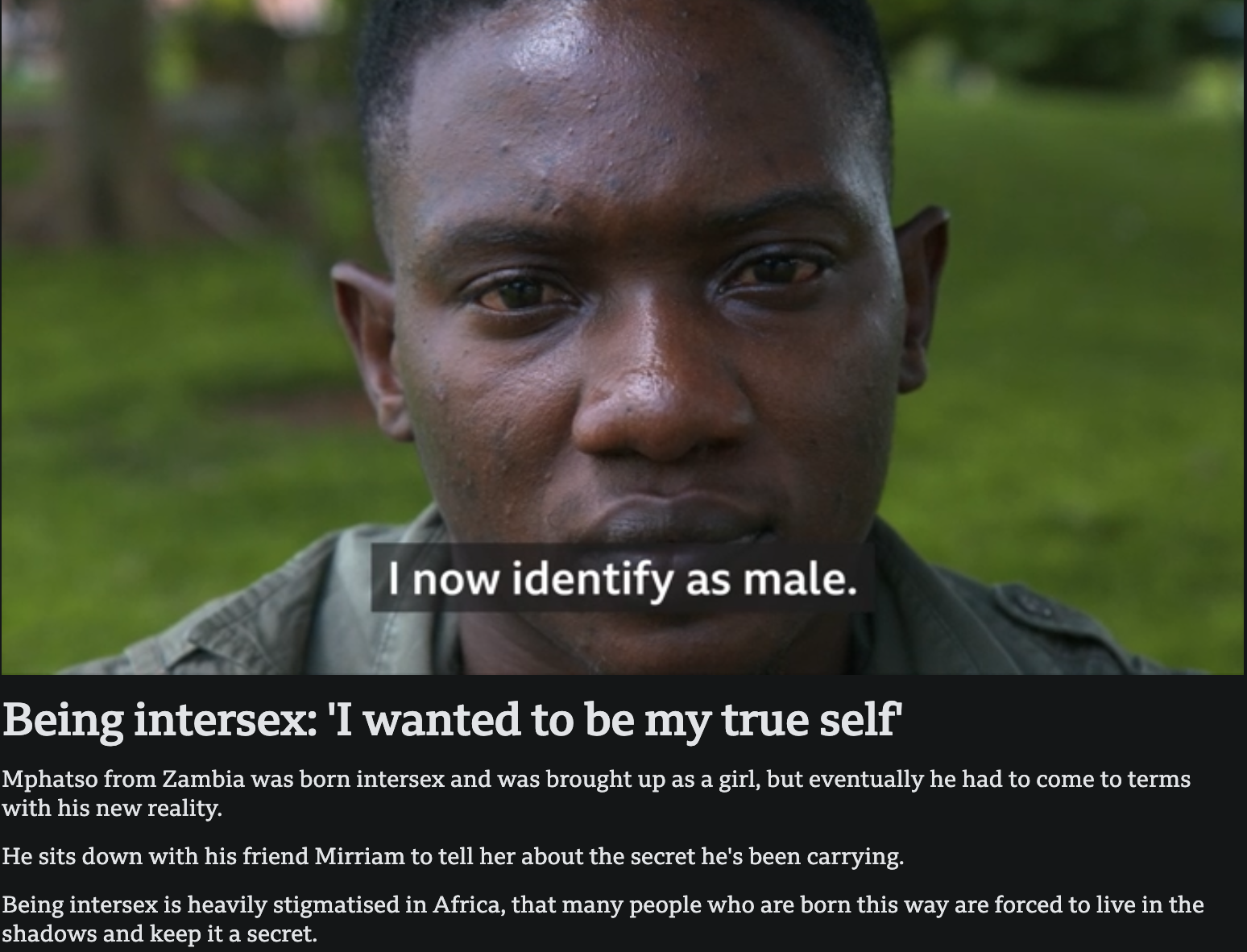
Founded by Mphatso Sakala, Intersex Society Zambia (ISSZ) is an intersex-led not-for-profit non-governmental organisation founded on 2nd May 2018. It ISSZ started its operations on 1st April 2019 and was registered on 19th May 2019. It exists to facilitate the recognition and protection of intersex people and to promote access to social, legal, political, spiritual and economic frameworks of intersex persons and transforming them into well-informed, motivated and active individuals to live a fulfilling life, achieving their dreams and contributing to their communities in Zambia and beyond its borders.
Visão
A Zambia where the rights of intersex persons are upheld by all.
Missão
To promote the rights of intersex persons in Zambia for an inclusive social, legal, and policy environment through evidence-based advocacy, awareness raising, psychosocial support, rehabilitation and supporting access to economic opportunities, education and health services.
Founder and current Executive Director of ISSZ, Mphatsois a passionate Intersex activist and human rights defender. They have played an active role in intersex activism in Africa since 2017 and are passionate and committed to intersex human rights advocacy and documentation. They have taken a leadership role in the formation of the African Intersex Movement (AIM), which brings together intersex activists and persons from across Africa and Mphatso currently sits on the AIM steering Committee as a Co-Chair. They have also contributed to several regional and global intersex spaces.
They are a Young African Leaders Initiative (YALI) Southern Africa (SA) Civic Leadership Alumni 2017, Rainbow Advocacy Program Fellow 2018 and Human Rights Defender Advocacy Program Fellow 2019 and a consultant on Intersex People and Sex Characteristics issues. A Computer and Network Engineer by profession and currently pursuing a Bachelor’s degree in Development Studies and Psychology, they are fervent about human rights work, especially the rights of intersex persons (children, adolescents and adults), children and marginalised groups.
What inspired you to start ISSZ instead of joining an existing intersex organisation, if there was one in Zambia at the time?
“I first worked for an organisation that advocated for trans and intersex rights but I later noticed a gap in the programming, especially around intersex children. If you are very keen in intersex activism, you will realise that organisations that work with minority groups usually avoid working with children because they do not want to be accused of recruiting them into homosexuality, which is a misleading notion that is not true but is still a narrative that exists in our society. This gap clearly affects the intersex babies whose identity questions begin at birth! My exact thoughts were “what happens to intersex babies and children between the time they are born until the time they reach puberty or the age of 16 or 18 to discover themselves?” This is what provoked me to start ISSZ, an intersex specific organisation that could encompass the welfare of intersex people from infancy, through childhood, youth to their adulthood.”
How did you identify the specific needs or issues of the intersex community that ISSZ addresses?
“It was through a combined effort of strategies. I specifically had the privilege of travelling to Uganda to learn from pioneer organisations like SIPD (Support Initiative for People with Atypical Sex Development) to understand intersex programming and organising. This helped me identify the stakeholders in Intersex rights advocacy and on travelling back to Zambia, I engaged intersex persons and mothers of intersex children in order to understand their own experiences beyond mine. I also did a lot of reading, research and consultations. This helped me form interventions around the unique needs and challenges of the intersex people in Zambia.”
Were there any role models or mentors who influenced your decision to start ISSZ?
“Yes, I was mentored by Julius Kaggwa, the founder of SIPD Uganda and my late doctor, Prof. James Chipeta.”
Can you describe the initial steps you took to turn your idea into a reality?
“When I realised the gaps around intersex organising in Zambia, my first step was to talk to the organisation that I was working with at the time to explain why I was leaving at the end of my contract. It was important for me to maintain a good working relationship with them. I then identified some of the main goals I wanted to achieve if I was to found an intersex-specific organisation. Exploring the change that I wanted to see in Zambia, the bigger picture, that is the vision, I also engaged with and learnt a lot from intersex activists from around Africa and the globe, doing a situational analysis back at home to build a strong foundation that would support the intersex community in Zambia.”
Did you face any scepticism or doubt from others when you first proposed ISSZ? How did you respond?
“Many supported and encouraged me to start the organisation, however there were instances that gave me cold feet as the day came closer. The landscape around intersex activism proved to be challenging especially around funding. I debated about leaving a job that paid me a monthly salary to commit to a volunteer position. This caused a lot of scepticism but I decided to focus on the good that the organisation would bring.”
What values or principles guide your organisation’s work?
“The organisation is guided by confidentiality, transparency and accountability, compassion, commitment, responsibility, tolerance and team work.”
How do you involve the community in the planning and implementation of ISSZ projects?
“We usually make sure that our programming is informed by the community we work with through the peer and parents’ support groups meetings that we hold monthly. These help inform our work by providing valuable local knowledge and insights into the communities’ dynamics and keep it tailored to the needs of our community.”
Have you collaborated with other organisations or individuals to further your mission? If so, how?
“The intersex community has a number of stakeholders and this has enlarged our collaborations as well. We’ve collaborated with media institutions to create visibility and help in shaping opinions and narratives on intersex persons. We have also closely worked with organisations that offer skills development programmes. We have worked with religious groups, government ministries like the ministry of health, Civil Society Organisations and partners beyond Zambia as well. We have worked with Institutions like the Kenya National Commission on Human Rights (KNCHR). Our collaborations also includes intersex-led organisations from around Africa and the World.”
What do you think sets ISSZ apart from others working in the same field?
“Community involvement is a priority for us and this has fostered community ownership of the organisation.”
Looking back, what are you most proud of accomplishing with ISSZ so far?
“I can talk about three accomplishments. One was the privilege of being able to contribute in the advocacy efforts that led to the adoption of the Resolution 552 to promote and protect the rights of Intersex persons in Africa by the African Commission on Human and People’s Rights in Africa. The second is having initiated the development of a management protocol for intersex persons — one that will hopefully be reviewed and adopted by the Zambian Ministry of Health very soon. Lastly is being able to conduct a legal and policy review as an organisation with support from other stakeholders, which shows the gaps in the law when it comes to inclusion of intersex persons.”
Interview conducted by Delphine Barigye, our Intersex Content Contributor
“Being intersex: I wanted to be my true self” (2019) — Short documentary about Mphatso Sakala, produced by BBC Africa’s Life Clinic
2 May 2018 — Founding of Intersex Society of Zambia (ISSZ), Zambia Founded by Mphatso Sakala, Intersex Society Zambia (ISSZ) is an intersex-led not-for-profit non-governmental organisation founded on 2nd May 2018. It ISSZ started its operations on 1st April 2019 and was registered on 19th May 2019. It exists to facilitate the recognition and protection […]
September 2018 — Founding of Intersex Community Trust, Zimbabwe
Intersex Community Trust was founded in September 2018 by Betha Tsitsi Ndabambi, an intersex woman who identified the issues faced by intersex Zimbabweans in her works as a journalist and community navigator. In Zimbabwe intersex issues have progressively emerged as relevant to fundamental rights protection. However, they are still largely treated as medical issues falling outside the scope of public scrutiny. The organisation focuses its work in the peri-urban areas and rural areas in Harare, Mashonaland East and Manicaland.
Visão
A created space where members of the intersex community can find healing, connection, self-exploration and education. Intersex Community Trust Zimbabwe envisions a space that challenges oppression in its forms.
Missão
To provide an inclusive, safe space with a raised voice committed to a continued process of understanding and challenging all forms of oppression. The Intersex Community Trust Zimbabwe is a dynamic, responsive organisation that serves by providing a growing spectrum of programs, resources, outreach and advocacy.
Values
Intersectionality: Understanding that community members who hold multiple marginalised identities are exponentially impacted by multiple systems of oppression.
Critical love: The organisation’s work utilises a love ethic informed by family values. The organisation understands that this love ethic will require compassion, challenges and support.
Inter-dependence: Engaging in resource sharing and disrupting oppressive notions of professionalism, productivity and individualism.
Images from the organisation’s Facebook page
Current Work
An established taskforce that oversees identification, vetting and registration of intersex identifying individuals. This is being achieved through our social media platforms, the local radio stations, healthcare workers, other stakeholders and fellow community members.
Donations and distribution of resources to the marginalised and limited community members.
Lobbying for the hormonal treatments for the older intersex individuals to achieve their reality.
Documenting the lived realities of the intersex community through visual recordings, pictorial, story writing and audio for strengthened advocacy in order to come up with evidence based programming, capacitating and strengthening.
Creating a stakeholders database in order to create conversations in line with the Sustainable Development Goals, National Gender Policy and The Declaration of Human Rights.
Currently working on being adopted as a member of the Zimbabwe Lawyers for Human Rights and ZimRights.
September 2018 — Founding of Intersex Community Trust, Zimbabwe Intersex Community Trust was founded in September 2018 by Betha Tsitsi Ndabambi, an intersex woman who identified the issues faced by intersex Zimbabweans in her works as a journalist and community navigator. In Zimbabwe intersex issues have progressively emerged as relevant to fundamental rights protection. However, […]
14 December 2018 — Publication of a Report on the Prevalence of Intimate Partner Violence Among Trans and LBQ Persons, Uganda
On 14 December 2018, the report, ‘Prevalence of Intimate Partner Violence (IPV) Among LBTQ/WSW Persons in Uganda’, was published by Fem Alliance Uganda (FEMA).
The report covered 6 districts (Kampala, Mbale, Malaba, Mbarara, Kasese and Lira) in all of the regions of Uganda and looks at IPV and mental health, the impact of alcohol and substance use, the adequacy of protection measures, and misconceptions regarding IPV. The final chapter focuses on consent and sexual violence, the value of informal support systems, access to services, strategic heterosexuality, the impact of alcohol and drug use, and mental health / suicidality.
The breakdown of the percentage of trans participants vs. LBQ participants per region is as follows:
14 December 2018 — Publication of a Report on the Prevalence of Intimate Partner Violence Among Trans and LBQ Persons, Uganda On 14 December 2018, the report, ‘Prevalence of Intimate Partner Violence (IPV) Among LBTQ/WSW Persons in Uganda’, was published by Fem Alliance Uganda (FEMA). The report covered 6 districts (Kampala, Mbale, Malaba, Mbarara, Kasese […]
2019 — Founding of Feminist Inclusion Leadership Center (FIL-Center), Uganda
The Feminist Inclusion Leadership Center (FIL-Center), a transfeminist NGO working for black trans, gender diverse and LBQ rights in Uganda, was founded in 2019, with active implementation of the organisation beginning in 2022 and registration in 2023. FIL-Center was founded by Samantha Jordans (Executive Director), Ms Brendah (Human Rights Advocate) and Sheila Makeyline (SRHR Advocate). The organisation began as a direct response to the growing challenges posed by hostile legislation, such as the Anti-Homosexuality Law and the Sexual Offenses Bill, which intensified the vulnerabilities of queer individuals and disadvantaged women.
Visão
FIL-Center envisions a more just and peaceful world where everyone is able to realise their autonomy, dignity and equity/equality.
Missão
A commitment to intersectional grassroots activism, actively engaging with various issues and strategies to promote feminist ideals, foster societal transformation, eradicate discrimination, and secure equal rights for trans and gender diverse groups across all dimensions of social, political, and economic life.
Areas of Work
Advocacy for gender equity/equality: To promote and protect the rights of LBQ and trans individuals through sustained advocacy efforts, challenging discriminatory laws, and raising awareness about gender issues, building a history in the community which will be used by future advocates.
Education and empowerment: To increase the accessibility of comprehensive education and vocational training programmes that equip trans and gender diverse individuals with skills and knowledge necessary for personal development and economic independence.
Healthcare access: To ensure that all individuals, particularly those from marginalised communities, mostly trans communities, have access to inclusive and gender-affirming healthcare services, including sexual and reproductive health rights (SRHR).
Support and safety: To establish support systems and safety programmes that address the immediate needs of LGBTQ+ individuals facing crises, such as evictions, violence, and discrimination, while promoting mental health and well-being.
Capacity building: To strengthen the capacities of key populations and queer-led organisations through training, mentorship, and resources, fostering a network of empowered advocates for social justice.
Collaboration and solidarity: To build partnerships with other organisations, coalitions, and community stakeholders to create a united front for advancing human rights and inclusion for all marginalised groups.
Images from FIL-Center’s Facebook page
Programmes
Healthcare access: Facilitating of gender-affirming healthcare services, including hormone therapy, primary information and surgery recommendations, as well as SRHR services.
Mental health support: Counselling and support spaces to address the unique challenges and stressors of the trans, gender diverse and LBQ community.
Advocacy and representation: Advocating for the rights and recognition of trans, feminist policies at local and regional (East Africa) levels.
Emergency funding: Funds to assist communities in crisis situations, including financial support for housing, healthcare and basic needs.
Educational support: Tuition assistance and adult education programmes focused on vocational skills.
Community building: Creating safe and inclusive spaces for all women and girls, as well as gender diverse communities to connect, share experiences and build supportive networks.
Empowerment and leadership development: Leadership training and capacity-building opportunities for women, girls, trans and gender diverse individuals to enhance their skills, confidence and advocacy abilities.
Through workshops and community training programmes, the FIL-Center has advocated for increased access to sexual and reproductive health rights (SRHR) among queer individuals. The organisation has collaborated with various health providers, highlighting the need for resilience and the urgent demand for policy change, while also creating safe channels for queer individuals. Its advocacy efforts have also led to successful collaborations with other organisations, amplifying the organisation’s impact and fostering solidarity within the queer community.
“As we continue to grow, we remain focused on uplifting the voices of those often silenced and ensuring that our work reflects the diverse experiences within our communities. Our story is one of resilience, hope, and the unwavering belief that everyone deserves to live authentically and safely.”
2019 — Founding of Feminist Inclusion Leadership Center (FIL-Center), Uganda The Feminist Inclusion Leadership Center (FIL-Center), a transfeminist NGO working for black trans, gender diverse and LBQ rights in Uganda, was founded in 2019, with active implementation of the organisation beginning in 2022 and registration in 2023. FIL-Center was founded by Samantha Jordans (Executive Director), […]
2019 — Founding of Trans Empowerment Initiative (TEI), Kenya
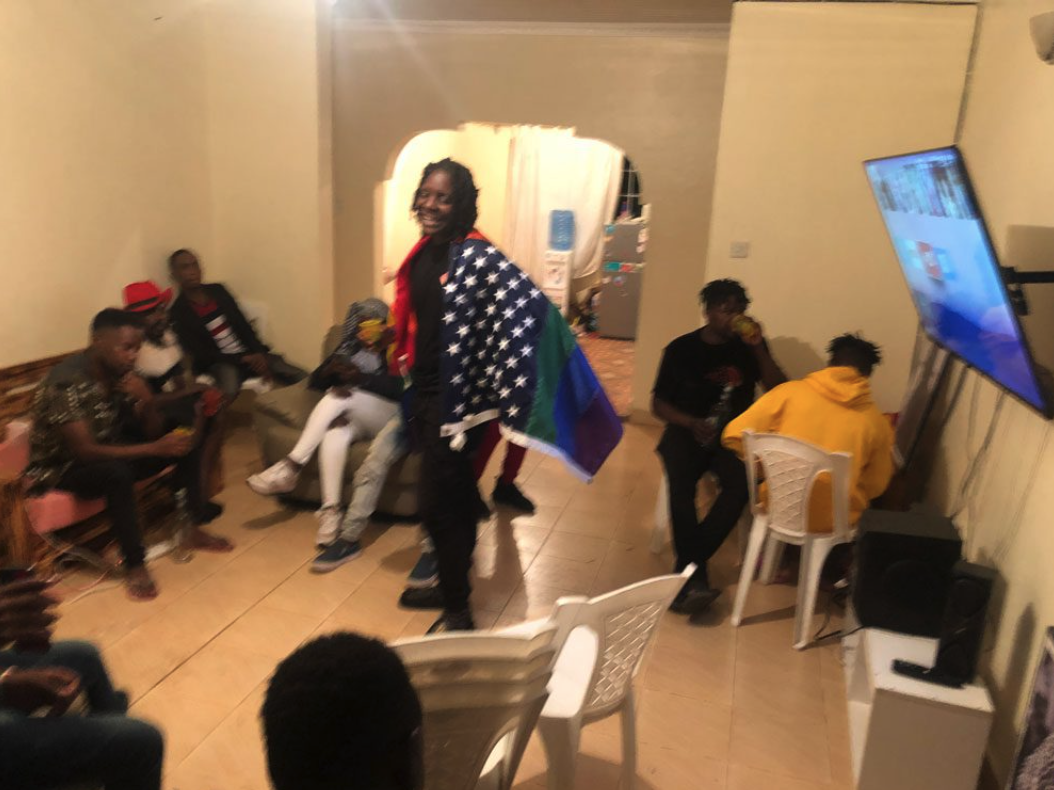
Trans Empowerment Initiative (TEI) is a community-rooted nonprofit organization based in East Africa, founded in 2019 to advance the rights, dignity and well-being of transmasculine and gender non-conforming folks. The group began its work as a small group of trans and gender non-conforming survivors of violence, displacement and systemic exclusion. From mutual aid circles to regional advocacy, TEI has evolved into a transformative force for empowerment, supporting trans men, transmasculine people, and gender non-conforming folks. The group facilitates access to gender-affirming healthcare, emergency housing, leadership development, economic skills training and community-led creative expression.
Registered as both a Community-Based Organisation (CBO) and a nonprofit in Kenya, TEI provides safety, affirmation and empowerment for those who have long been marginalised and facing layered forms of discrimination and precarity. Grounded in a survivor-centered, trauma-informed and intersectional framework, TEI champions gender diversity through a radical feminist and queer liberation lens. The organisation’s programs support health, housing, economic empowerment and human rights advocacy, ensuring that our community’s lived realities shape every decision TEI makes. TEI works to build a world where every transmasculine and gender non-conforming person can heal, lead, create and thrive.
Visão
A just and inclusive East Africa where every transmasculine and gender non-conforming person lives freely, thrives economically and expresses their identities and potential without fear or limitation.
Missão
To build resilient and affirming communities that advance the well-being and economic freedom of transmasculine and gender non-conforming people by creating inclusive spaces for care, creativity and sustainable empowerment.
Core Values
Intersectionality: TEI recognises how gender identity interacts with refugee status, class, race, ability and other lived realities, shaping the group’s holistic approach.
Radical feminism and queer liberation: TEI challenges oppressive systems and champion bodily autonomy, justice and the liberation of all gender non-conforming people.
Safety and protection: TEI creates safe physical, emotional and political spaces for transmasculine and gender non-conforming communities.
Solidarity and mutual support: TEI nurtures collective care ensuring no one faces hardship alone.
Accountability and transparency: TEI commmits to integrity, openness and trust within its community and partnerships.
Healing and resilience: The group uplifts pathways to wellness, acknowledging the strength within its communities.
Projects
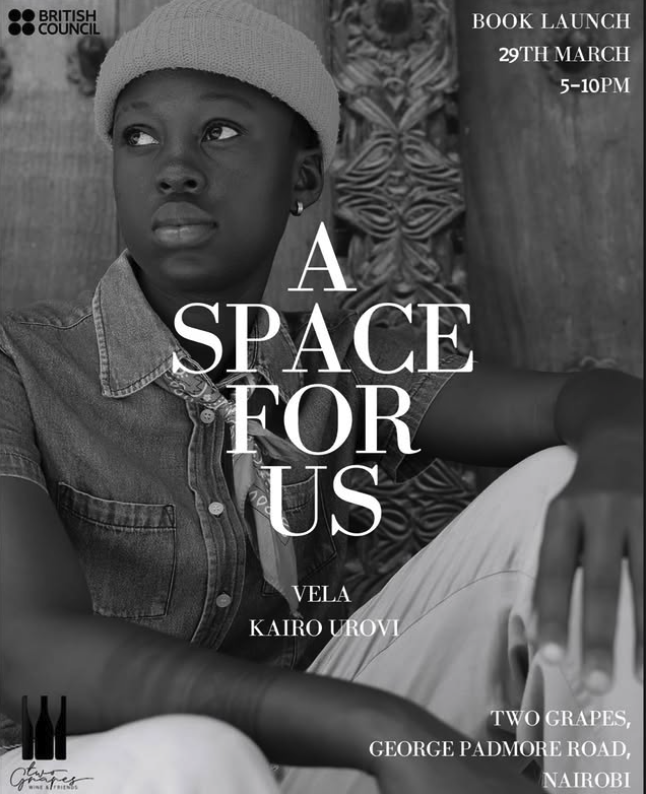
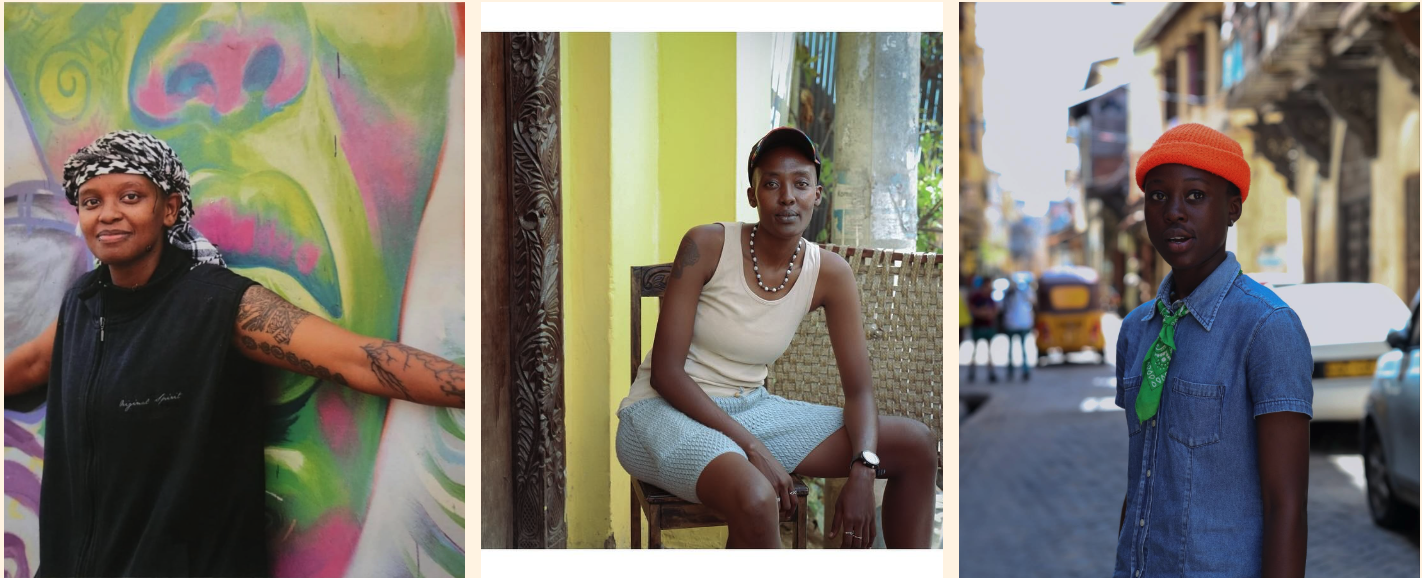
“A Space for Us”
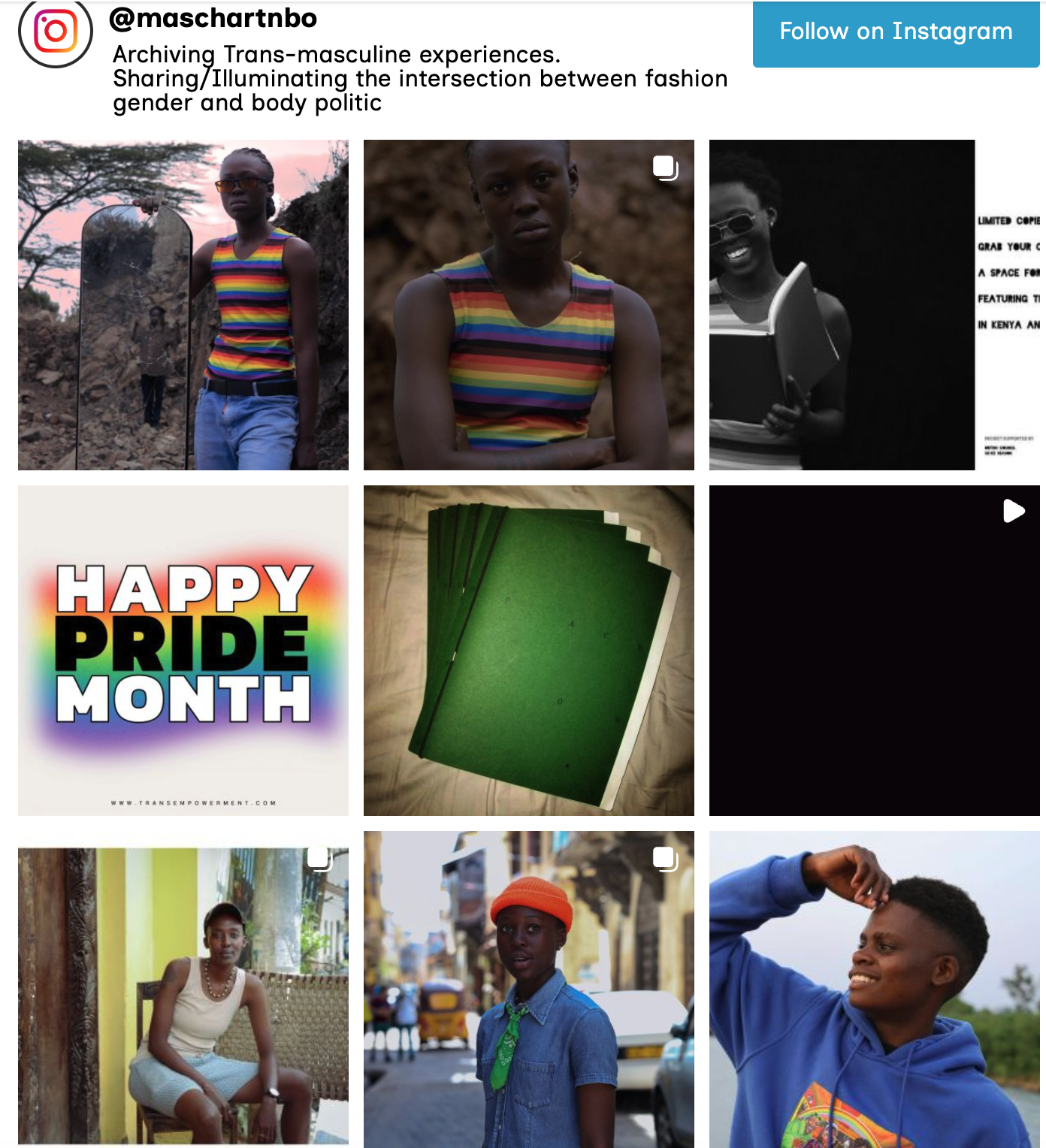
A cross-cultural photography and storytelling project supported by the British Council. It features portraits and personal narratives of transmasculine individuals from Kenya and the UK, exploring themes of identity, visibility, and belonging. Through exhibitions, guided conversations, and a print publication, the project fosters global dialogue, solidarity, and artistic expression.
Maschart — Advocacy Through Storytelling
Maschart is the visual and narrative advocacy arm of TEI, using photography, film, and storytelling to document the lives, challenges, and resilience of transmasculine individuals in East Africa. The project challenges: stereotypes and invisibility by centring on authentic voices and lived experiences, fostering empathy, understanding, and long-term social change.
Food Drive and Emergency Relief
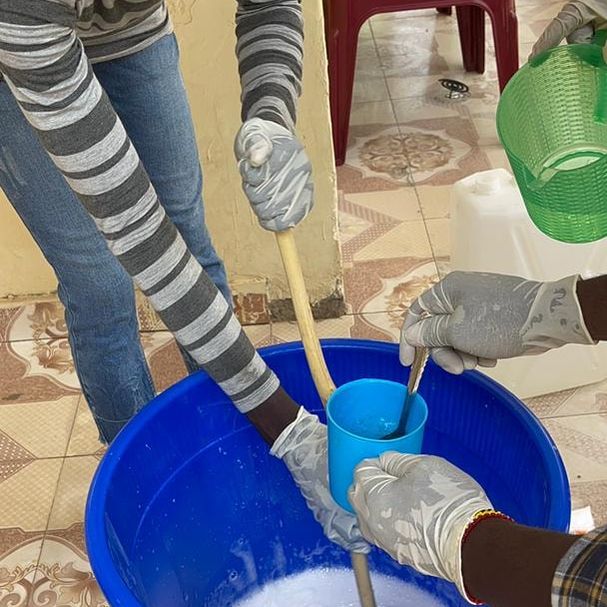
TEI’s food drive project responds to urgent needs within our community particularly during periods of displacement, crisis, or economic hardship. The group distributes essential food packages and hygiene supplies to trans and gender diverse individuals facing hunger, ensuring no one is left behind.
Mental Health and Wellness Support Groups
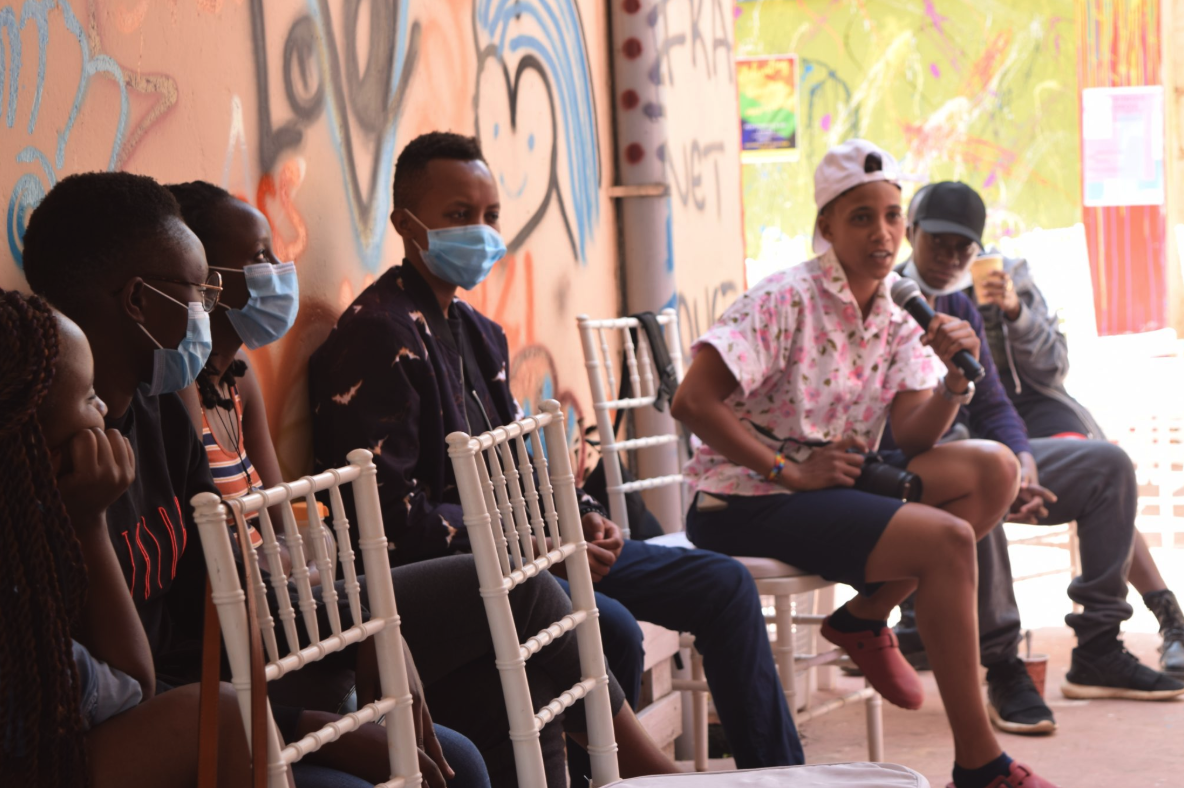
At the heart of TEI is the belief that healing is communal. Their mental health and wellness program offers peer led support groups, trauma informed care, and resource sharing sessions designed specifically for transmasculine individuals. These safe spaces foster connection, emotional support, and access to mental health professionals where possible.
Binder Drive
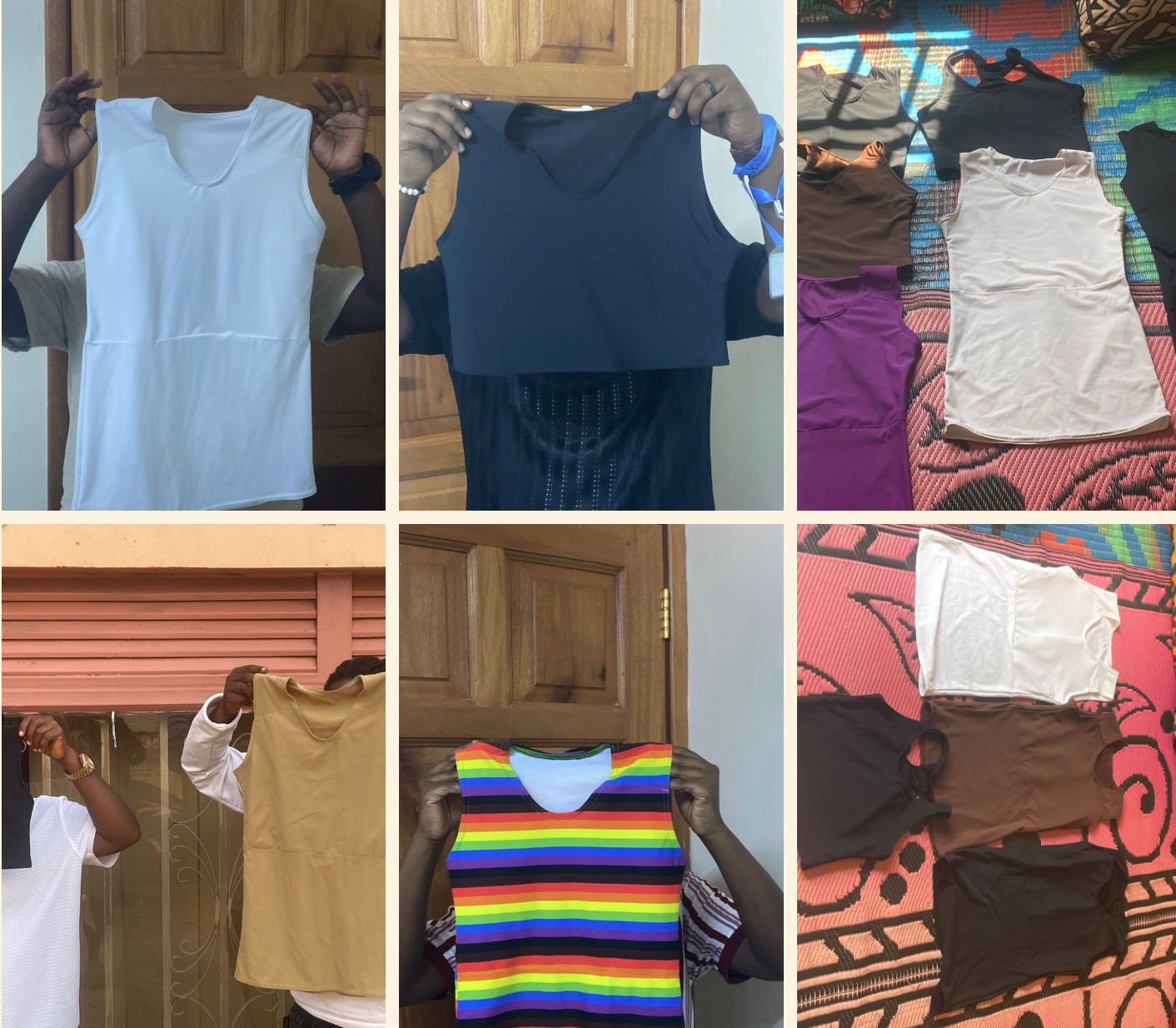
TEI’s Binder Drive initiative provides safe and affirming chest binders to transmasculine individuals across East Africa who cannot afford or access them. Through partnerships with global supporters and safe local distribution points, the group hosted three successful drives focused on dignity, health, and body autonomy. Each edition has reached dozens of individuals with life-affirming support.
Crochet and Knitting Program
This creative livelihood project provides participants with training in crochet and knitting, enabling them to produce marketable handmade items such as scarves, bags, and clothing. The initiative not only supports skill building and economic empowerment but also offers a calming, therapeutic space for expression, connection, and healing through art.
Poultry and Sustainable Farming
TEI’s poultry and farming initiative empowers transmasculine individuals with hands-on agricultural skills to support sustainable living and income generation. By creating small-scale farming systems including poultry rearing, vegetable gardening, and composting, this project strengthens food security while promoting economic independence for marginalised community members.
2019 — Founding of Trans Empowerment Initiative (TEI), Kenya Trans Empowerment Initiative (TEI) is a community-rooted nonprofit organization based in East Africa, founded in 2019 to advance the rights, dignity and well-being of transmasculine and gender non-conforming folks. The group began its work as a small group of trans and gender non-conforming survivors of violence, […]
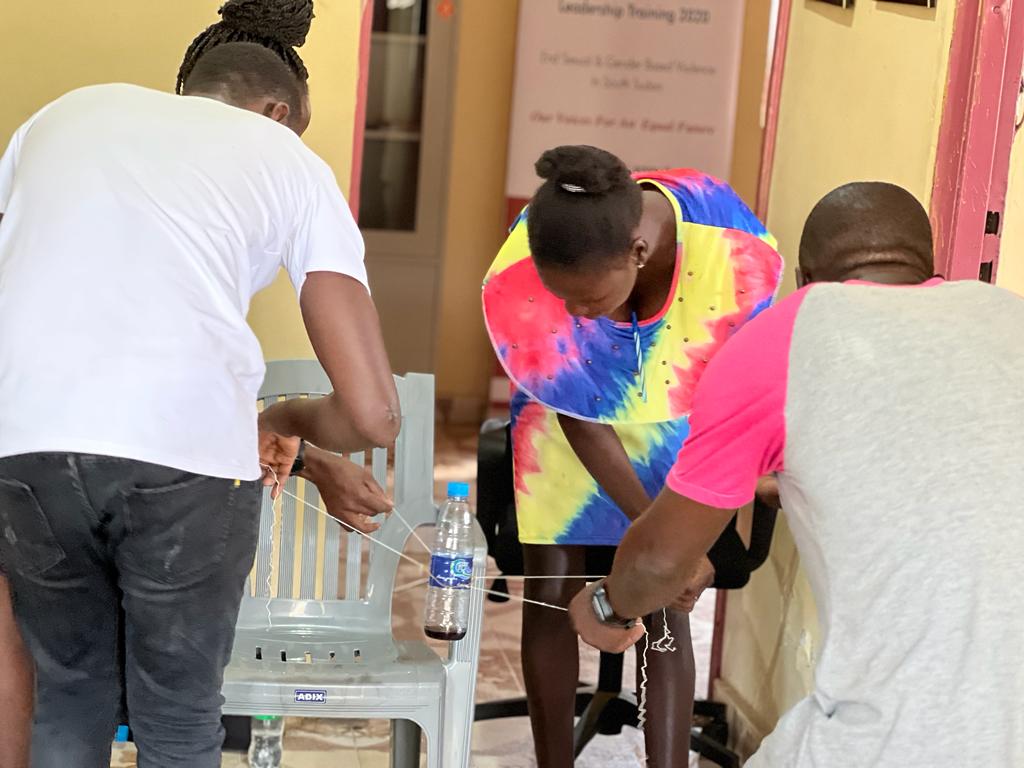
2019 — Founding of Rise Initiative for Women’s Right Advocacy (RiWA), South Sudan
Founded in 2019 in South Sudan, Rise Initiative for Women’s Right Advocacy (RiWA) works primarily with the LGBTIQ community, with a specific focus on trans women, intersex people and children, as well as youth and survivors of gender-based violence. RiWA promotes and protects the rights of LGBTIQ persons through advocacy, human rights education, psychosocial support, and leadership development. We also use sports, particularly women’s football, as a platform to empower young women and advocate for equality and inclusion. RiWA was registered in 2021.
Visão
To envisage a peaceful country offering the LGBTIQ community an opportunity to participate in the socio-economic development decisions and activities in South Sudan where they are accorded full and equal dignity without prejudice.
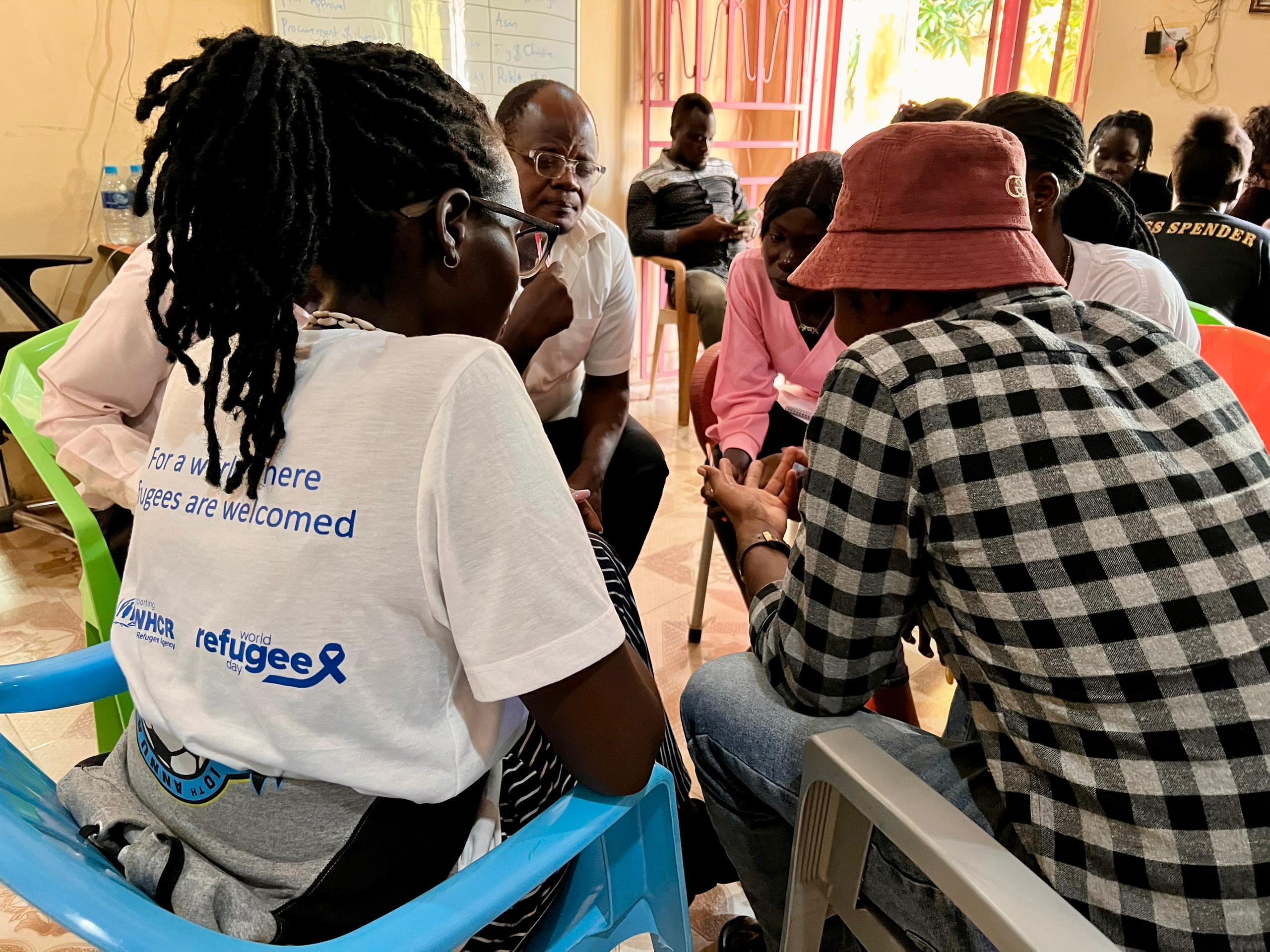
SOGI Training
Missão
To empower and amplify the voices of women, girls, and marginalised communities through human rights education, advocacy, and leadership development, fostering equality and social justice in South Sudan.
Goals/Objectives
Promote gender equality and womxn’s empowerment.
Protect and advance the rights of LGBTIQ persons and other marginalised groups.
Prevent and respond to gender-based violence through awareness and psychosocial support.
Strengthen youth leadership and participation in social change.
Use sports and creative platforms for community mobilisation and advocacy.
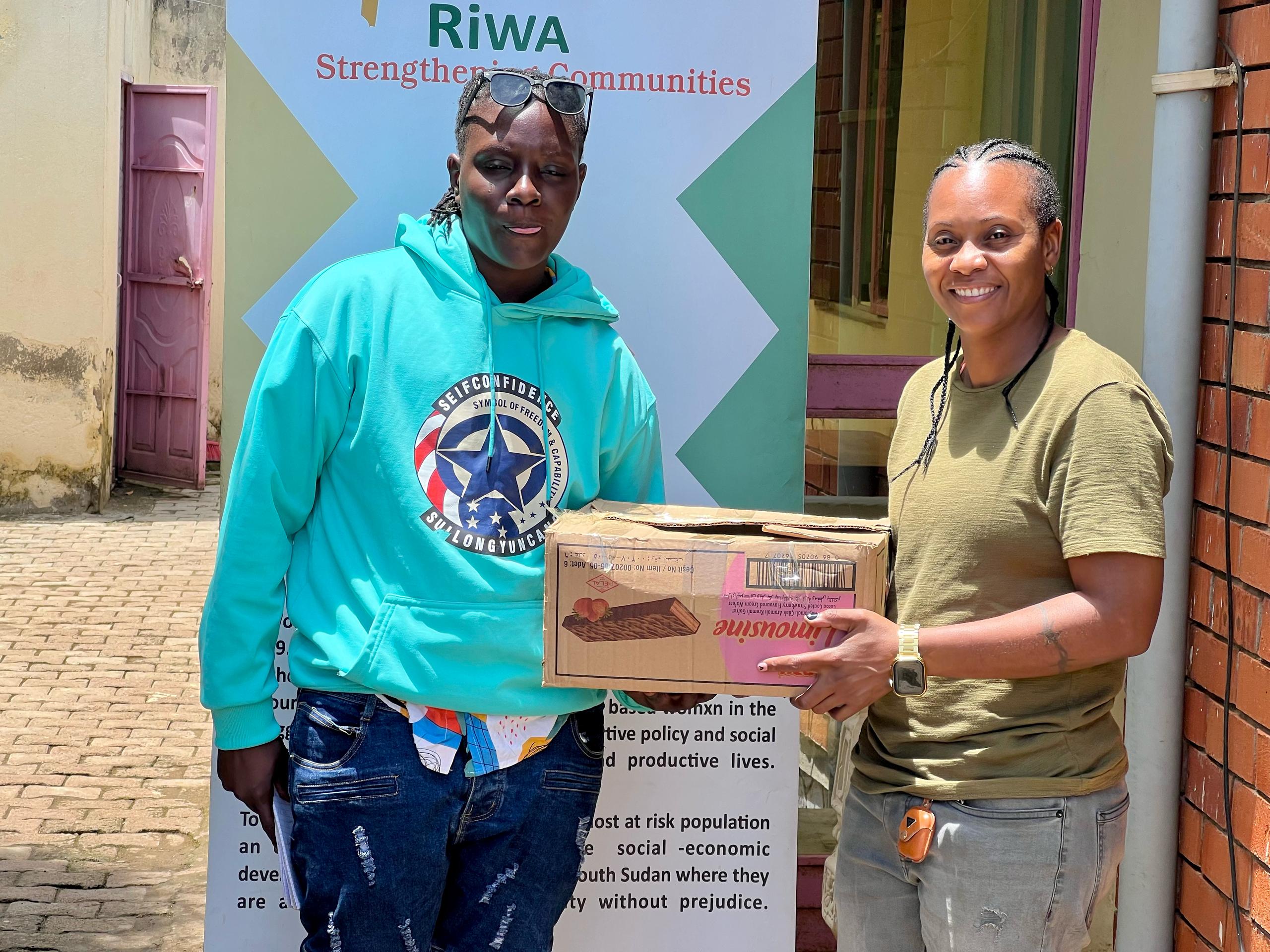
Refugee and community outreach
Áreas de incidência
Gender Equality and Womxn’s Empowerment
Sexual and Reproductive Health and Rights (SRHR)
Human Rights and Access to Justice
Mental Health and Psychosocial Support
Sports for Empowerment and Advocacy
Human Rights Documentation and Protection
Trans and Intersex Programmes
Trans programme
RiWA provides dedicated support to the transgender community in South Sudan, who face high levels of stigma, violence, and exclusion. RiWA’s work includes emergency protection, safe shelter referrals, psychosocial support, and accompaniment for those facing threats or abuse.
The organisation also documents human rights violations against trans people and uses this evidence for advocacy at local and national levels. Through leadership training and community organising, RiWA empowers trans activists to participate in decision-making and strengthen their visibility and safety.
Key areas of our support include:
Emergency assistance and protection.
Psychosocial support and healing spaces.
Documentation of human rights violations.
Leadership development and capacity building.
Intersex programme
RiWA’s Intersex Community of South Sudan (ICS) Initiative is aimed at addressing issues affecting intersex children and persons in South Sudan. This Initiative is the first of its kind in South Sudan, and is focused on visibility, protection, and empowerment of intersex people. RiWA creates safe spaces for intersex individuals and families, facilitates peer-support groups, and conducts community awareness to challenge stigma and harmful practices, including non-consensual medical interventions.
2019 — Founding of Rise Initiative for Women’s Right Advocacy (RiWA), South Sudan Founded in 2019 in South Sudan, Rise Initiative for Women’s Right Advocacy (RiWA) works primarily with the LGBTIQ community, with a specific focus on trans women, intersex people and children, as well as youth and survivors of gender-based violence. RiWA promotes and […]
2019 — Formation des Réseaux Transnationaux Indépendants d’Afrique Centrale (RITAC), Cameroun / Formation of the Independent Trans Networks of Central Africa (RITAC), Cameroon
2019 — Formation des Réseaux Transnationaux Indépendants d’Afrique Centrale (RITAC), Cameroun / Formation of the Independent Trans Networks of Central Africa (RITAC), Cameroon
Créé en 2019 par des organisations membres du Forum Trans d’Afrique de l’Ouest (WATF) et d’autres organisations, le Réseau Indépendant des Trans d’Afrique Centrale (RITAC), basé à Yaoundé, au Cameroun, ambitionne une Afrique centrale où l’identité trans est reconnue et librement vécue. RITAC et WATF sont partenaires de mise en œuvre de plusieurs projets en Afrique de l’Ouest et en Afrique Centrale. RITAC est une association qui compte 22 membres en Afrique Centrale, dont 10 organisations et 12 militants.
Formed in 2019 by member organisations of the West African Trans Forum (WATF) and other organisations, the Independent Trans Networks of Central Africa (RITAC — Réseau Indépendant des Trans d’Afrique Centrale), based in Yaoundé, Cameroon, envisions a Central Africa where trans identity is recognised and freely experienced. RITAC and WATF are implementing partners in several projects across West and Central Africa. RITAC is an association which has 22 members across Central Africa, including 10 organisations and 12 activists.
Domaines de travail / Areas of Work
RITAC
Contribue à l’amélioration des conditions de vie des personnes trans par l’intermédiaire de ses associations membres (AM) en Afrique centrale.
Renforce le leadership et la structuration des associations membres.
Promouvoir le renforcement des capacités des responsables d’organisations trans.
Documenter les violences faites aux personnes trans en Afrique centrale par l’intermédiaire de ses associations membres.
Accorder des mini-subventions aux associations membres pour la mise en œuvre d’actions en faveur des personnes trans.
contributes to improving the living conditions of trans people through its Member Associations (MA) in Central Africa
strengthens the leadership and structuring of Member Associations
carries out capacity building for leaders of trans organisations
documents the violence against trans people in Central Africa through Member Associations
provides grant mini-grants to Member Associations for the implementation of actions in favour of trans people.
2019 — Formation des Réseaux Transnationaux Indépendants d’Afrique Centrale (RITAC), Cameroun / Formation of the Independent Trans Networks of Central Africa (RITAC), Cameroon Créé en 2019 par des organisations membres du Forum Trans d’Afrique de l’Ouest (WATF) et d’autres organisations, le Réseau Indépendant des Trans d’Afrique Centrale (RITAC), basé à Yaoundé, au Cameroun, ambitionne une […]
Founded in 2019, Upendo Rights Advocacy Initiative – Malaba (URAI), is non-governmental organisation that serves the rural Ugandan community of LBQ women, intersex, gender non-conforming and other gender diverse persons. URAI was founded against the background of no services for LGBTI persons in Malaba and the perception that the LGBTI community is urban based. Yet LGBTI, people live in all contexts, including small towns and rural areas. LGBTI people in rural contexts experience unique and diverse challenges, with distinctive human rights, livelihood and healthcare needs that receive little attention at the national level, even with the considerable work that has already been done on LGBTI human rights, livelihoods and health situations in urban areas. Upendo was registered limited by guarantee in November 2021.
Missão
To represent, mobilise and empower communities of rural LBQ women, intersex, gender non-conforming and other gender diverse individuals through advocacy, inclusiveness, creating solidarity, and promoting leadership. URAI does this work through wellness and livelihood programmes, and advocacy initiatives to engage different stakeholders on the issues that these rural communities face.
Objectivos
Advocate for policy changes to protect rural LBQ women, intersex, gender non-conforming and other gender diverse individuals.
Mobilise rural LGBTI communities through workshops, campaigns, and alliances.
Empower LGBTI individuals with skills training and resources for self-advocacy.
Foster inclusiveness and solidarity within rural communities.
Promote leadership among LGBTI individuals in rural areas.
Address unique challenges through research and targeted programmes.
Collaborate with stakeholders to improve services and support for rural LGBTI communities.
2019 — Upendo Rights Advocacy Initiative – Malaba (URAI) Founded, Uganda Founded in 2019, Upendo Rights Advocacy Initiative – Malaba (URAI), is non-governmental organisation that serves the rural Ugandan community of LBQ women, intersex, gender non-conforming and other gender diverse persons. URAI was founded against the background of no services for LGBTI persons in Malaba […]
20 March 2019 — Fondygender a été fondée / Fondygender Founded, Ivory Coast
Fondée le 20 mars 2019, Fondygender est une organisation communautaire à but non lucratif, non confessionnelle, apolitique et non gouvernementale dans la région des Lagons en Côte d’Ivoire et se concentre sur les droits humains trans, en particulier la lutte contre les IST, le VIH / SIDA, la tuberculose, l’hépatite et le Covid 19.
Founded 20 March 2019, Fondygender is a non-profit, non-denominational, apolitical, non-governmental community organisation in the Lagoons region of Ivory Coast and is focused on trans human rights, specifically fighting against STIs HIV / AIDS, TB, Hepatitis and Covid 19.
La Vision / Visão
Une société diversifiée et inclusive dans laquelle tous les individus ont la possibilité de réaliser leur plein potentiel tout en respectant leurs droits fondamentaux (droit à la santé, droit à l’éducation, droit à la sécurité, etc.)
A diverse and inclusive society in which all individuals have the opportunity to achieve their full potential while respecting their fundamental rights (right to health, right to education, right to security, etc.)
Missão
Mettre en synergie et coordonner les activités communautaires afin de contribuer à une meilleure stratégie d’accès aux droits fondamentaux et au respect des libertés des personnes transgenres. Et plus largement, de la communauté des minorités sexuelles et de genre et des mouvements féministes inclusifs.
To synergise and coordinate community activities in order to be part of a better strategy for access to fundamental rights and respect for the freedoms of transgender people. And more broadly the community of sexual and gender minorities and inclusive feminist movements.
Images from the organisation’s website
Valeurs / Values
Visibilité
Inclusion
Solidarité
Justice sociale
Visibility
Inclusion
Solidarity
Social justice
Domaines de travail / Areas of Work
Promotion de la santé sexuelle et reproductive / VIH-SIDA.
Diffusion et promotion des droits humains.
Promotion d’un féminisme inclusif pour l’égalité des sexes, des genres et des chances.
Promotion de l’autonomisation.
Développement d’actions culturelles de sensibilisation et de divertissement.
Promotion of sexual and reproductive health / HIV-AIDS.
Dissemination and promotion of human rights.
Promoting inclusive feminism for the equality of all sexes, genders and opportunities.
Promoting empowerment.
Developing cultural action for awareness and entertainment.
Contacter / Contacto
Site web / Sítio Web +225 0759 927 755 / +225 0708 714 397 Email: contact@fondygender.org
20 March 2019 — Fondygender a été fondée / Fondygender Founded, Ivory Coast Fondée le 20 mars 2019, Fondygender est une organisation communautaire à but non lucratif, non confessionnelle, apolitique et non gouvernementale dans la région des Lagons en Côte d’Ivoire et se concentre sur les droits humains trans, en particulier la lutte contre les […]
9 December 201711 December 201712 December 20172018201820182018201820 January 201817 February 201822 March 20182 May 2018September 201814 December 20182019201920192019201920 March 2019
You can include information about your African Organisation/Group
There are many African organisations and individuals who over the years have contributed in invaluable ways to the story of the trans, gender diverse and intersex movements who are not yet included on our Timeline.
Queremos reconhecer e incluir todas as contribuições verificáveis.
The Timeline is about your stories and voices. You can find out more about how to contribute by visiting our Contact Us page here.