An archive of histories/herstories/theirstories affecting and influencing the trans, gender diverse and intersex movements in Africa
This Timeline of our archive of histories/herstories/theirstories of the trans, gender diverse and intersex movements in Africa and in the Diaspora emerged through the grassroots experiences and memories of the contributing African activists and organisations.
It is often updated with new stories and the Timeline is continually growing.
How to navigate the Timeline
Categories are displayed alphabetically at the top of the Timeline and can be used to filter the results to focus on the research theme chosen. For example, ‘All’ will show you all topics, while ‘Intersex’ will display all entries related to intersex movements and moments.
Alternatively, use the search bar in the menu at the top and bottom of screen to find more specific information.
Categories relating to gender, sex characteristics and sexual orientation have flag icons and colour groups to visually distinguish them from one another:
All
Activistas
Todos
Arte
Requerentes de asilo/Migrantes/Refugiados
Áudio e vídeo
Ballroom
Comunidade
Conferências
Travesti
Depathologisation
Diáspora
Drag
Films
Diversidade de género
Não-conformidade de género
Gender-Affirming Healthcare
Healthcare
HIV/AIDS
Homeless people
In Memoriam
Intersexo
Entrevistas
LBQ
LBTI
LBTQ
Legislação
LGBTQIA+
Media
Não binário
Organizações
People living with HIV
Persons with Disabilities
Publicações
Trabalho sexual
Desporto
SRHR
TIHA Articles
Trans
Trans e intersexo
Transfeminista
Transmasculine
Transsexual
Transvestite
Youth
June 2010 — First Lusophone Trans Workshop, Mozambique
For the first time on the African continent, a Lusophone (Portuguese-speaking) trans workshop was presented in June 2010 by IGLHRC (the International Gay and Lesbian Human Rights Commission,today known as OutRight International) and Género DynamiX (GDX) in Maputo, Mozambique. Due to language barriers, it is extremely difficult to establish networks in Mozambique and Angola where the main spoken language is Portuguese, so this workshop was groundbreaking.
For the first time on the African continent, a Lusophone (Portuguese-speaking) trans workshop was presented in June 2010 by IGLHRC (the International Gay and Lesbian Human Rights Commission, today known as OutRight International) and Gender DynamiX (GDX) in Maputo, Mozambique. Due to language barriers, it is extremely difficult to establish networks in Mozambique and Angola […]
On 13 August 2010 the South African Labour Court ruled in favour of reinstating Christine Elhers after she took her employer, Bohler Uddeholm, to court for unfair discrimination and for dismissing her based on her gender identity. Judge Francis not only ruled for reinstatement but ordered the company to backpay Christine the salary she had lost between her dismissal and reinstatement.
During the trial, the company argued that at the time of her employment, Christine was a man and that their clients and the nature of their product (in the metal industry) required her to be a man. In his article titled Christine, give them hell, Professor Pierre de Vos wrote about the reasons why such arguments don’t stand up in court from a constitutional point of view.
The outcome of this case set a precedent and a great example for fair and equal employment for South African trans persons.
On 13 August 2010 the South African Labour Court ruled in favour of reinstating Christine Elhers after she took her employer, Bohler Uddeholm, to court for unfair discrimination and for dismissing her based on her gender identity. Judge Francis not only ruled for reinstatement but ordered the company to backpay Christine the salary she had […]
Secondly, the highly successful Digital Storytelling DVD, Exquisite Gender, was produced by the activists and each participant received copies after the launch to use as training/presentation and sensitisation material. This material has since travelled all over the continent and continues to be an educational tool in trans advocacy today. After robust discussions, the activists collectively decided to not make the Digital Storytelling DVDs public by means of online uploads, as there would be no control over who could access them, thereby compromising the identities and safety of the activities.
*The Organisation’s name is omitted to protect its members due to the passing of the Anti–Homosexuality Act in March 2023 in Uganda.
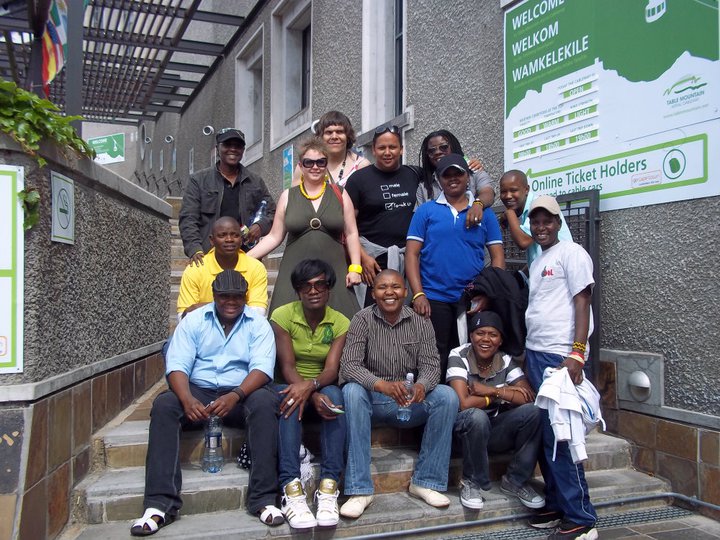
Participants outside the entrance to the Table Mountain cable cars, Cape Town, South Africa
In September 2010, the second part of the Eastern and Southern African Trans and Intersex Regional Exchange Programme hosted by Gender DynamiX (GDX) and a partner organisation in East Africa* was held in Cape Town, South Africa. The Programme achieved two tangible and practical results. The first was that the 16 activists finalised the details […]
October 2010 — Eastern and Southern African Trans and Intersex Regional Exchange Programme Joins the Stop Trans Pathologization (STP2012) Campaign, Eastern and Southern Africa
October 2010 — Eastern and Southern African Trans and Intersex Regional Exchange Programme Joins the Stop Trans Pathologization (STP2012) Campaign, Eastern and Southern Africa
In October 2010, the Eastern and Southern African Trans and Intersex Regional Exchange Programme, launched in May 2010 by South Africa’s Género DynamiX (GDX) and Uganda’s Support Initiative for People with Atypical Sex Development (SIPD), joined the Stop Trans Pathologization (STP2012) Campaign, a campaign advocating for the depathologisation of trans identities (transsexual and transgender) and their retirement from the American Psychiatric Association’s Diagnostic and Statistical Manual of Mental Disorders — 4 (DSM-4).
The Exchange Programme’s submission to the Campaign consisted of a video clip produced by Robert Hamblin with quotes from Eastern and Southern African activists.
October 2010 — Eastern and Southern African Trans and Intersex Regional Exchange Programme Joins the Stop Trans Pathologization (STP2012) Campaign, Eastern and Southern Africa In October 2010, the Eastern and Southern African Trans and Intersex Regional Exchange Programme, launched in May 2010 by South Africa’s Gender DynamiX (GDX) and Uganda’s Support Initiative for People with Atypical Sex […]
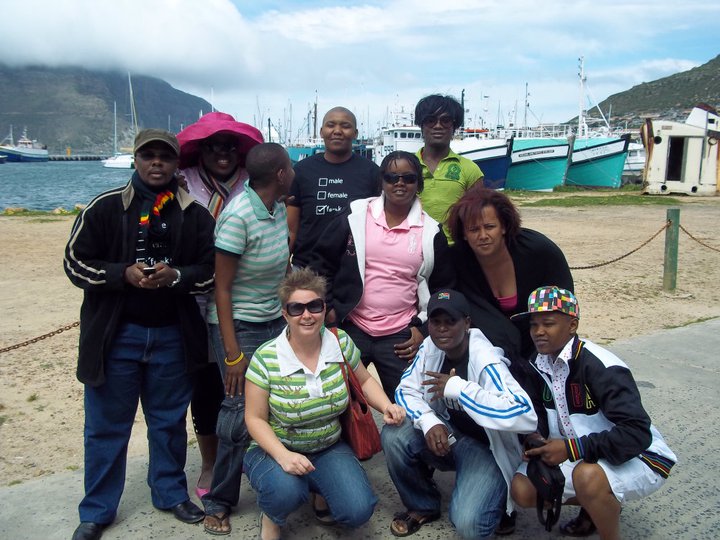
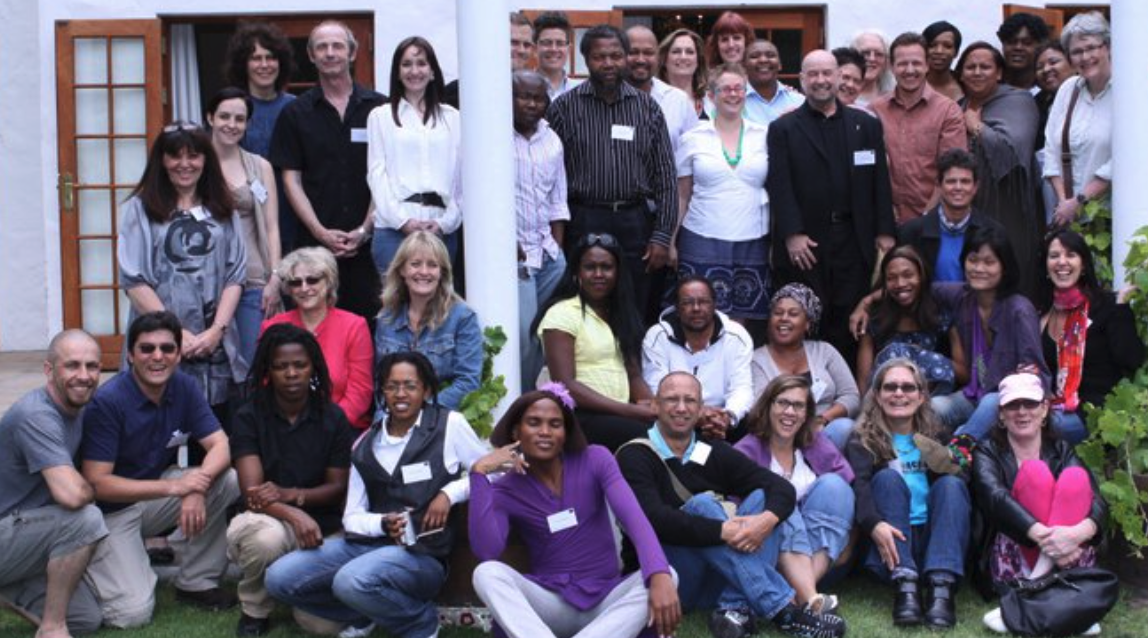
Em Novembro de 2010,Dinâmica de Género organizou a conferência pré-Trans Health, Research and Advocacy Conference em Hout Bay, Cabo Ocidental, África do Sul. O objetivo da pré-conferência foi criar consciência sobre a situação de base vivida por pessoas trans em toda a África do Sul – tanto em áreas rurais como em cidades onde existe, no mínimo, um nível básico de acesso a serviços.
Esta pré-conferência foi considerada o primeiro passo em direção ao planeamento da Conferência Trans Saúde, Investigação e Advocacia agendada para 26 – 28 de Novembro de 2011, um evento que seria o primeiro do género no continente. A Gender DynamiX selecionou um número de indivíduos para participar na pré-conferência. Foram convidados a participar porque foram selecionados para garantir a mais vasta variedade possível de experiências dentro da comunidade trans, bem como de profissionais multidisciplinares. Quarenta pessoas participaram na pré-conferência.
Foto de Zanele Muholi
A lista de profissionais presentes incluía um ou mais psicólogos, um cirurgião, um médico de clínica geral, um endocrinologista, um enfermeiro, um curandeiro tradicional, um sexólogo, um assistente social, um médico de família, um jornalista e um advogado trans dos EUA que faz parte da direção da WPATH. A Gender DynamiX esteve representada por funcionários e membros da direção. Os membros da comunidade foram representados por pessoas trans masculinas e trans femininas de áreas rurais e cidades, um refugiado, pais de crianças trans e uma mulher trans idosa. A pré-conferência foi um grande sucesso e um marco para os movimentos trans e intersexo.
A 1.ª Conferência sobre Saúde, Investigação e Advocacia Trans realizou-se em novembro de 2011.
Ler sobre a 2ª Conferência Trans Saúde, Investigação e Advocacia, maio de 2014
O impacto de Eusebius McKaiser
Um dos resultados da pré-conferência em 2010 foi que um jornalista que compareceu, Eusebius McKaiser, publicou um artigo no Mail and Guardian em dezembro de 2010, em que não só reconheceu a sua própria ignorância anterior sobre questões trans e intersexo, mas que marcaria o início do seu apoio contínuo ao movimento. A primeira introdução real de Eusebius a questões complexas e importantes para pessoas trans resultou da sua participação. Após a sua introdução a pessoas trans durante a conferência, ele escreveu uma história tocante, descrevendo como a sua experiência na conferência moldou os seus pensamentos, reconhecendo que as pessoas LGBT em geral não sabem nem metade do que imaginam sobre a vida das pessoas trans. Este relato pessoal foi publicado como um artigo de página inteira no Mail & Guardian.
No artigo, ele escreve:
Esta (falta de uma compreensão completa da natureza dos corpos transgénero) é exagerada por organizações e entidades financiadoras bem-intencionadas, que têm uma abordagem "abrangente". Imaginam que, ao visarem as comunidades gay ou LGBTI (lésbicas, gays, bissexuais, transgénero e intersexo) mais amplas e generalizadas, todas as minorias sexuais são assim alcançadas. Na realidade, o 'T' e o 'I' em LGBTI são invisíveis.
Ele terminou o artigo afirmando:
O preconceito contra minorias sexuais não se restringe a atos de violência explícita contra lésbicas negras. Precisamos estar mais vigilantes quanto a outras manifestações de preconceito. Essa vigilância deve começar com a verificação das nossas próprias atitudes. Mesmo as vítimas de preconceito, incluindo homens e mulheres gays, precisam ter cuidado com a transfobia.
McKaiser faleceu em 30 de maio de 2023.
Uma homenagem a Eusebius McKaiser (28 de março de 1978 — 30 de maio de 2023)
Nos anos desde a pré-conferência em 2010, afirmou-se como um brilhante jornalista, filósofo e analista político. Permaneceu também um aliado do movimento trans e intersexo, e foi um brilhante jornalista, filósofo e analista político.
É com choque e descrença que sul-africanos e o mundo souberam do falecimento súbito e prematuro de Eusebius McKaiser. Inúmeros ativistas políticos, LGBTIQ+, de direitos humanos e antirracismo, jornalistas, académicos e analistas críticos, publicaram memórias e homenagens em comentários na própria página de Facebook, Instagram e outras plataformas de redes sociais de Eusebius. Ele era uma voz e um pensador brilhantes com uma opinião pública que não se esquivou de temas controversos e não teve medo de chamar os bois pelos nomes. Desafiou jornalistas e outras figuras públicas a procurar a verdade e um jornalismo honesto e ético.
Foi também uma voz de razão e um aliado crítico da comunidade queer, ao assumir publicamente a sua orientação sexual, ao defender as pessoas LGBTIQ+, ao destacar questões sobre bissexualidade, homossexualidade e os desafios que as pessoas trans enfrentam no seu dia a dia. Foi um apoiante das campanhas de despenalização dos trabalhadores sexuais.
Após a primeira introdução de Eusebius a questões trans, falou também no seu espaço na Rádio 702, no seu programa de entrevistas, sobre como o "resto do acrónimo LGBT" tenta silenciar a identidade de T. Mencionou-o novamente como moderador no Kopano da Other Foundation, nos videoclipes acima.
Eusebius McKaiser fala contra a Lei Anti-Homossexualidade do Uganda, 2023
O último tweet de Eusebius no dia da sua morte sublinha ainda mais o quão fortemente ele se sentia em relação à Lei Anti-Homossexualidade:
A série QueerSona de Iranti, 9 de fevereiro de 2023
No início de 2023, durante o Estado da Nação do Presidente sul-africano Cyril Ramaphosa, a organização Iranti tiveram uma série nas suas redes sociais intitulada “QueerSona”
Iranti ficou muito grata por isto e agradeceu publicamente a Eusébio pela sua contribuição:
“Estamos gratos a si, Eusebius Mckaiser, por partilhar o seu #QueerSona Eusebius McKaiser – Autor, Locutor e Analista Político. O Discurso sobre o Estado da Nação do Presidente está a chegar. Exigimos que o Presidente @CyrilRamaphosa reconheça as nossas exigências e comprometa funcionários e recursos do Estado para garantir o fim da discriminação e dos atos de violência contra pessoas LGBTQIA+. Junte-se a nós e responsabilize o presidente. #QueerSona#Sona2023#Sona23“
Homenagens a Eusebius McKaizer
Liesl Theron no Facebook (Liesl é a cofundadora da Gender DynamiX)
Sempre que via algum disparate frenético a acontecer em Mzanzi, dizia sempre: "É hora de ouvir o Eusebius, para perceber o que se está a passar", porque ele analisava tão bem os acontecimentos políticos. Gostava de ouvir os seus podcasts enquanto cozinhava na cozinha. Lembrei-me de como ele, graciosamente, se sentou em silêncio e absorveu toda a informação "nova" quando o convidámos para assistir à pré-conferência da primeira Conferência sobre Saúde Trans em Hout Bay. Ele perguntou-me porque é que o tínhamos convidado, pois ele não sabia muito sobre o assunto, e eu respondi: "É por isso que o queremos aqui". Depois de assistir à conferência, ele escreveu uma página inteira para o M&G sobre as dificuldades que as pessoas trans enfrentam diariamente nas suas vidas. Ele foi brilhante! Depois disso, fomos uma vez co-painelistas no lançamento de um livro Queer sobre membros da comunidade LGBTQI do Malawi, Muholi foi a fotógrafa e Eusebius, e eu fui convidado por GALA para o lançamento como oradores. Mas para além disso, ele foi o meu guia sobre as notícias sul-africanas, especialmente agora que vivo no México.
Marion Stevens no Facebook (A Marion integrou o comité de planeamento para a conferência pré-Trans Health, Research and Advocacy Conference)
A vida é tão frágil. Lembro-me do nosso primeiro encontro em Hout Bay em 2010, na conferência pré-Saúde Transgénero. Estava sentado na última fila, a ouvir, e depois escreveu um artigo para o Mail and Guardian, colocando as dificuldades da saúde transgénero em domínio público para reflexão e consideração. Eu tinha um filho pequeno comigo, o Xanny tinha cerca de 4 anos e você aguentou amavelmente as suas perguntas e pedidos por mais sumo de laranja. Desde então, as ideias que colocou em domínio público foram uma enorme contribuição para a nossa democracia. Havia momentos, claro, em que era irritante e arrogante. Estou tão chocado com a sua partida, a vida é tão frágil, assim tão cedo. As minhas condolências aos seus entes queridos – o seu parceiro, o seu pai, tias e primos – e muitos amigos. Eusebius Mckaiser, descanse em paz.
Sally-Jean Shackleton no Facebook (Sally-Jean foi a presidente inaugural da Gender DynamiX)
Eusebius, Mckaiser foi um gigante – em intelecto e em bravura. Que perda devastadora. Sou grato pela sua generosidade em apoiar e defender as trabalhadoras do sexo, por ser visivelmente queer e assertivo… por ser um defensor leal e firme do que é certo e bom. Que bizarro ser falado no passado. Juntando-me a outros hoje no luto e enviando conforto à sua família e parceiro. Descansa em poder #eusibiusmckaiser
In November 2010, Gender DynamiX hosted the pre-Trans Health, Research and Advocacy Conference in Hout Bay, Western Cape, South Africa. The purpose of the pre-conference was to create awareness around the baseline situation experienced by trans people throughout South Africa – both in rural spaces and cities where there is, at minimum, a basic level of access to […]
Richard was born with ambiguous genitalia and could therefore not obtain a birth certificate, identity card or passport. He was arrested on 16 March 2005 for aggravated robbery.
“During a routine physical search the prison officers discovered his ambiguous genitalia and consequently could not decide whether to house him in a male or female cell. The Kiuti Magistrates Court ordered that the petitioner be medically examined and the medical report confirmed that he was intersexual. The Magistrates Court then ordered that the petitioner was to be remanded in isolation in the Kiuti Police Station pending trial.
The petitioner was convicted, sentenced to death and sent to a male-only prison for convicts on death row. There the petitioner was made to share cells and facilities with male inmates but was later placed in isolation. It was alleged that while he was in the prison he was subjected to invasive body searches, mockery and abuse because of his condition.”
Despite the Court recognising that Muasya’s condition fitted its definition of intersex, the Court found that because there was no verifiable data about intersex people as a group or class in Kenyan society, the treatment of intersex people was not a matter of public interest. They also found that he did not have a right to legal recognition or protection against discrimination. They also found that he had not been discriminated against in his schooling, employment and that his inability to attain identity documents was his fault and that his inability to vote was therefore his failing. The Court thus ruled that his freedom of movement had not been violated as it was his responsibility to attain the relevant identity documents. The Court also held that the social stigma Muasya suffered was not a legal issue.
The Court found in favour of Muasya’s claim that he had been subjected to inhuman and degrading treatment in prison and he was awarded damages of 500,000 Kenyan Shillings.
During the period leading up to the trial and after, Muasya was sexually abused and his rights violated for 8 years as an intersex person confined with male prisoners in Kamiti Maximum prison.
2 December 2010 — High Court Ruling Against Intersex Prisoner, Kenya In the case, Richard Muasya v. the Hon. Attorney General, High Court of Kenya on 2 December 2010, Muasya lost his case of claiming violations of his constitutional rights, in which he asked for the legalisation of a third gender. Richard was born with […]
2011 — Trans Woman Tshepo Ricki Kgositau Sues the State for the Right to Gender Marker Change, Botswana
Batswana trans woman, Tshepo Ricki Kgositau, (former Executive Director of Dinâmica de Género) applied to the Civil and National Registration office in Gaborone, Botswana to change her documentation in the national register from male to female in 2011. She argued that the State has a duty to realise the constitutional protection of rights and amend her Omang (identity document), as
“her birth-assigned gender does not correspond with her internal and individual experience of gender”.
Ricki’s application was denied and she sued the State for this right to change her gender marker. She won this case in 2017.
2011 — Trans Woman Tshepo Ricki Kgositau Sues the State for the Right to Gender Marker Change, Botswana Batswana trans woman, Tshepo Ricki Kgositau, (former Executive Director of Gender DynamiX) applied to the Civil and National Registration office in Gaborone, Botswana to change her documentation in the national register from male to female in 2011. […]
In April 2011 the events of Caster Semenya’s gender verification spiralled into an international debate about intersex* conditions and gender, resulting in the IAAF passing a new policy on gender verification, making the tests more specific to suspected cases of ‘hyperandrogenism’ in elite female athletes. The IAAF (International Amateur Athletic Federation and International Association of Athletics Federations, now known as World Athletics) and the International Olympics Committee (IOC) reviewed its regulations and policies, particularly the sections on routine gender verifications for all female athletes.
The media spectacle created by Caster Semenya’s gender verification sparked more discussion and led to greater awareness and visibility of intersex and gender non-conformity issues all over the world. This debate and the increasing global awareness of gender and sex variance is still ongoing.
In April 2011 the events of Caster Semenya’s gender verification spiralled into an international debate about intersex* conditions and gender, resulting in the IAAF passing a new policy on gender verification, making the tests more specific to suspected cases of ‘hyperandrogenism’ in elite female athletes. The IAAF (International Amateur Athletic Federation and International Association of […]
May 2011 — Trans Women and Transfeminine Activists Demand Recognition Within the African Trans Advocacy Movement (Eastern and Southern African Trans and Intersex Regional Exchange Programme), Uganda
May 2011 — Trans Women and Transfeminine Activists Demand Recognition Within the African Trans Advocacy Movement (Eastern and Southern African Trans and Intersex Regional Exchange Programme), Uganda
The first part of the second year of the Eastern and Southern African Trans and Intersex Regional Exchange Programme, hosted by Género DynamiX (GDX)and a partner organisation from East Africa,took place in Uganda in May 2011.
This was a watershed workshop as the number of activists, who numbered 16 the year before, grew beyond the capacity of the Exchange Programme. It was during this workshop that Themba Nkosi shared that he had started a youth support group, aGender, in Soweto, Johannesburg.
This group was the result of the capacity-building work that was part of the Exchange Programme in 2010. During this exchange workshop, the transfeminine and trans women participants stepped out of the shadows and demanded recognition by claiming a space separate from that dominated by trans masculine and trans men activists, not just in previous workshops, but within the trans and intersex movement in Africa as a whole. This sparked debate between the two groups, and it was within this dialogue that LeighAnn van der Merwe announced the founding of S.H.E, the Social, Health and Empowerment Feminist Collective of Transgender and Intersex Women of Africa.
May 2011 — Trans Women and Transfeminine Activists Demand Recognition Within the African Trans Advocacy Movement (Eastern and Southern African Trans and Intersex Regional Exchange Programme), Uganda The first part of the second year of the Eastern and Southern African Trans and Intersex Regional Exchange Programme, hosted by Gender DynamiX (GDX) and a partner organisation […]
Part of the founding reasons derived from the Trans and Intersex Regional Exchange Programme, hosted by Gender DynamiX in May 2011 in Uganda, where trans feminine and trans women activists and trans masculine and trans men activists had intense discussions about the power imbalance within the trans movement in Africa, which was overwhelmingly led by trans men and trans masculine people.
S.H.E strives to build the leadership of trans women, and work for greater inclusion of trans women and their issues in African women’s and feminist movements at the local, national and regional levels. At the local level, S.H.E works with trans women in peri-urban informal settlements and township communities, predominantly in the Eastern Cape Province, where they run support groups and ‘co-powerment’ programs. At the national level, they collaborate with women’s movements to raise issues of violence against trans women, and with trans and intersex organisations to advance campaigns for access to health care. At the continental level, they build the capacity of trans and women’s rights organisations. They held the first African Transformative Feminist Leadership Institute, which brought together 14 transgender women activists from 8 countries working to advance a feminist agenda for trans women on the African continent, starting with the release of the “African Trans Feminist Charter.”
May 2011 — Social, Health and Empowerment Feminist Collective of Transgender and Intersex Women of Africa (S.H.E) Established, South Africa In May 2011, Social, Health and Empowerment Feminist Collective of Transgender and Intersex Women of Africa (S.H.E) was formally established by LeighAnn van der Merwe, following the announcement of the organisation’s formation during the Eastern […]
Initially envisioned as a space that would provide a platform where participants could learn from the workshops and from each other, the dynamic changed sooner than anticipated by the organisers as it became evident that the greatest value of the Programme was the way in which learning had become completely interactive, with attending activists being fully participatory, bringing knowledge to the table that was as essential as the knowledge brought by the hosts.
Due to the way in which participants had progressed and excelled beyond the current format of the workshops, in 2011 the hosts Gender DynamiX (GDX) and their partner organisation in East Africa, decided to reassess the format of the Eastern and Southern African Trans and Intersex Regional Exchange Programme for 2012 and onwards. Initially envisioned […]
In 2011, co-hosts of the Eastern and Southern African Trans and Intersex Regional Exchange Programme, Gender DynamiX (GDX) and their partner in East Africa (name withheld for security reasons), approached Transgender and Intersex Africa (TIA) to form a 3-organisation coalition together with Support Initiative for People with Atypical Sex Development (SIPD) in Uganda, which would […]
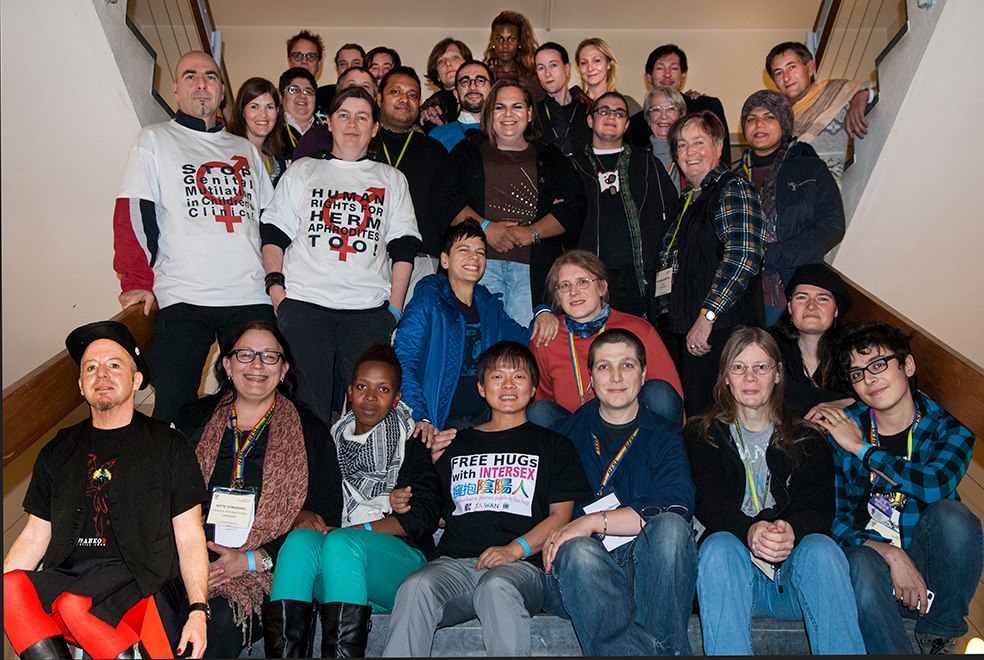
The first International Intersex Forum, organised by ILGA and ILGA-Europe, took place in Belgium in September 2011. 24 Activists representing 17 intersex organisations from all continents were present, includingIntersex Society South Africa (ISSA)’s Sally Gross, who was also the correspondent for Africa. The Forum concluded with 3 main goals:
“To put an end to mutilating and ‘normalising’ practices such as genital surgeries, psychological and other medical treatments, including infanticide and selective abortion on the grounds of an intersex condition in some parts of the world.
To ensure that the personal, free, prior, and fully informed consent of the intersex individual is a compulsory requirement in all medical practices and protocols.
Creating and facilitating supportive, safe and celebratory environments for intersex people, their families, and communities.”
The first International Intersex Forum, organised by ILGA and ILGA-Europe, took place in Belgium in September 2011. 24 Activists representing 17 intersex organisations from all continents were present, including Intersex Society South Africa (ISSA)’s Sally Gross, who was also the correspondent for Africa. The Forum concluded with 3 main goals:
November 2011 — 1st Regional Trans Health, Research and Advocacy Conference, South Africa: First Trans Conference in Africa
In November 2011, Género DynamiX (GDX) hosted the first Regional Trans Health, Advocacy & Research Conference, bringing together activists, researchers and providers. This event was an African first, as it was the first trans conference to be held in Africa. The Conference was held in South Africa.
Two documentaries resulted from the conference:
“Parent of Trans”
Botswana activist Ricki Tshepo Kgositau (before she worked at Gender DynamiX, first as Advocacy Manager and later as ED), was the interviewer in this documentary. Here she interviewed the mom of a trans masculine person, Diana Motsitsi. The video was produced on a voluntary basis by Zanele Muholi and Inkanyiso Productions.
“Service Delivery & TG Primary Health Care in SA”
The second video produced during this conference “Service Delivery & TG Primary Health Care in SA”, came about as the conference had a substantial number of panel sessions on the topics of service delivery [health], education, and various forms of access. Input was given by Leoni Spalding (Gay and Lesbian Network), Daphney Conco, (Democratic Nursing Organisation of South Africa, the largest nurses’ trade union in South Africa, representing and advocating for the rights of nurses and midwives), Dr Asa Radix (Callen Health Community Center NYC), Jamison Green (WPATH), Amitrajit Saha (UNDP) and community member Revelation Xakoshe (Transgénero e Intersexo África). The video was produced on a voluntary basis by Zanele Muholi and Inkanyiso Productions.
November 2011 — 1st Regional Trans Health, Research and Advocacy Conference, South Africa: First Trans Conference in Africa In November 2011, Gender DynamiX (GDX) hosted the first Regional Trans Health, Advocacy & Research Conference, bringing together activists, researchers and providers. This event was an African first, as it was the first trans conference to be held […]
Em dezembro de 2011, foi estabelecida a Ushirikiano Panda no Quénia, tornando-se a segunda organização trans queniana depois da TEA (Transgender Education & Advocacy). A organização foi fundada por Gullitt Amakobe, um homem trans, Sidney, uma pessoa intersexo, e Barbra Wangare, uma mulher trans que é a atual Diretora Executiva da EATHAN, a East Africa Trans Health […]
December 2011 — Founding of Ushirikiano Panda (now Jinsiangu), Kenya
Cooperação Panda, formed in December 2011, officially changed its name to Jinsiangu on 27 May 2012. The name Jinsiangu, comes from the two Swahili words, ‘jinsia’ and ‘yangu’, meaning ‘my gender’, a name proposed by co-founder Barbra Wangare, who is the current Executive Director of the East Africa Trans Health and Advocacy Network (EATHAN). Jinsiangu was established with the hopes of turning into a fully-fledged community-based organisation. Jinsiangu is committed to ITGNC-led, pro-humanity and pro-equality organising.
Visão
Diversity, Autonomy & Freedom: A Kenya that celebrates and respects diversity, and where all persons have bodily autonomy, freedom, justice and access to fundamental needs.
Missão
Jinsiangu seeks to ensure that the lives and wellbeing of intersex, trans and gender non-conforming persons are enhanced through the establishment of safe spaces, through advocacy and research, through the provision of information, health services, and psycho-social support, and by fostering opportunities for holistic empowerment.
Objectivos
Provision of fundamental needs
Jinsiangu advocates for the provision of fundamental needs of ITGNC persons through engagement with various professionals, state officials and service providers in order to change discriminatory policies and prejudice against them.
Creating awareness and understanding
Jinsiangu aims to increase awareness and understanding of ITGNC people, both within the LGBTI community and in the larger society.
Developing knowledge
Jinsiangu is committed to developing and disseminating knowledge on the socio-economic and political situation of ITGNC people in Kenya, including information on their health and medical needs.
Effective and reliable care and support
Jinsiangu is establishing itself as a go-to provider for effective and reliable care and support for ITGNC Kenyans. Including safe spaces, psycho-social support, and ITGNC-friendly counselling services.
Values
Equality, Autonomy, Confidentiality, Accountability, Love, Diversity, Perseverance, Integrity and Openness.
Watch our interview with Barbra Wangare from 15 October 2024
TIHA’s Victor J. Mukasa and Barbra discussed her personal journey as a trans woman and the early history of trans awareness in Kenya, her role in the founding of Jinsiangu and the work that she and EATHAN do in Kenya, East Africa and globally.
Watch our interview with co-founder, Po Kimani
We interviewed Po Kimani on the 27th of June, 2025. Po is an intersex, non-binary, neurodivergent black feminist healer and abolitionist, whose life’s work embodies radical care as resistance. An LGBTQIA+ and sex worker advocate, they co-founded Jinsiangu, Galck+, Minority Women in Action, the Defenders Coalition, and the Trans Empowerment Initiative – T.E.I. Po was Kenya’s first openly queer sex worker activist and helped organise the iconic Queer Tent (‘Q Spot’) at the 2007 World Social Forum.
December 2011 — Founding of Ushirikiano Panda (now Jinsiangu), Kenya Ushirikiano Panda, formed in December 2011, officially changed its name to Jinsiangu on 27 May 2012. The name Jinsiangu, comes from the two Swahili words, ‘jinsia’ and ‘yangu’, meaning ‘my gender’, a name proposed by co-founder Barbra Wangare, who is the current Executive Director of the East […]
Founded in 2012 by Jay Mulucha and another activist*, Fem Alliance Uganda (FEMA) works primarily with lesbian, bisexual, transgender and queer (LBTQ) persons and advocates for the rights, visibility, and inclusion of LBTQ persons through community empowerment, advocacy, and capacity building. The organisation was registered in 2012.
* Name withheld for safety reasons.
Visão
A stigma-free Uganda where LBTQ people can enjoy equal rights, human dignity, respect and social justice.
Missão
To promote human rights and restore the human dignity of LBTQ persons through education, personal development, advocacy and strategic partnerships.
FEMA Founder, Jay Mulucha, speaking at the AIDS 2022 Conference
Objectivos
To increase knowledge, information and advocate for human rights of LBTQ persons within the community.
To promote a well-coordinated, inter-dependent and strong network of LBTQ membership.
To develop the institutional capacity of FEMA to be able to fulfill its mandate.
To establish and maintain strategic partnerships with key allies and partners.
Areas of Work
Human rights advocacy.
Sexual and reproductive health rights (SRHR)promotion and advocacy.
2012 — Fem Alliance Uganda (FEMA) Founded, Uganda Founded in 2012 by Jay Mulucha and another activist*, Fem Alliance Uganda (FEMA) works primarily with lesbian, bisexual, transgender and queer (LBTQ) persons and advocates for the rights, visibility, and inclusion of LBTQ persons through community empowerment, advocacy, and capacity building. The organisation was registered in 2012. […]
2012 — Fondation de Shin Together Cameroun / Founding of Shin Together Cameroon
Fondée en 2012 par Claude Batele, Shin Together Cameroon est une organisation axée sur la défense et la sensibilisation de la communauté intersexuée au Cameroun. Elle fournit des services directs aux personnes intersexuées du pays. L’organisation a été enregistrée en 2024.
Founded in 2012 by Claude Batele, Shin Together Cameroon is an organisation focused on advocacy and awareness raising for the intersex community in Cameroon, and provides direct services to intersex people in the country. The organisation was registered in 2024.
La Vision / Visão
Shin Together Cameroon envisage un Cameroun où les personnes discriminées en raison de leur apparence physique sont en sécurité, épanouies, indépendantes, libres et en bonne santé.
Shin Together Cameroon envisions a Cameroon where people discriminated against on the basis of their physical appearance are safe, fulfilled, independent, free, and healthy.
Missão
L’association a pour objectif de promouvoir l’inclusion, l’harmonie et la solidarité des personnes discriminées en raison de leur apparence physique au Cameroun.
The association aims to promote inclusion, harmony and solidarity of people discriminated against on the basis of their physical appearance in Cameroon.
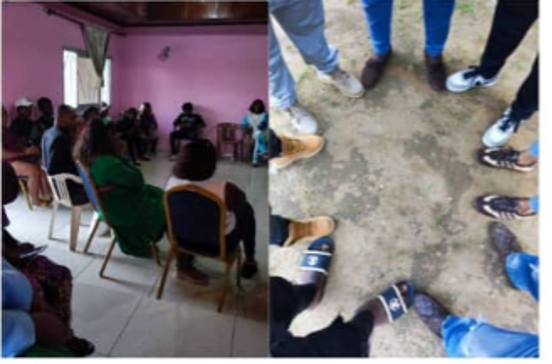
Séance de sensibilisation / Awareness raising session
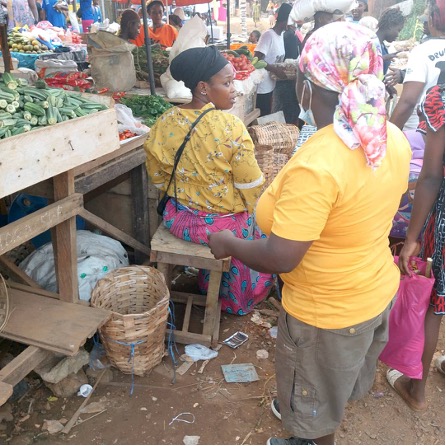
Causerie éducative au marché / Educational talk at the market
Domaines de travail / Areas of Work
L’organisation se concentre sur la sensibilisation à la condition intersexuée, la lutte contre la discrimination, la défense des droits et la prise en charge globale des personnes intersexes, ainsi que la promotion des bonnes pratiques à leur égard. Elle agit à travers :
Mener des actions de plaidoyer sur le plan national pour la prise en compte des besoins spécifiques des personnes cibles ;
Mobiliser les ressources propres aux personnes cibles ;
Sensibiliser et éduquer nos cibles scolarisées pour réduire le décrochage scolaire ;
Mener des études et recherches pour soutenir les plaidoyers en leurs direction au Cameroun ;
Lutter contre les mutilations génitales au Cameroun ;
Sensibiliser la population sur l’inclusion des cibles ;
Travailler avec les alliés dans le processus d’inclusion sociale ;
Mener des actions de sensibilisation auprès des formation sanitaire (FOSA) pour une meilleure prise en charge des cibles.
The organisation focuses on raising awareness of the intersex condition, fighting discrimination, advocacy, and comprehensive care for intersex people, and promoting good practices towards them. It does so through:
Conducting national advocacy efforts to address the specific needs of target populations.
Mobilising resources specific to target populations.
Raising awareness and educate our target populations to reduce school dropout rates.
Conducting studies and research to support advocacy efforts directed at them in Cameroon.
Combatting female genital mutilation in Cameroon.
Raising public awareness about the inclusion of target populations.
Working with allies in the social inclusion process.
Conducting awareness-raising efforts among health facilities (FOSA) to improve the care provided to target populations.
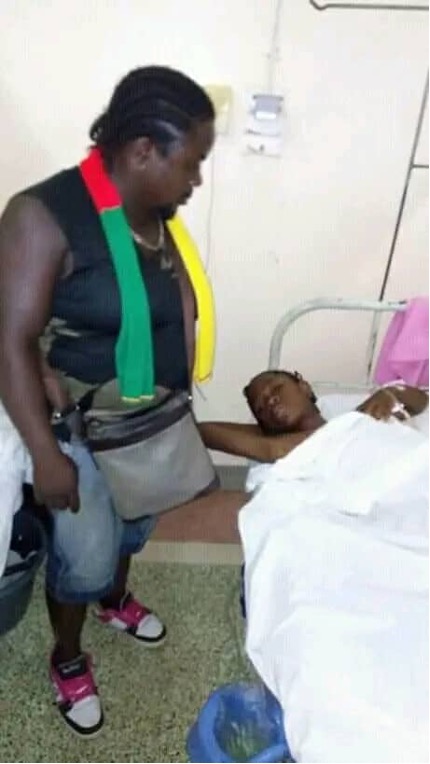
Assistance aux personnes opérées / Assistance to people undergoing surgery
2012 — Fondation de Shin Together Cameroun / Founding of Shin Together Cameroon Fondée en 2012 par Claude Batele, Shin Together Cameroon est une organisation axée sur la défense et la sensibilisation de la communauté intersexuée au Cameroun. Elle fournit des services directs aux personnes intersexuées du pays. L’organisation a été enregistrée en 2024. Founded […]
Trans Smart Trust was founded in January 2012 and registered on 16 July 2016. Situated in Zimbabwe, the organisation focuses on trans and intersex rights. Gumisayi Bonzo is the Executive Director and one of the founders of the organisation. The other founders are Alesandrabree Chacha and Delfina Sundarreman.
The organisation manages a portfolio of projects and programmes targeting communities who include persons living with HIV, people with disabilities, sex workers, drug users and other marginalised communities. Since its inception, the organisation’s interventions have been classified into advocacy, education, life skills and livelihoods, healthcare, legal support and emergency response.
Visão
Sustainable well-being for trans and intersex persons.
Missão
To champion the human rights, capacity and agency of trans and intersex people in realising their well-being.
Goals
Inclusivity
Empowerment
Collaboration
Intersectionality
Country Context
More about the context of trans and intersex individuals in Zimbabwe and the reason for the founding of Trans Smart Trust, from their website:
“At the heart of our story lies the plight of transgender individuals in Zimbabwe and across the African continent. In a region where societal attitudes and legal frameworks often fail to recognize and protect the rights of transgender people, they face immense challenges and discrimination on a daily basis. Transgender individuals in Zimbabwe contend with a lack of legal recognition, limited access to healthcare services, and widespread social stigma. They often experience rejection from their families, communities, and even face violence and harassment. The struggle for transgender rights in Africa is a multifaceted battle, as it encompasses the fight for legal recognition, access to gender-affirming healthcare, protection from discrimination, and the promotion of inclusive education and employment opportunities. Despite the adversities they face, Trans Smart Trust champions transgender and intersex people’s well-being in Zimbabwe.”
Trans Smart Trust was founded in January 2012 and registered on 16 July 2016. Situated in Zimbabwe, the organisation focuses on trans and intersex rights. Gumisayi Bonzo is the Executive Director and one of the founders of the organisation. The other founders are Alesandrabree Chacha and Delfina Sundarreman. The organisation manages a portfolio of projects […]
2012 — Founding of Iranti, South Africa Iranti was founded by Jabulani Chen Pereira in 2012. Jabu, the organisation’s leadership, and the entire team is composed of trans, lesbian, and intersex persons. Iranti is an African regional organisation that involves media and documentation in its advocacy. Jabu stepped down as Founding Director in 2022. Intersex […]
June 201013 August 2010September 2010October 2010November 20102 December 20102011April 2011May 2011May 201120112011September 2011November 2011December 201127 May 201220122012January 20122012
You can include information about your African Organisation/Group
There are many African organisations and individuals who over the years have contributed in invaluable ways to the story of the trans, gender diverse and intersex movements who are not yet included on our Timeline.
Queremos reconhecer e incluir todas as contribuições verificáveis.
The Timeline is about your stories and voices. You can find out more about how to contribute by visiting our Contact Us page here.