An archive of histories/herstories/theirstories affecting and influencing the trans, gender diverse and intersex movements in Africa
This Timeline of our archive of histories/herstories/theirstories of the trans, gender diverse and intersex movements in Africa and in the Diaspora emerged through the grassroots experiences and memories of the contributing African activists and organisations.
It is often updated with new stories and the Timeline is continually growing.
How to navigate the Timeline
Categories are displayed alphabetically at the top of the Timeline and can be used to filter the results to focus on the research theme chosen. For example, ‘All’ will show you all topics, while ‘Intersex’ will display all entries related to intersex movements and moments.
Alternatively, use the search bar in the menu at the top and bottom of screen to find more specific information.
Categories relating to gender, sex characteristics and sexual orientation have flag icons and colour groups to visually distinguish them from one another:
All
Activistas
Todos
Arte
Requerentes de asilo/Migrantes/Refugiados
Áudio e vídeo
Ballroom
Comunidade
Conferências
Travesti
Depathologisation
Diáspora
Drag
Films
Diversidade de género
Não-conformidade de género
Gender-Affirming Healthcare
Healthcare
HIV/AIDS
Homeless people
In Memoriam
Intersexo
Entrevistas
LBQ
LBTI
LBTQ
Legislação
LGBTQIA+
Media
Não binário
Organizações
People living with HIV
Persons with Disabilities
Publicações
Trabalho sexual
Desporto
SRHR
TIHA Articles
Trans
Trans e intersexo
Transfeminista
Transmasculine
Transsexual
Transvestite
Youth
6 June 2012 — Trans Woman Files Constitutional Petition, Kenya
Batha Nthungi, a trans woman, filed a constitutional petition (240 of 2012) against Kenya’s Attorney General for violation of her human rights on 6 June 2012. She had been arrested in 2011 and stripped by a police officer after it was discovered that she was transgender. Nthungi won her case on 14 June 2013.
Batha Nthungi, a trans woman, filed a constitutional petition (240 of 2012) against Kenya’s Attorney General for violation of her human rights on 6 June 2012. She had been arrested in 2011 and stripped by a police officer after it was discovered that she was transgender. Nthungi won her case on 14 June 2013.
Thapelo Makutle, um jovem de 23 anos de Kuruman, na província do Cabo Setentrional, que se identificava como gay e transgénero, foi brutalmente assassinado em junho de 2012. Thapelo era voluntário numa organização local de gays e lésbicas, a Lesbian, Gay and Bisexual Organisation (LEGBO) no Cabo Setentrional, e também participava em concursos como drag queen, […]
The three directors of the Transitioning Africa (TA) coalition met in Nairobi with Dr Chloe Schwenke from the USAID Africa Bureau. The purpose of the meeting was to discuss support from the U.S. Agency that would culminate in an African Blueprint for the Provision of Comprehensive Care for Trans Persons, similar to the Blueprint in Latin America and the Caribbean.
Following the meeting, TA sent a letter to the USAID (U.S. Agency for International Development), with a proposal to form a partnership with the World Health Organization (WHO). TA suggested that this proposed partnership would collectively work on developing a model appropriate to African realities, creating a Blueprint for Transgender and Intersex Health Care for sub-Saharan Africa.
2012 — Trans Man and Gender DynamiX Co-Founder, Lex Kirsten, Receives Social Justice Philanthropy Award, South Africa
Lex Kirsten, the co-founder of Género DynamiX (GDX), received the Prémio de Filantropia Inyathelo in the Social Justice and Human Rights category for promoting the rights of transgender people in South Africa and across the continent.
Lex Kirsten
Watch: Interview with Lex about his story and the founding of Gender DynamiX
2012 — Trans Man and Gender DynamiX Co-Founder, Lex Kirsten, Receives Social Justice Philanthropy Award, South Africa Lex Kirsten, the co-founder of Gender DynamiX (GDX), received the Inyathelo Philanthropy Award in the Social Justice and Human Rights category for promoting the rights of transgender people in South Africa and across the continent. Watch: Interview with Lex […]
The publication, Sex in Transition: Remaking of Gender and Race in South Africa, by Professor Amanda Lock Swarr, published on 1 November 2012, takes the reader through the Apartheid times of South Africa, and how the lives of those who lived across or in between the gender binary system were impacted. It also explores how people from different races in South Africa were treated differently when race, gender and gender expression/ identity intersect with each other. The publication was launched at the District Six Museum in Cape Town, which has its own rich and layered history related to, amongst other things, race and gender. Amanda had a long-standing history with various South African LGBTIQ+ and political activists, and since 1997 her work and interests have had a strong focus on queer, trans and intersex studies in South Africa.
The publication, Sex in Transition: Remaking of Gender and Race in South Africa, by Professor Amanda Lock Swarr, published on 1 November 2012, takes the reader through the Apartheid times of South Africa, and how the lives of those who lived across or in between the gender binary system were impacted. It also explores how […]
Sibusiso (full name excluded for safety reasons), GDX’s Director at the time, and intersex activist Sally Gross, argued that applicants were unable to access medical facilities, apply for jobs, unable to get their academic results and could not vote, they faced difficulty in travelling and allegations of fraud. Some applications had been turned down without reasons given and in some instances applicants were forced to go through a surgery operation, sterilisation and forced divorce. Ler mais.
Gender DynamiX (GDX) and a cohort of other trans organisations lodged an appeal with the South African Parliament on 13 November 2012 with regard to the ongoing failure to implement the Alteration of Sex Description and Sex Status Act, Act 49 of 2003. Sibusiso (full name excluded for safety reasons), GDX’s Director at the time, […]
The first Trans and Intersex Annual Pride on the continent of Africa was held in Gaborone, Botswana on 24 November 2012. The event was initiated by Rainbow Identity Association (RIA). The march hosted various trans and intersex activists from other African countries. These Prides in Botswana are the only Prides focused on trans and intersex people […]
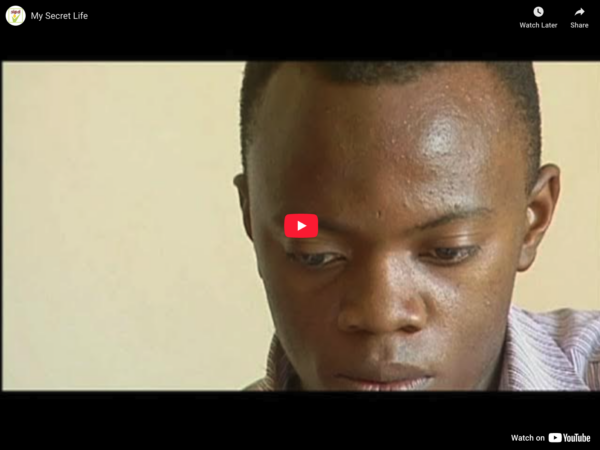
December 2012 — First Screening of ‘My Secret Life’, a Documentary on Intersex Lived Realities, Uganda
First screened in December 2012, ‘My Secret Life’ isa short documentary compiled by Support Initiative for People with Atypical Sex Development (SIPD), exploring intersex lived realities through voices of intersex children and people, parents, doctors, and SIPD staff. The documentary highlights the obscene discrimination that intersex persons in Uganda experience simply because of their uniqueness.
“Are you a boy or a girl?” This is the question that determines which group a person can play with at school.
The first public screening took place at the December 26th ILGA (International Lesbian, Gay, Bisexual, Trans and Intersex Association) World Conference in Stockholm, where it received a paradoxical yet powerful response – both unsettling and deeply encouraging. Many activists working on minority rights witnessed, for the first time, an African perspective on intersex lived realities and experiences documented in such depth.
The post-screening question and answer session was one of the most rewarding moments, sparking new partnerships and opportunities to amplify African intersex voices on national, regional, and International platforms.
Photo from the launch of ‘My Secret Life’ at the ILGA World Conference
Watch the documentary
This article was written by our intersex content contributor, Delphine Barigye.
December 2012 — First Screening of ‘My Secret Life’, a Documentary on Intersex Lived Realities, Uganda First screened in December 2012, ‘My Secret Life’ is a short documentary compiled by Support Initiative for People with Atypical Sex Development (SIPD), exploring intersex lived realities through voices of intersex children and people, parents, doctors, and SIPD staff. […]
A trans man made history in December 2012 when he participated in the third South African Mr Leather contest. He came out as trans while on stage during his speech. At the time of the contest, SA Leather’s constitution stipulated that only cisgender and gay or bisexual men were allowed to participate. Subsequently, SA Leather went through an organisational process at its following Annual General Meeting, where members voted positively to amend its constitution to include all sexual orientations, as well as all genders and gender identities.
A trans man made history in December 2012 when he participated in the third South African Mr Leather contest. He came out as trans while on stage during his speech. At the time of the contest, SA Leather’s constitution stipulated that only cisgender and gay or bisexual men were allowed to participate. Subsequently, SA Leather […]
The International Intersex Forum had its second gathering in Stockholm, Sweden December 2012. As with the first Forum in 2011, intersex activists from all continents attended. The previous Forum’s 3 principles were expanded to 7 and read as follows:
“To put an end to mutilating and “normalising” practices such as genital surgeries, psychological and other medical treatments, including infanticide and selective abortion (on the grounds of intersex).
To ensure that the personal, free, prior, and fully informed consent of the intersex individual is a compulsory requirement in all medical practices and protocols.
Creating and facilitating supportive, safe and celebratory environments for intersex people, their families and their surroundings.
In view of ensuring the bodily integrity and health of the intersex child, psycho-social support and non-pathologising peer support be provided to parents and/or care providers and the child’s immediate family instead of surgical or other medical treatment unless such interventions are life-saving.
The provision of all human rights and citizenship rights to intersex people.
The provision of access to one’s own medical records and any documentation, and the affirmation of the intersex person’s right to truth.
The acknowledgement and redress of the suffering and injustice caused in the past.”
Another outcome of the Forum was the open letter that was drafted by Hilda Viloria, the Global Chair of Organisational Intersex International, and undersigned by the forum’s attending activists, which included African signatories including Sally Gross and Hlompho (formerly Nthabiseng) Mokoena. The open letter was then presented to the UN High Commissioner for Human Rights, Her Excellency, Navanethem Pillay.
The International Intersex Forum had its second gathering in Stockholm, Sweden December 2012. As with the first Forum in 2011, intersex activists from all continents attended. The previous Forum’s 3 principles were expanded to 7 and read as follows: Another outcome of the Forum was the open letter that was drafted by Hilda Viloria, the […]
2013 — Founding of Dynamic Initiative for Healthcare & Human Rights (DIHHR), Nigeria
Trans and Intersex People (TIP) for Human Rights in Nigeria (THRIN), now Dynamic Initiative for Healthcare & Human Rights (DIHHR), was formed in 2013. DIHHR is a trans/intersex-led organisation advocating for the rights of trans and intersex persons and gender non-conforming individuals in Nigeria. The organisation was registered on 6 December 2018.
THRIN was set up to programme for trans and intersex people and other gender non-conforming individuals who have been identified as a marginalised and underserved group in terms of provision of healthcare and other services in Nigeria. THRIN started in 2013 as a Facebook online social forum known as TransNigeria which was formed by Mx. Emmanuella (Ella) David-ette. The Facebook page changed its name to Dynamic Initiative for Healthcare & Human Rights (DIHHR) in January 2019.
The group started with a membership of thirty-three (33) persons and currently has a membership of 205 individuals spread beyond Nigeria to other countries of Africa. The network started based on the recognition that there are trans and intersex persons needing support and human rights interventions ranging from gender affirmation and trauma support/coping mechanisms, among others. The Facebook group evolved into an organisation in October 2015.
Visão
To be the top leading trans and intersex supporting organisation in Nigeria, West Africa and then globally.
Missão
To promote the respect of the rights of every human being irrespective of their sexual orientation and gender identity and expression and that includes their health and wellbeing.
Areas of Work
Human rights: Legal representation, paralegal services, documentation and monitoring, advocacy, psychosocial services, and the provision of safety and security measures.
Capacity building: Trainings, meetings, focused group discussions, safety and security information.
2013 — Founding of Dynamic Initiative for Healthcare & Human Rights (DIHHR), Nigeria Trans and Intersex People (TIP) for Human Rights in Nigeria (THRIN), now Dynamic Initiative for Healthcare & Human Rights (DIHHR), was formed in 2013. DIHHR is a trans/intersex-led organisation advocating for the rights of trans and intersex persons and gender non-conforming individuals […]
We Exist, published by Trans Bantu Zambia in 2013, is a self-publication that serves as a powerful platform to give voice to the often marginalised and overlooked transgender community in Zambia. Through a collection of 21 short stories and poems, the book seeks to recognise and validate the existence of trans community members in Zambia. The narratives within the book cover a spectrum of emotions, ranging from triumph and courage to experiences of marginalisation and abuse.
The primary objective of We Exist is to shed light on the diverse and multifaceted lives of transgender individuals in Zambia, providing a platform of story-sharing and perspectives. The book acknowledges the struggles faced by the trans community, addressing issues such as stigma and discrimination that have, tragically, led to the loss of four Zambian trans persons who are honoured and remembered in the publication.
By amplifying the voices of the trans community, the book aims to foster understanding, empathy, and awareness among readers about the challenges and triumphs of being transgender in Zambia. Through a blend of prose and poetry, the book invites readers to explore the rich tapestry of experiences within the trans community, ultimately contributing to a more inclusive and compassionate society.
We Exist, published by Trans Bantu Zambia in 2013, is a self-publication that serves as a powerful platform to give voice to the often marginalised and overlooked transgender community in Zambia. Through a collection of 21 short stories and poems, the book seeks to recognise and validate the existence of trans community members in Zambia. […]
In March 2013 Audrey Mbugua, a trans woman, filed a case (JR Case No. 147 of 2013) at Kenya’s High Court to compel the Kenya National Examination Council (KNEC) to change the name on her high school diploma. She also sought the removal of the male sex marker on her certificate. In November 2014, Mbugua won the case.
In March 2013 Audrey Mbugua, a trans woman, filed a case (JR Case No. 147 of 2013) at Kenya’s High Court to compel the Kenya National Examination Council (KNEC) to change the name on her high school diploma. She also sought the removal of the male sex marker on her certificate. In November 2014, Mbugua […]
In June 2013, Neo Musangi, a Kenyan non-binary artist and activist, performed publicly in front of the building of the Kenia National Archives. The aim of the performance was intended to dismantle the gender binary and create awareness about non-binary identities.
In a street performance, as citizens looked on, Neo Musangi took the audience through a range of what seemed to be confusing emotions. In ‘Time and Space I‘, they performed a one-person act without dialogue. The piece addressed sentiments that can be interpreted as inner conflict, turmoil, displacement or even mental health issues. As with creative works, including performance art, the meaning of the performance is open for interpretation.
The performance builds up and is followed by a performance called ‘In Time and Space II‘, where they dress in female clothing, taking on a feminine appearance until the scene rolls over into getting dressed in denim and a shirt, in a very masculine presentation and from there redressing in a different female outfit. The performance of getting dressed into male and female clothing became a continuous loop, until Neo walks away, disappearing into the audience, dressed as a dapper young guy.
In the final part of the series, ‘In Time and Space III‘, audience members were asked to unpack, analyse, and give comments on how they felt about the performance. Only men spoke to the interviewer and confusion was clear, questions such as “What genitals” the person has, and are they “active on men, or active on women, they should decide”, addresses issues faced by non-binary individuals.
In June 2013, Neo Musangi, a Kenyan non-binary artist and activist, performed publicly in front of the building of the Kenia National Archives. The aim of the performance was intended to dismantle the gender binary and create awareness about non-binary identities. In a street performance, as citizens looked on, Neo Musangi took the audience through […]
On 14 June 2013, Kenya’s High Court upheld Batha Nthungi’s petition filed a year earlier, in which she declared that being stripped and physically assaulted by the Kenyan Police violated her human rights (A.N.N v Attorney General). The Court agreed that the stripping of her in the glare of the media was meant to humiliate her, and deny her of her dignity and ruled that she be awarded USD 2,000. The Court further prescribed proper procedure for the future arrest of accused trans persons.
On 14 June 2013, Kenya’s High Court upheld Batha Nthungi’s petition filed a year earlier, in which she declared that being stripped and physically assaulted by the Kenyan Police violated her human rights (A.N.N v Attorney General). The Court agreed that the stripping of her in the glare of the media was meant to humiliate […]
Strategic Action Litigation (SAL) is a process in Public Interest Law whereby members of a marginalised group deliberately and proactively take a test case to court for the purpose of establishing a positive legal precedent with legal implications that go beyond the immediate litigants. This specific kind of litigation aims to achieve broader social change. Kenya’s intersex visibility began with such litigation, which saw the country’s intersex rights progress more rapidly than in other African countries. This piece strategically highlights the two court cases that have advanced Intersex advocacy in Kenya.
The Case of R.M. v. Attorney General & 4 Others (2010), Petition No. 705 of 2007 Kenya, High Court
This landmark legal battle highlighted the rights of intersex persons and challenged the lack of legal recognition and protection for them.
Richard Musya (R.M.), the petitioner in this case, was born intersex, with ambiguous genitalia and raised as male by their parents. The medical and societal understanding of intersex conditions in Kenya, as in many parts of the world, was limited. Intersex persons often faced stigma, discrimination, and pressure to conform to binary gender norms through surgical interventions or other means.
R.M. faced significant challenges related to their intersex status, including difficulties in obtaining legal recognition for employment and marriage, and documents such as a birth certificate that accurately reflected their identity. This lack of documentation affected many aspects of their life, including access to education, healthcare, and social services.
R.M. was later arrested and while awaiting trial, they were isolated because they are intersex. Upon conviction, the petitioner was transferred to a maximum security prison in the male population where they suffered inhuman and degrading treatment at the hands of prison officials.
R.M. brought the case to the High Court of Kenya, arguing that the state had violated their constitutional rights by failing to provide adequate legal recognition and protection for intersex persons. The case was grounded in several constitutional provisions, including the right to dignity, equality, and freedom from discrimination on the basis of sex. R.M. sought the issuance of a birth certificate that accurately reflected their intersex status without forcing a male or female designation. They challenged the systemic discrimination faced by intersex persons in Kenya, advocating for legal and social recognition of their unique identities. The case brought attention to the pressure on intersex persons to undergo unnecessary medical procedures to conform to binary gender norms.
Throughout the case, various experts, including medical professionals, human rights advocates, and intersex persons, provided testimony on the nature of intersex conditions and the human rights issues involved. The petitioner’s legal team argued that the lack of recognition and the forced binary classification violated R.M.’s fundamental rights.
Judgement
The High Court granted R.M.’s claim for damages for inhuman and degrading treatment at the hands of the state, but rejected all other claims. It pioneered public interest litigation on the challenges faced by intersex persons. It resulted in the Court enshrining the principles of intersex persons being free from cruel, inhumane and degrading treatment or punishment especially during arrest or search.
E.A. & Another v. Attorney General & 6 others (Baby ‘A’ case) [2014], Petition No. 266 of 2013 Kenya
Baby A, who was born as an intersex baby with ambiguous genitalia, was marked ‘?’ on their legal documents.
Baby A’s mother (E.A.), the petitioner in this case, faced several challenges trying to register the birth of her baby which required a determinate sex category as either male or female — categories that her baby did not fit. As a result, her baby was not issued a birth certificate. In these cases, many intersex children are forced to undergo corrective surgery, which undermines their right to self-autonomy and brings about many other challenges later on in their adult life.
E.A. brought the case to the High Court, claiming that not having a birth certificate denies the baby legal recognition (suing for legal discrimination) and the ability to enjoy other rights like the right to education and Medicare care.
Judgement
The Court found no evidence to support that Baby A had experienced discrimination and held that neither the hospital nor the Court had violated the baby’s rights. The Court confirmed that the baby was intersex and in order to avoid any future discrimination, Baby A and other intersex children must be registered by the registrar of Births and Deaths.
The Court determined that there was a necessity for guidelines, rules, and regulations concerning surgeries on intersex persons, as well as for the government to gather data on intersex persons. However, it also found that it was beyond its jurisdiction to establish such guidelines or oversee data collection and therefore instructed the government to undertake these responsibilities.
Subsequent Developments for the Intersex Community in Kenya
Following these two judgments, there have been ongoing efforts in Kenya to improve the legal framework for intersex persons. This includes advocacy for comprehensive anti-discrimination laws, better healthcare policies, and increased public awareness to reduce stigma and discrimination against intersex people.
The R.M. case was a pivotal moment in advancing the rights of intersex persons in Kenya and across Africa. It set a precedent for legal recognition and protection, prompting discussions on necessary legal and policy reforms to support intersex people. The case also raised awareness about intersex issues, contributing to a broader movement towards greater visibility and acceptance.
The Baby A case triggered reforms on the rights of intersex people in Kenya. In 2014, the Persons Deprived of Liberty Act was enacted and defined “intersex” within Kenyan Legislation for the first time.
In 2017, the Attorney General formed the Taskforce on Policy, Legal, Institutional and Administrative Reforms Regarding Intersex Persons. The Taskforce reported to the Kenyan government about the human rights situation of intersex persons in Kenya and recommended law reforms to recognise and protect the rights of intersex persons in Kenya, and called for the collection of statistical data on intersex persons. The resultant inclusion of intersex persons in statistical data in Kenya made Kenya the first African country to include data on intersex people in its census in 2019. 1,524 Intersex persons were counted, a number estimated to be less than the actual number because many numerators did not include the ‘I’ gender marker question and many are still believed to have not disclosed their truth.
The Attorney General also created the Intersex Persons Implementation Coordination Committee (IPICC), a body established to oversee and coordinate the implementation of policies and programmes concerning the rights and welfare of intersex individuals in Kenya. Following this, the Kenyan president appointed the first intersex commissioner at the Kenya National Commission on Human Rights.
The Children Act, 2022 introduced significant provisions for intersex children. The Act mandates that intersex children are to be treated with respect and given equal access to essential services, including healthcare, education, and social protection. It also condemns discrimination against intersex children in child protection centres and other similar facilities. A key aspect of the law is its protection against non-consensual and unnecessary sex assignment surgeries, stipulating that such procedures should only occur with medical recommendation. Violators of this provision face a minimum fine of $5,000. Although entrusting doctors with decision-making power could pose some risks, this legislation represents a significant step forward and serves as a powerful example for intersex rights advocates throughout Africa.
Strategic Action Litigation has proven to be a vital tool in advancing the rights and protections for intersex persons in Kenya. The continued legal and social efforts are part of a journey that Kenya is on to eventually achieve full recognition and protection of intersex rights. It is a combination of effort from legal practitioners, activists, policymakers, and the community at large. By remaining steadfast in these efforts, there is hope for a future where intersex individuals can live freely and with dignity, enjoying the same rights and protections as all other Kenyan citizens.
Strategic Action Litigation (SAL) is a process in Public Interest Law whereby members of a marginalised group deliberately and proactively take a test case to court for the purpose of establishing a positive legal precedent with legal implications that go beyond the immediate litigants. This specific kind of litigation aims to achieve broader social change. […]
Ugandan trans activist and leader, Victor Mukasa, with assistance from Immigration Equality, was granted asylum status in the United States on 27 June 2013 after fleeing Uganda due to fear of persecution for his gender identity. Victor is often informally considered a pivotal role player in the trans movement in Africa.
Ugandan trans activist and leader, Victor Mukasa, with assistance from Immigration Equality, was granted asylum status in the United States on 27 June 2013 after fleeing Uganda due to fear of persecution for his gender identity. Victor is often informally considered a pivotal role player in the trans movement in Africa.
On 23 August 2013 the board of Transgender Education & Advocacy (TEA), comprising 3 trans Kenyans — Audrey Mbugua, Maureen Muia, and Annet Jennifer — sued the Kenyan State and the NGO Coordination Board for refusing to register TEA as an NGO. The State and the Board opposed the case, indicating that they could not register TEA because they could not tell the gender of its board members. The NGO Coordination Board also indicated that the applicants’ names on their national identity cards did not match the names submitted by the applicants when they applied for registration.
On 23 August 2013 the board of Transgender Education & Advocacy (TEA), comprising 3 trans Kenyans — Audrey Mbugua, Maureen Muia, and Annet Jennifer — sued the Kenyan State and the NGO Coordination Board for refusing to register TEA as an NGO. The State and the Board opposed the case, indicating that they could not […]
Trans Angolan musician, Titica, was made a UNAIDS National Goodwill Ambassador on 7 October 2013.
Titica is a pioneer in a local music genre called ‘kuduro’, and even performed for the then Angolan President, José Eduardo dos Santos. Her appointment as UNAIDS Goodwill Ambassador came at a time when many acknowledged that Angola was moving from being a rigid anti-LGBTIQ+ state to one where social recognition and acceptance of the presence of transgender persons such as Titica were acknowledged, even while the State’s penal code still outlawed homosexuality.
June 2025: Titica’s open letter about the discrimination and transphobia she’s been a victim of
“A todas as pessoas que me acompanham, respeitam e acreditam na minha arte:
Escrevo esta carta com o coração pesado, mas também com a cabeça erguida. Nos últimos dias, tenho sido alvo de ataques, boicotes e difamações na internet, com a divulgação de conteúdos que em nada representam quem sou — como artista, como mulher, como ser humano.
Esses atos não são apenas uma tentativa de manchar a minha imagem pública, mas também um reflexo da transfobia estrutural que tantas mulheres trans enfrentam diariamente. É um tipo de violência que tenta calar a nossa existência, questionar o nosso valor e apagar a nossa dignidade.
Mas não me calarei. A minha voz sempre foi instrumento de luta, de cultura e de transformação — e continuará a ser.
Sou Titica. Sou mulher. Sou trans. E exijo respeito.
A minha trajetória não começou ontem. Venho de longe, de batalhas dançadas no chão do Kuduro até os palcos internacionais, com esforço, talento e verdade. Nenhuma mentira fabricada poderá apagar o que construí com tanto suor e coragem.
Peço a todas as pessoas de bem que não se calem perante esse tipo de violência digital. Denunciem. Reflitam. E, acima de tudo, escolham o lado certo da história: o lado da empatia, da justiça e do respeito.
A minha arte continuará a falar mais alto. E cada passo meu será uma afirmação de resistência, orgulho e amor próprio.
Com firmeza e gratidão,
Titica
Cantora, mulher trans, artista angolana”
“To all the people who follow me, respect and believe in my art:
Writing this letter with a heavy heart but also with a head held high. In recent days, I have been the target of attacks, boycotted and defamation on the Internet, with the publication of content that in no way represents who I am — as an artist, as a woman, as a human being.
These acts are not only an attempt to tarnish my public image, but also a reflection of the structural transphobia that so many trans women face on a daily basis. It is a kind of violence that attempts to silence our existence, question our value, and erase our dignity.
But I won’t shut up. My voice has always been an instrument of struggle, of culture, and of transformation—and it will always be.
I am Titica. I am a woman. I am trans. And I demand respect.
My journey did not begin yesterday I come a long way, from danced battles on Kuduro floor to international stages, with effort, talent and truth. No fabricated lie can erase what I built with sweat and guts.
I request all good people not to remain silent in front of this kind of digital violence. Let’s report it. Let’s reflect. And above all, choose the right side of history: the side of empathy, justice and respect.
My art will continue to speak louder And every step I take will be an affirmation of resilience, pride and self-love.
Trans Angolan musician, Titica, was made a UNAIDS National Goodwill Ambassador on 7 October 2013. Titica is a pioneer in a local music genre called ‘kuduro’, and even performed for the then Angolan President, José Eduardo dos Santos. Her appointment as UNAIDS Goodwill Ambassador came at a time when many acknowledged that Angola was moving […]
The Third International Intersex Forum took place on 29 November 2013 in Valletta, Malta and concluded on 1 December 2013. With the initial 3 principles decided on at the first Forum, and then extended during the second Forum, the ongoing work document evolved into the Malta Declaration at this third Forum.
The Malta Declaration was drafted and finalised by 34 intersex activists from all continents, including Africa’s Julius Kaggwa and Hlompho Mokoena (formerly known as Nthabiseng), with representation from 30 intersex organisations. You can read more about this Forum and the Declaration here.
The Malta Declaration is available in English, Chinese, Dutch, French, German, Serbian, and Spanish/Castellano.
The Third International Intersex Forum took place on 29 November 2013 in Valletta, Malta and concluded on 1 December 2013. With the initial 3 principles decided on at the first Forum, and then extended during the second Forum, the ongoing work document evolved into the Malta Declaration at this third Forum. The Malta Declaration was […]
6 June 2012June 2012September 2012October 20121 November 201213 November 201224 November 2012December 2012December 2012December 201220132013March 2013June 201314 June 2013201327 June 201323 August 20137 October 20131 December 2013
You can include information about your African Organisation/Group
There are many African organisations and individuals who over the years have contributed in invaluable ways to the story of the trans, gender diverse and intersex movements who are not yet included on our Timeline.
Queremos reconhecer e incluir todas as contribuições verificáveis.
The Timeline is about your stories and voices. You can find out more about how to contribute by visiting our Contact Us page here.