Une archive d'histoires/d'h(i)stories/de leurstories affectant et influençant les personnes trans, diverses de genre et intersexe Mouvements en Afrique
Cette chronologie de nos archives d'histoires trans, genre diverses et intersexes en Afrique et dans la diaspora est née des expériences et des souvenirs de militants et d'organisations africains.
Elle est souvent mise à jour avec de nouvelles histoires et la chronologie ne cesse de s'agrandir.
Comment naviguer dans la ligne de temps
Les catégories sont affichées par ordre alphabétique en haut de la chronologie et peuvent être utilisées pour filtrer les résultats afin de se concentrer sur le thème de recherche choisi. Par exemple, « Toutes » affichera tous les sujets, tandis que « Intersexe » affichera toutes les entrées relatives aux mouvements et moments intersexe.
Alternativement, utilisez la barre de recherche dans le menu en haut et en bas de l'écran pour trouver des informations plus spécifiques.
Les catégories relatives au genre, aux caractéristiques sexuelles et à l'orientation sexuelle sont assorties d'icônes et de groupes de couleurs pour les distinguer visuellement les unes des autres :
Tous
Militants
Tous
L'art
Demandeurs d'asile/migrants/réfugiés
Audio et vidéo
Ballroom
Communauté
Conférences
Travestissement
Dépéthalogisation
Diaspora
Drag
Films
Diversité des genres
Non-conformité au genre
Soins de santé intégrant la dimension de genre
Santé
HIV/AIDS
Homeless people
In Memoriam
Intersexe
Interviews
LBQ
LBTI
LGBTQ
Législation
LGBTQIA+
Media
Non-binaire
Organisations
People living with HIV
Personnes handicapées
Publications
Travail sexuel
Le sport
DSRF
TIHA Articles
Trans
Trans et Intersexe
Transféministe
Transmasculin
Transsexuel
Transsexuel
Jeunesse
6 June 2012 — Trans Woman Files Constitutional Petition, Kenya
Batha Nthungi, a trans woman, filed a constitutional petition (240 of 2012) against Kenya’s Attorney General for violation of her human rights on 6 June 2012. She had been arrested in 2011 and stripped by a police officer after it was discovered that she was transgender. Nthungi won her case on 14 June 2013.
Batha Nthungi, a trans woman, filed a constitutional petition (240 of 2012) against Kenya’s Attorney General for violation of her human rights on 6 June 2012. She had been arrested in 2011 and stripped by a police officer after it was discovered that she was transgender. Nthungi won her case on 14 June 2013.
Thapelo Makutle, a 23-year-old person from Kuruman in the Northern Cape province, who identified as gay and transgender, was callously murdered in June 2012. Thapelo was a volunteer at a local gay and lesbian organisation, the Lesbian, Gay and Bisexual Organisation (LEGBO) in the Northern Cape, and also participated in pageants as a drag queen, […]
The three directors of the Transitioning Africa (TA) coalition met in Nairobi with Dr Chloe Schwenke from the USAID Africa Bureau. The purpose of the meeting was to discuss support from the U.S. Agency that would culminate in an African Blueprint for the Provision of Comprehensive Care for Trans Persons, similar to the Blueprint in Latin America and the Caribbean.
Following the meeting, TA sent a letter to the USAID (U.S. Agency for International Development), with a proposal to form a partnership with the World Health Organization (WHO). TA suggested that this proposed partnership would collectively work on developing a model appropriate to African realities, creating a Blueprint for Transgender and Intersex Health Care for sub-Saharan Africa.
2012 — Trans Man and Gender DynamiX Co-Founder, Lex Kirsten, Receives Social Justice Philanthropy Award, South Africa
Lex Kirsten, the co-founder of Gender DynamiX (GDX), received the Prix Inyathelo de la philanthropie in the Social Justice and Human Rights category for promoting the rights of transgender people in South Africa and across the continent.
Lex Kirsten
Watch: Interview with Lex about his story and the founding of Gender DynamiX
2012 — Trans Man and Gender DynamiX Co-Founder, Lex Kirsten, Receives Social Justice Philanthropy Award, South Africa Lex Kirsten, the co-founder of Gender DynamiX (GDX), received the Inyathelo Philanthropy Award in the Social Justice and Human Rights category for promoting the rights of transgender people in South Africa and across the continent. Watch: Interview with Lex […]
The publication, Sex in Transition: Remaking of Gender and Race in South Africa, by Professor Amanda Lock Swarr, published on 1 November 2012, takes the reader through the Apartheid times of South Africa, and how the lives of those who lived across or in between the gender binary system were impacted. It also explores how people from different races in South Africa were treated differently when race, gender and gender expression/ identity intersect with each other. The publication was launched at the District Six Museum in Cape Town, which has its own rich and layered history related to, amongst other things, race and gender. Amanda had a long-standing history with various South African LGBTIQ+ and political activists, and since 1997 her work and interests have had a strong focus on queer, trans and intersex studies in South Africa.
The publication, Sex in Transition: Remaking of Gender and Race in South Africa, by Professor Amanda Lock Swarr, published on 1 November 2012, takes the reader through the Apartheid times of South Africa, and how the lives of those who lived across or in between the gender binary system were impacted. It also explores how […]
13 novembre 2012 — Appel au Parlement concernant l'échec de la mise en œuvre de la loi sur la modification de la description et du statut du sexe, Afrique du Sud
Sibusiso (nom complet omis pour des raisons de sécurité), directeur de GDX à l'époque, et militant intersexe Sally Gross, ont fait valoir que les requérants étaient incapables d'accéder aux établissements médicaux, de postuler à des emplois, d'obtenir leurs résultats scolaires et de voter ; ils ont rencontré des difficultés à voyager et des allégations de fraude. Certaines demandes avaient été rejetées sans motif et dans certains cas, les requérants étaient contraints de subir une intervention chirurgicale, une stérilisation et un divorce forcé. Lire la suite.
Gender DynamiX (GDX) and a cohort of other trans organisations lodged an appeal with the South African Parliament on 13 November 2012 with regard to the ongoing failure to implement the Alteration of Sex Description and Sex Status Act, Act 49 of 2003. Sibusiso (full name excluded for safety reasons), GDX’s Director at the time, […]
The first Trans and Intersex Annual Pride on the continent of Africa was held in Gaborone, Botswana on 24 November 2012. The event was initiated by Rainbow Identity Association (RIA). The march hosted various trans and intersex activists from other African countries. These Prides in Botswana are the only Prides focused on trans and intersex people […]
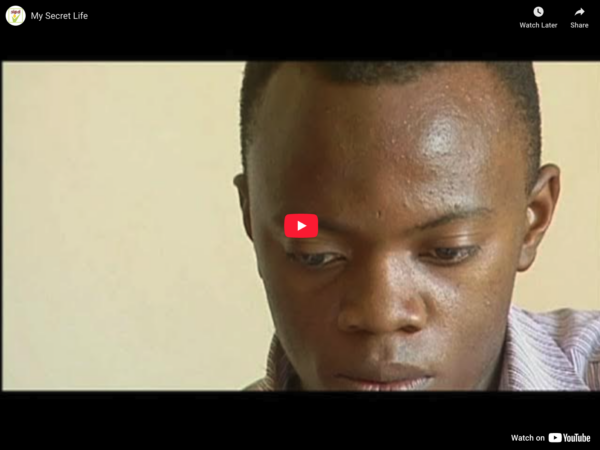
December 2012 — First Screening of ‘My Secret Life’, a Documentary on Intersex Lived Realities, Uganda
First screened in December 2012, ‘My Secret Life’ isa short documentary compiled by Initiative de soutien aux personnes présentant un développement sexuel atypique (SIPD), exploring intersex lived realities through voices of intersex children and people, parents, doctors, and SIPD staff. The documentary highlights the obscene discrimination that intersex persons in Uganda experience simply because of their uniqueness.
“Are you a boy or a girl?” This is the question that determines which group a person can play with at school.
The first public screening took place at the December 26th ILGA (International Lesbian, Gay, Bisexual, Trans and Intersex Association) World Conference in Stockholm, where it received a paradoxical yet powerful response – both unsettling and deeply encouraging. Many activists working on minority rights witnessed, for the first time, an African perspective on intersex lived realities and experiences documented in such depth.
The post-screening question and answer session was one of the most rewarding moments, sparking new partnerships and opportunities to amplify African intersex voices on national, regional, and International platforms.
Photo from the launch of ‘My Secret Life’ at the ILGA World Conference
Watch the documentary
This article was written by our intersex content contributor, Delphine Barigye.
December 2012 — First Screening of ‘My Secret Life’, a Documentary on Intersex Lived Realities, Uganda First screened in December 2012, ‘My Secret Life’ is a short documentary compiled by Support Initiative for People with Atypical Sex Development (SIPD), exploring intersex lived realities through voices of intersex children and people, parents, doctors, and SIPD staff. […]
A trans man made history in December 2012 when he participated in the third South African Mr Leather contest. He came out as trans while on stage during his speech. At the time of the contest, SA Leather’s constitution stipulated that only cisgender and gay or bisexual men were allowed to participate. Subsequently, SA Leather went through an organisational process at its following Annual General Meeting, where members voted positively to amend its constitution to include all sexual orientations, as well as all genders and gender identities.
A trans man made history in December 2012 when he participated in the third South African Mr Leather contest. He came out as trans while on stage during his speech. At the time of the contest, SA Leather’s constitution stipulated that only cisgender and gay or bisexual men were allowed to participate. Subsequently, SA Leather […]
Le International Intersex Forum had its second gathering in Stockholm, Sweden December 2012. As with the first Forum in 2011, intersex activists from all continents attended. The previous Forum’s 3 principles were expanded to 7 and read as follows:
«To put an end to mutilating and “normalising” practices such as genital surgeries, psychological and other medical treatments, including infanticide and selective abortion (on the grounds of intersex).
To ensure that the personal, free, prior, and fully informed consent of the intersex individual is a compulsory requirement in all medical practices and protocols.
Creating and facilitating supportive, safe and celebratory environments for intersex people, their families and their surroundings.
In view of ensuring the bodily integrity and health of the intersex child, psycho-social support and non-pathologising peer support be provided to parents and/or care providers and the child’s immediate family instead of surgical or other medical treatment unless such interventions are life-saving.
The provision of all human rights and citizenship rights to intersex people.
The provision of access to one’s own medical records and any documentation, and the affirmation of the intersex person’s right to truth.
The acknowledgement and redress of the suffering and injustice caused in the past.”
Another outcome of the Forum was the open letter that was drafted by Hilda Viloria, the Global Chair of Organisational Intersex International, and undersigned by the forum’s attending activists, which included African signatories including Sally Gross and Hlompho (formerly Nthabiseng) Mokoena. The open letter was then presented to the UN High Commissioner for Human Rights, Her Excellency, Navanethem Pillay.
The International Intersex Forum had its second gathering in Stockholm, Sweden December 2012. As with the first Forum in 2011, intersex activists from all continents attended. The previous Forum’s 3 principles were expanded to 7 and read as follows: Another outcome of the Forum was the open letter that was drafted by Hilda Viloria, the […]
2013 — Founding of Dynamic Initiative for Healthcare & Human Rights (DIHHR), Nigeria
Trans and Intersex People (TIP) for Human Rights in Nigeria (THRIN), now Dynamic Initiative for Healthcare & Human Rights (DIHHR), was formed in 2013. DIHHR is a trans/intersex-led organisation advocating for the rights of trans and intersex persons and gender non-conforming individuals in Nigeria. The organisation was registered on 6 December 2018.
THRIN was set up to programme for trans and intersex people and other gender non-conforming individuals who have been identified as a marginalised and underserved group in terms of provision of healthcare and other services in Nigeria. THRIN started in 2013 as a Facebook online social forum known as TransNigeria which was formed by Mx. Emmanuella (Ella) David-ette. The Facebook page changed its name to Dynamic Initiative for Healthcare & Human Rights (DIHHR) in January 2019.
The group started with a membership of thirty-three (33) persons and currently has a membership of 205 individuals spread beyond Nigeria to other countries of Africa. The network started based on the recognition that there are trans and intersex persons needing support and human rights interventions ranging from gender affirmation and trauma support/coping mechanisms, among others. The Facebook group evolved into an organisation in October 2015.
Vision
To be the top leading trans and intersex supporting organisation in Nigeria, West Africa and then globally.
La mission
To promote the respect of the rights of every human being irrespective of their sexual orientation and gender identity and expression and that includes their health and wellbeing.
Areas of Work
Human rights: Legal representation, paralegal services, documentation and monitoring, advocacy, psychosocial services, and the provision of safety and security measures.
Capacity building: Trainings, meetings, focused group discussions, safety and security information.
2013 — Founding of Dynamic Initiative for Healthcare & Human Rights (DIHHR), Nigeria Trans and Intersex People (TIP) for Human Rights in Nigeria (THRIN), now Dynamic Initiative for Healthcare & Human Rights (DIHHR), was formed in 2013. DIHHR is a trans/intersex-led organisation advocating for the rights of trans and intersex persons and gender non-conforming individuals […]
We Exist, published by Trans Bantu Zambia in 2013, is a self-publication that serves as a powerful platform to give voice to the often marginalised and overlooked transgender community in Zambia. Through a collection of 21 short stories and poems, the book seeks to recognise and validate the existence of trans community members in Zambia. The narratives within the book cover a spectrum of emotions, ranging from triumph and courage to experiences of marginalisation and abuse.
The primary objective of We Exist is to shed light on the diverse and multifaceted lives of transgender individuals in Zambia, providing a platform of story-sharing and perspectives. The book acknowledges the struggles faced by the trans community, addressing issues such as stigma and discrimination that have, tragically, led to the loss of four Zambian trans persons who are honoured and remembered in the publication.
By amplifying the voices of the trans community, the book aims to foster understanding, empathy, and awareness among readers about the challenges and triumphs of being transgender in Zambia. Through a blend of prose and poetry, the book invites readers to explore the rich tapestry of experiences within the trans community, ultimately contributing to a more inclusive and compassionate society.
We Exist, published by Trans Bantu Zambia in 2013, is a self-publication that serves as a powerful platform to give voice to the often marginalised and overlooked transgender community in Zambia. Through a collection of 21 short stories and poems, the book seeks to recognise and validate the existence of trans community members in Zambia. […]
In March 2013 Audrey Mbugua, a trans woman, filed a case (JR Case No. 147 of 2013) at Kenya’s High Court to compel the Kenya National Examination Council (KNEC) to change the name on her high school diploma. She also sought the removal of the male sex marker on her certificate. In November 2014, Mbugua won the case.
In March 2013 Audrey Mbugua, a trans woman, filed a case (JR Case No. 147 of 2013) at Kenya’s High Court to compel the Kenya National Examination Council (KNEC) to change the name on her high school diploma. She also sought the removal of the male sex marker on her certificate. In November 2014, Mbugua […]
In June 2013, Neo Musangi, a Kenyan non-binary artist and activist, performed publicly in front of the building of the Kenia National Archives. The aim of the performance was intended to dismantle the gender binary and create awareness about non-binary identities.
In a street performance, as citizens looked on, Neo Musangi took the audience through a range of what seemed to be confusing emotions. In ‘Time and Space I‘, they performed a one-person act without dialogue. The piece addressed sentiments that can be interpreted as inner conflict, turmoil, displacement or even mental health issues. As with creative works, including performance art, the meaning of the performance is open for interpretation.
The performance builds up and is followed by a performance called ‘In Time and Space II‘, where they dress in female clothing, taking on a feminine appearance until the scene rolls over into getting dressed in denim and a shirt, in a very masculine presentation and from there redressing in a different female outfit. The performance of getting dressed into male and female clothing became a continuous loop, until Neo walks away, disappearing into the audience, dressed as a dapper young guy.
In the final part of the series, ‘In Time and Space III‘, audience members were asked to unpack, analyse, and give comments on how they felt about the performance. Only men spoke to the interviewer and confusion was clear, questions such as “What genitals” the person has, and are they “active on men, or active on women, they should decide”, addresses issues faced by non-binary individuals.
In June 2013, Neo Musangi, a Kenyan non-binary artist and activist, performed publicly in front of the building of the Kenia National Archives. The aim of the performance was intended to dismantle the gender binary and create awareness about non-binary identities. In a street performance, as citizens looked on, Neo Musangi took the audience through […]
On 14 June 2013, Kenya’s High Court upheld Batha Nthungi’s petition filed a year earlier, in which she declared that being stripped and physically assaulted by the Kenyan Police violated her human rights (A.N.N v Attorney General). The Court agreed that the stripping of her in the glare of the media was meant to humiliate her, and deny her of her dignity and ruled that she be awarded USD 2,000. The Court further prescribed proper procedure for the future arrest of accused trans persons.
On 14 June 2013, Kenya’s High Court upheld Batha Nthungi’s petition filed a year earlier, in which she declared that being stripped and physically assaulted by the Kenyan Police violated her human rights (A.N.N v Attorney General). The Court agreed that the stripping of her in the glare of the media was meant to humiliate […]
Strategic Action Litigation (SAL) is a process in Public Interest Law whereby members of a marginalised group deliberately and proactively take a test case to court for the purpose of establishing a positive legal precedent with legal implications that go beyond the immediate litigants. This specific kind of litigation aims to achieve broader social change. Kenya’s intersex visibility began with such litigation, which saw the country’s intersex rights progress more rapidly than in other African countries. This piece strategically highlights the two court cases that have advanced Intersex advocacy in Kenya.
L'affaire R.M. c. Attorney General & 4 Others (2010), Petition No. 705 of 2007 Kenya, High Court
Cette bataille juridique historique a mis en lumière les droits des personnes intersexuées et a remis en question l'absence de reconnaissance et de protection juridiques à leur égard.
Richard Musya (R.M.), le requérant dans cette affaire, est né intersexué, avec des organes génitaux ambigus, et a été élevé comme un homme par ses parents. Au Kenya, comme dans de nombreuses régions du monde, la compréhension médicale et sociétale des conditions d'intersexualité était limitée. Les personnes intersexuées étaient souvent confrontées à la stigmatisation, à la discrimination et aux pressions exercées pour qu'elles se conforment aux normes binaires de genre par le biais d'interventions chirurgicales ou d'autres moyens.
R.M. a dû faire face à d'importants défis liés à son statut d'intersexe, notamment des difficultés à obtenir une reconnaissance juridique pour l'emploi et le mariage, ainsi que des documents tels qu'un certificat de naissance reflétant fidèlement son identité. Ce manque de documents a affecté de nombreux aspects de leur vie, notamment l'accès à l'éducation, aux soins de santé et aux services sociaux.
R.M. a ensuite été arrêté et, dans l'attente de son procès, il a été isolé en raison de son intersexualité. Après avoir été condamnés, les requérants ont été transférés dans une prison de haute sécurité pour hommes, où ils ont subi des traitements inhumains et dégradants de la part des autorités pénitentiaires.
R.M. a porté l'affaire devant la Haute Cour du Kenya, arguant que l'État avait violé ses droits constitutionnels en ne fournissant pas une reconnaissance et une protection juridiques adéquates aux personnes intersexuées. L'affaire était fondée sur plusieurs dispositions constitutionnelles, notamment le droit à la dignité, à l'égalité et à l'absence de discrimination fondée sur le sexe. R.M. demandait la délivrance d'un certificat de naissance reflétant fidèlement son statut intersexuel sans imposer une désignation masculine ou féminine. Ils ont contesté la discrimination systémique à laquelle sont confrontées les personnes intersexuées au Kenya, en plaidant pour une reconnaissance juridique et sociale de leur identité unique. L'affaire a attiré l'attention sur les pressions exercées sur les personnes intersexuées pour qu'elles subissent des procédures médicales inutiles afin de se conformer aux normes de genre binaires.
Tout au long de l'affaire, divers experts, notamment des professionnels de la santé, des défenseurs des droits de l'homme et des personnes intersexuées, ont témoigné sur la nature des conditions intersexuées et les questions de droits de l'homme en jeu. L'équipe juridique du requérant a fait valoir que l'absence de reconnaissance et la classification binaire forcée violaient les droits fondamentaux de R.M..
Le jugement
La Haute Cour a fait droit à la demande de dommages-intérêts de R.M. pour traitement inhumain et dégradant aux mains de l'État, mais a rejeté toutes les autres demandes. Cette affaire a fait œuvre de pionnier en matière de litiges d'intérêt public sur les défis auxquels sont confrontées les personnes intersexuées. Elle a permis à la Cour de consacrer le principe selon lequel les personnes intersexuées ne doivent pas être soumises à des peines ou traitements cruels, inhumains et dégradants, en particulier lors d'une arrestation ou d'une perquisition.
E.A. & Another v. Attorney General & 6 others (Baby 'A' case) [2014], Petition No. 266 of 2013 Kenya
Le bébé A, qui est né intersexué avec des organes génitaux ambigus, a été marqué " ?" sur leurs documents juridiques.
La mère du bébé A (E.A.), la requérante dans cette affaire, a été confrontée à plusieurs difficultés en essayant d'enregistrer la naissance de son bébé, ce qui nécessitait une catégorie de sexe déterminée comme étant masculine ou féminine - catégories auxquelles son bébé ne correspondait pas. En conséquence, son bébé n'a pas reçu d'acte de naissance. Dans ces cas, de nombreux enfants intersexués sont contraints de subir une chirurgie corrective, ce qui porte atteinte à leur droit à l'autonomie et entraîne de nombreux autres problèmes plus tard dans leur vie d'adulte.
E.A. a porté l'affaire devant la Haute Cour, affirmant que l'absence d'acte de naissance prive le bébé d'une reconnaissance juridique (poursuite pour discrimination légale) et de la possibilité de jouir d'autres droits tels que le droit à l'éducation et aux soins médicaux.
Le jugement
La Cour n'a trouvé aucune preuve de discrimination à l'encontre du bébé A et a estimé que ni l'hôpital ni la Cour n'avaient violé les droits du bébé. La Cour a confirmé que le bébé était intersexué et que, pour éviter toute discrimination future, le bébé A et les autres enfants intersexués devaient être enregistrés par l'officier d'état civil.
La Cour a déterminé qu'il était nécessaire d'établir des lignes directrices, des règles et des règlements concernant les opérations chirurgicales sur les personnes intersexuées, et que le gouvernement devait recueillir des données sur les personnes intersexuées. Toutefois, elle a également estimé qu'il n'était pas de son ressort d'établir de telles lignes directrices ou de superviser la collecte de données et a donc chargé le gouvernement d'assumer ces responsabilités.
Développements ultérieurs pour la communauté intersexe au Kenya
À la suite de ces deux arrêts, des efforts ont été déployés au Kenya pour améliorer le cadre juridique des personnes intersexuées. Il s'agit notamment de plaider en faveur de lois antidiscriminatoires complètes, de meilleures politiques de santé et d'une sensibilisation accrue du public afin de réduire la stigmatisation et la discrimination à l'égard des personnes intersexuées.
L'affaire R.M. a marqué un tournant dans la promotion des droits des personnes intersexuées au Kenya et dans toute l'Afrique. Elle a créé un précédent en matière de reconnaissance et de protection juridiques, suscitant des discussions sur les réformes juridiques et politiques nécessaires pour soutenir les personnes intersexuées. L'affaire a également permis de sensibiliser le public aux questions liées à l'intersexualité, contribuant ainsi à un mouvement plus large en faveur d'une plus grande visibilité et d'une meilleure acceptation.
L'affaire Baby A a déclenché des réformes sur les droits des personnes intersexuées au Kenya. En 2014, le Loi sur les personnes privées de liberté a été promulguée et a défini pour la première fois le terme "intersexe" dans la législation kenyane.
En 2017, le procureur général a mis sur pied le groupe de travail sur les réformes politiques, juridiques, institutionnelles et administratives concernant les personnes intersexuées. Ce groupe de travail a fait rapport au gouvernement kenyan sur la situation des droits de l'homme des personnes intersexuées au Kenya et a recommandé des réformes législatives pour reconnaître et protéger les droits des personnes intersexuées au Kenya, et a appelé à la collecte de données statistiques sur les personnes intersexuées. L'inclusion des personnes intersexuées dans les données statistiques au Kenya a fait du Kenya le premier pays africain à inclure des données sur les personnes intersexuées dans son recensement en 2019. 1 524 personnes intersexuées ont été recensées, un nombre estimé inférieur au nombre réel car de nombreux numérateurs n'ont pas inclus la question du marqueur de genre "I" et on pense que de nombreuses personnes n'ont toujours pas révélé leur vérité.
The Attorney General also created the Intersex Persons Implementation Coordination Committee (IPICC), a body established to oversee and coordinate the implementation of policies and programmes concerning the rights and welfare of intersex individuals in Kenya. Following this, the Kenyan president appointed the first intersex commissioner at the Kenya National Commission on Human Rights.
Loi sur l'enfance, 2022 a introduit des dispositions importantes pour les enfants intersexués. La loi stipule que les enfants intersexués doivent être traités avec respect et bénéficier d'un accès égal aux services essentiels, y compris les soins de santé, l'éducation et la protection sociale. Elle condamne également la discrimination à l'encontre des enfants intersexués dans les centres de protection de l'enfance et autres structures similaires. Un aspect essentiel de la loi est sa protection contre les opérations chirurgicales d'assignation de sexe non consenties et non nécessaires, stipulant que de telles procédures ne doivent avoir lieu que sur recommandation médicale. Les personnes qui enfreignent cette disposition sont passibles d'une amende minimale de $5 000. Bien que le fait de confier aux médecins le pouvoir de décision puisse présenter certains risques, cette législation représente une avancée significative et sert d'exemple aux défenseurs des droits des personnes intersexuées dans toute l'Afrique.
L'action stratégique en justice s'est révélée être un outil essentiel pour faire progresser les droits et les protections des personnes intersexuées au Kenya. Les efforts juridiques et sociaux continus font partie d'un voyage que le Kenya a entrepris pour parvenir à la pleine reconnaissance et à la protection des droits des personnes intersexuées. Il s'agit d'une combinaison d'efforts de la part des praticiens du droit, des activistes, des décideurs politiques et de la communauté dans son ensemble. En persévérant dans ces efforts, on peut espérer un avenir où les personnes intersexuées pourront vivre librement et dignement, en bénéficiant des mêmes droits et protections que tous les autres citoyens kenyans.
Strategic Action Litigation (SAL) is a process in Public Interest Law whereby members of a marginalised group deliberately and proactively take a test case to court for the purpose of establishing a positive legal precedent with legal implications that go beyond the immediate litigants. This specific kind of litigation aims to achieve broader social change. […]
Ugandan trans activist and leader, Victor Mukasa, with assistance from Immigration Equality, was granted asylum status in the United States on 27 June 2013 after fleeing Uganda due to fear of persecution for his gender identity. Victor is often informally considered a pivotal role player in the trans movement in Africa.
Ugandan trans activist and leader, Victor Mukasa, with assistance from Immigration Equality, was granted asylum status in the United States on 27 June 2013 after fleeing Uganda due to fear of persecution for his gender identity. Victor is often informally considered a pivotal role player in the trans movement in Africa.
On 23 August 2013 the board of Éducation et Défense des droits des personnes transgenres (TEA), comprising 3 trans Kenyans — Audrey Mbugua, Maureen Muia, and Annet Jennifer — sued the Kenyan State and the NGO Coordination Board for refusing to register TEA as an NGO. The State and the Board opposed the case, indicating that they could not register TEA because they could not tell the gender of its board members. The NGO Coordination Board also indicated that the applicants’ names on their national identity cards did not match the names submitted by the applicants when they applied for registration.
On 23 August 2013 the board of Transgender Education & Advocacy (TEA), comprising 3 trans Kenyans — Audrey Mbugua, Maureen Muia, and Annet Jennifer — sued the Kenyan State and the NGO Coordination Board for refusing to register TEA as an NGO. The State and the Board opposed the case, indicating that they could not […]
Trans Angolan musician, Titica, was made a UNAIDS National Goodwill Ambassador on 7 October 2013.
Titica is a pioneer in a local music genre called ‘kuduro’, and even performed for the then Angolan President, José Eduardo dos Santos. Her appointment as UNAIDS Goodwill Ambassador came at a time when many acknowledged that Angola was moving from being a rigid anti-LGBTIQ+ state to one where social recognition and acceptance of the presence of transgender persons such as Titica were acknowledged, even while the State’s penal code still outlawed homosexuality.
June 2025: Titica’s open letter about the discrimination and transphobia she’s been a victim of
“A todas as pessoas que me acompanham, respeitam e acreditam na minha arte:
Escrevo esta carta com o coração pesado, mas também com a cabeça erguida. Nos últimos dias, tenho sido alvo de ataques, boicotes e difamações na internet, com a divulgação de conteúdos que em nada representam quem sou — como artista, como mulher, como ser humano.
Esses atos não são apenas uma tentativa de manchar a minha imagem pública, mas também um reflexo da transfobia estrutural que tantas mulheres trans enfrentam diariamente. É um tipo de violência que tenta calar a nossa existência, questionar o nosso valor e apagar a nossa dignidade.
Mas não me calarei. A minha voz sempre foi instrumento de luta, de cultura e de transformação — e continuará a ser.
Sou Titica. Sou mulher. Sou trans. E exijo respeito.
A minha trajetória não começou ontem. Venho de longe, de batalhas dançadas no chão do Kuduro até os palcos internacionais, com esforço, talento e verdade. Nenhuma mentira fabricada poderá apagar o que construí com tanto suor e coragem.
Peço a todas as pessoas de bem que não se calem perante esse tipo de violência digital. Denunciem. Reflitam. E, acima de tudo, escolham o lado certo da história: o lado da empatia, da justiça e do respeito.
A minha arte continuará a falar mais alto. E cada passo meu será uma afirmação de resistência, orgulho e amor próprio.
Com firmeza e gratidão,
Titica
Cantora, mulher trans, artista angolana”
“To all the people who follow me, respect and believe in my art:
Writing this letter with a heavy heart but also with a head held high. In recent days, I have been the target of attacks, boycotted and defamation on the Internet, with the publication of content that in no way represents who I am — as an artist, as a woman, as a human being.
These acts are not only an attempt to tarnish my public image, but also a reflection of the structural transphobia that so many trans women face on a daily basis. It is a kind of violence that attempts to silence our existence, question our value, and erase our dignity.
But I won’t shut up. My voice has always been an instrument of struggle, of culture, and of transformation—and it will always be.
I am Titica. I am a woman. I am trans. And I demand respect.
My journey did not begin yesterday I come a long way, from danced battles on Kuduro floor to international stages, with effort, talent and truth. No fabricated lie can erase what I built with sweat and guts.
I request all good people not to remain silent in front of this kind of digital violence. Let’s report it. Let’s reflect. And above all, choose the right side of history: the side of empathy, justice and respect.
My art will continue to speak louder And every step I take will be an affirmation of resilience, pride and self-love.
Trans Angolan musician, Titica, was made a UNAIDS National Goodwill Ambassador on 7 October 2013. Titica is a pioneer in a local music genre called ‘kuduro’, and even performed for the then Angolan President, José Eduardo dos Santos. Her appointment as UNAIDS Goodwill Ambassador came at a time when many acknowledged that Angola was moving […]
The Third International Intersex Forum took place on 29 November 2013 in Valletta, Malta and concluded on 1 December 2013. With the initial 3 principles decided on at the first Forum, and then extended during the second Forum, the ongoing work document evolved into the Malta Declaration at this third Forum.
The Malta Declaration was drafted and finalised by 34 intersex activists from all continents, including Africa’s Julius Kaggwa and Hlompho Mokoena (formerly known as Nthabiseng), with representation from 30 intersex organisations. You can read more about this Forum and the Declaration here.
The Malta Declaration is available in English, Chinese, Dutch, French, German, Serbian, and Spanish/Castellano.
The Third International Intersex Forum took place on 29 November 2013 in Valletta, Malta and concluded on 1 December 2013. With the initial 3 principles decided on at the first Forum, and then extended during the second Forum, the ongoing work document evolved into the Malta Declaration at this third Forum. The Malta Declaration was […]
6 June 2012June 2012September 2012October 20121 November 201213 November 201224 November 2012December 2012December 2012December 201220132013March 2013June 201314 June 2013201327 June 201323 August 20137 October 20131 December 2013
Vous pouvez inclure des informations sur votre organisation/groupe africain.
Il existe de nombreuses organisations et individus africains qui, au fil des années, ont apporté des contributions inestimables à l'histoire des mouvements trans, intersexes et gender diverse qui ne figurent pas encore sur notre Chronologie.
Nous voulons reconnaître et inclure toutes les contributions vérifiables.
La ligne du temps concerne votre des histoires et des voix. Vous pouvez en savoir plus sur la façon de contribuer en visitant notre page Contactez-nous ici.