An archive of histories/herstories/theirstories affecting and influencing the trans, gender diverse and intersex movements in Africa
This Timeline of our archive of histories/herstories/theirstories of the trans, gender diverse and intersex movements in Africa and in the Diaspora emerged through the grassroots experiences and memories of the contributing African activists and organisations.
It is often updated with new stories and the Timeline is continually growing.
How to navigate the Timeline
Categories are displayed alphabetically at the top of the Timeline and can be used to filter the results to focus on the research theme chosen. For example, ‘All’ will show you all topics, while ‘Intersex’ will display all entries related to intersex movements and moments.
Alternatively, use the search bar in the menu at the top and bottom of screen to find more specific information.
Categories relating to gender, sex characteristics and sexual orientation have flag icons and colour groups to visually distinguish them from one another:
All
Activists
All
Art
Asylum Seekers/Migrants/Refugees
Audio and Video
Awards
Ballroom
Community
Conferences
Cross-Dressing
Depathologisation
Diaspora
Drag
Films
Gender Diverse
Gender Non-Conforming
Gender-Affirming Healthcare
Gender-Based Violence
Healthcare
HIV/AIDS
Homeless people
In Memoriam
Intersex
Interviews
LBQ
LBTI
LBTQ
Legislation
LGBTQIA+
Media
Non-Binary
Organisations
People living with HIV
Persons with Disabilities
Publications
Sex Work
Sport
SRHR
TIHA Articles
Trans
Trans & Intersex
Transfeminist
Transmasculine
Transsexual
Transvestite
Youth
14 July 2026 — Article: BBC Intersex Stories Through the Voices of African Intersex Activists
14 July 2026 — Article: BBC Intersex Stories Through the Voices of African Intersex Activists
The media plays an important role in shaping public understanding of intersex people. While African intersex advocates have long been telling their own stories through books, documentaries and other organisational work, British Broadcasting Corporation (BBC) reporting has helped bring some of these voices to international audiences. This article highlights three BBC stories that shed light on the realities, challenges and resilience of intersex people across Africa.
Julius Kaggwa — Uganda
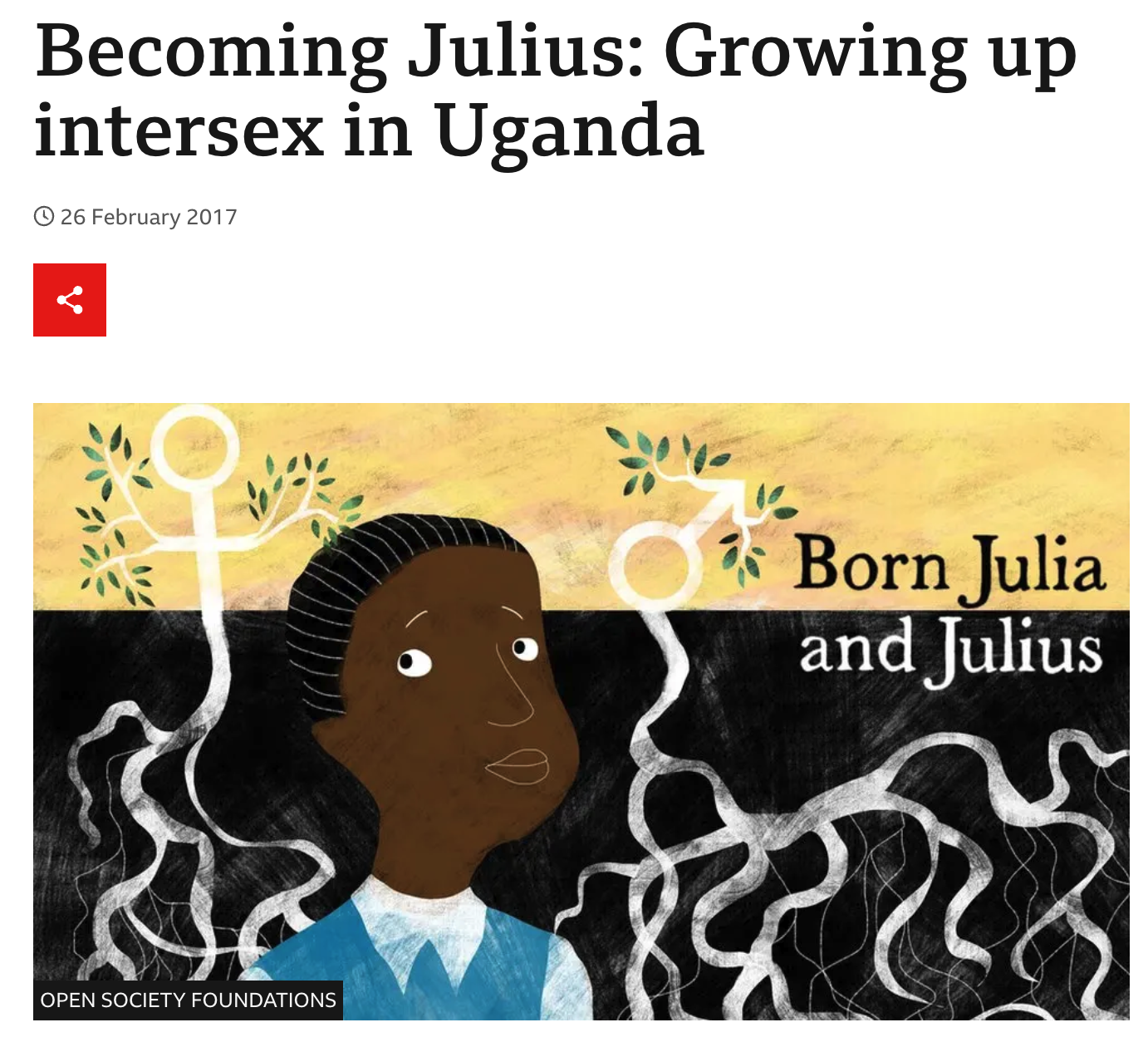
“Becoming Julius: Growing up intersex in Uganda” (2017) is the personal story of Julius Kaggwa, from being raised as Julia to becoming Julius, one of Africa’s leading intersex activists. The piece explores his childhood, stigma, school experiences, identity, the journey into advocacy and the family he has built. It is both deeply narrative and an important story on how intersex advocacy in East Africa began. The story is beautifully illustrated by PositiveNegatives for the Open Society Foundations. Julius Kaggwa is the Founder of Support Initiative for People with Atypical Sex Development (SIPD). You can read the full BBC story here.
Julius Kaggwa
Mphatso Sakala — Zambia
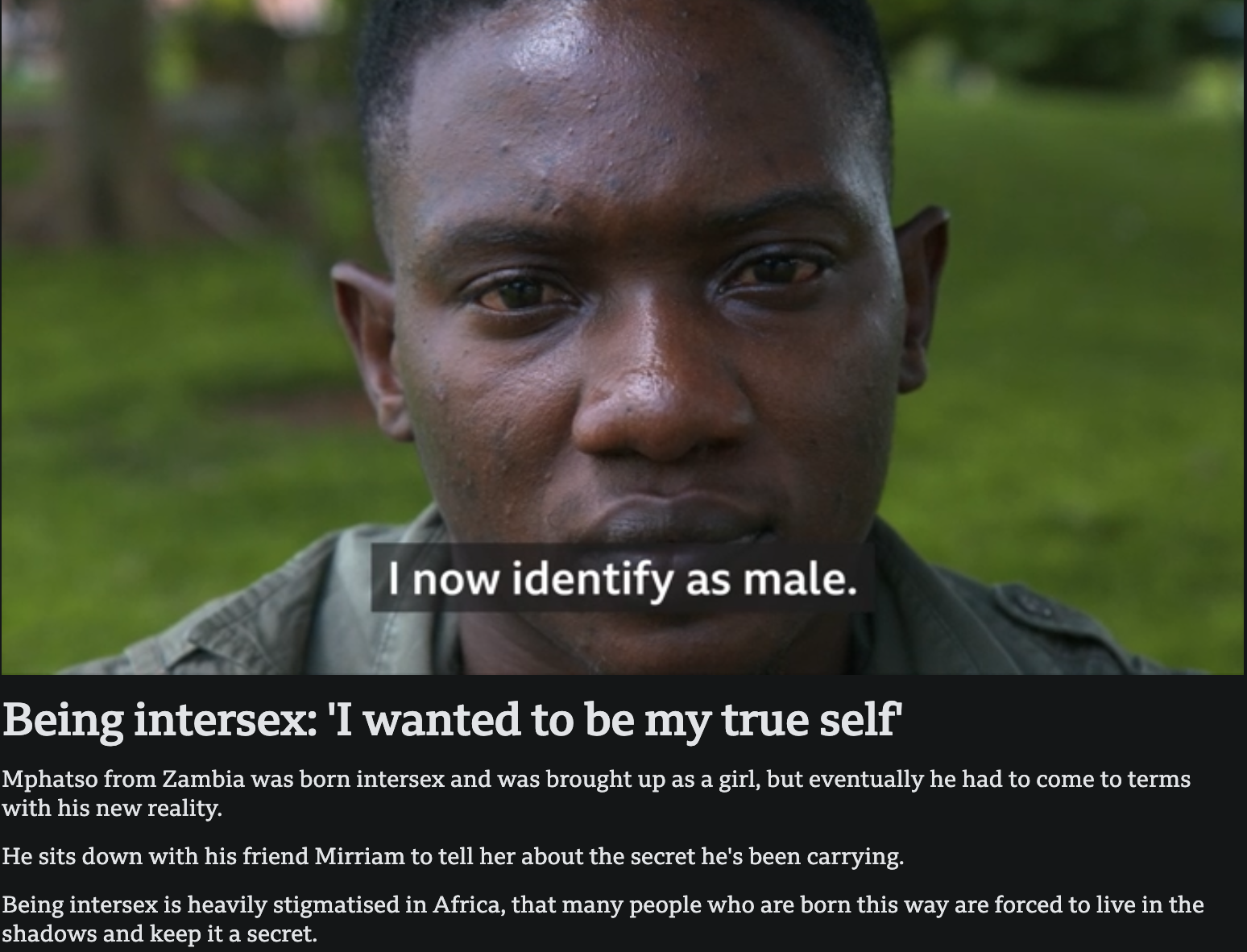
The short documentary, “Being intersex: I wanted to be my true self” (2019), produced by BBC Africa’s Life Clinic, explores Mphatso Sakala’s story of disclosing his truth to his childhood friend who became a sister, Miriam. The film explores the emotional impact of secrecy, family expectations, self-discovery and the courage it takes to live openly in a society where intersex people often face misunderstanding and stigma. He shares a deeply personal story of his intersex journey, especially the reality that comes with being different from the rest, being assigned female at birth and eventually embracing their authentic identity. The journey is not about becoming someone else but about living genuinely. Sharing his story publically, Mphatso helps challenge stigma and encourages greater understanding of intersex people in Zambia and across Africa. Mphatso is the Founder and current Executive Director of Intersex Society of Zambia (ISSZ). Watch the BBC documentary:
James Karanja — Kenya
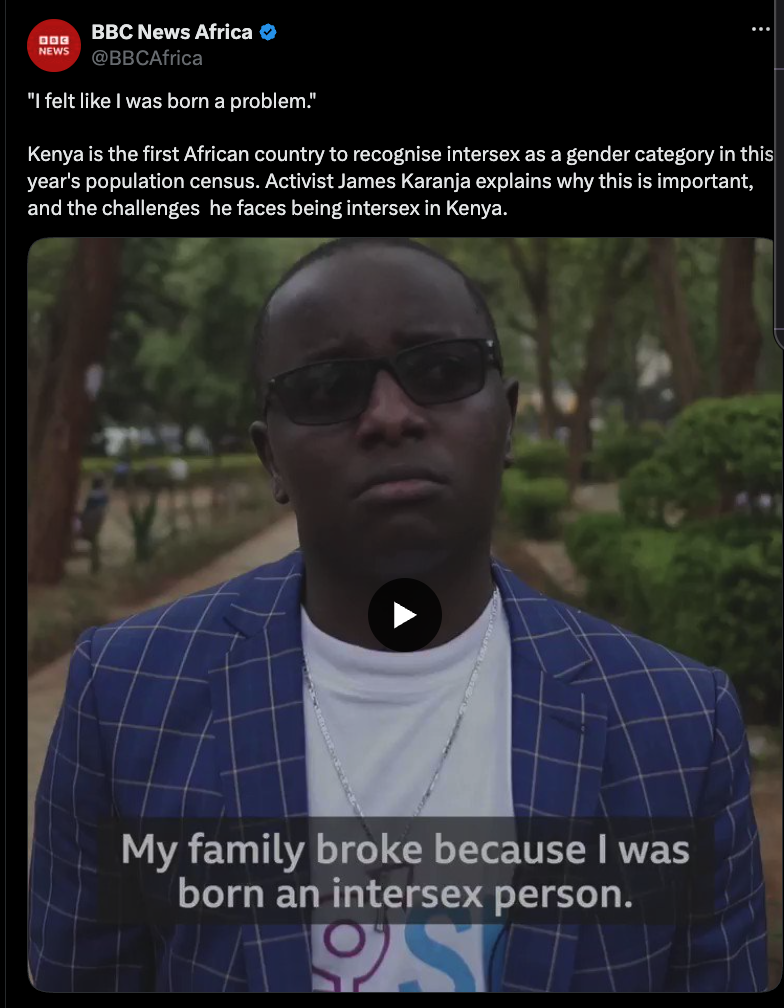
Kenya was the first African country to recognise intersex as a gender category in their 2019 population census. In this BBC article, James Karanja narrates his childhood story as an intersex person born in Kenya unselfishly sharing the struggles of an intersex child and their family and explaining why being counted matters. James was assigned female at birth and raised as Mary because his family and the health care providers were uncertain how to classify his sex. As he grew older, his body developed more typically male characteristics, leaving him to navigate confusion, stigma and rejection within his community. Through self-discovery and advocacy, he embraced his identity as James Karanja and became a leading voice for the intersex rights in Kenya. The timing of the BBC story is significant as it coincided with Kenya’s historic decision to collect data on intersex people during the national census, making the country the first in Africa to do so. For James, this was acknowledgement that intersex people exist and deserve equal access to services, legal protection and public policy. By weaving James’ personal story with Kenya’s landmark census, the BBC demonstrated that behind every policy milestone, there are real people whose lives have been shaped by invisibility and this should no longer be the way forward. Watch the BBC documentary here:
These stories have helped move public conversations beyond myths and misconceptions especially when told right. While no single media outlet can capture the diversity of intersex experiences, because they go way beyond just these stories, responsible journalism can increase understanding, reduce stigma and encourage informed discussions about bodily autonomy and human rights. Continue reading these stories in our archive to experience wider realities of intersex lives.
This article was written by our Intersex Content Contributor, Delphine Barigye
14 July 2026 — Article: BBC Intersex Stories Through the Voices of African Intersex Activists The media plays an important role in shaping public understanding of intersex people. While African intersex advocates have long been telling their own stories through books, documentaries and other organisational work, British Broadcasting Corporation (BBC) reporting has helped bring some […]
You can include information about your African Organisation/Group
There are many African organisations and individuals who over the years have contributed in invaluable ways to the story of the trans, gender diverse and intersex movements who are not yet included on our Timeline.
We want to acknowledge and include all verifiable contributions.
The Timeline is about your stories and voices. You can find out more about how to contribute by visiting our Contact Us page here.