An archive of histories/herstories/theirstories affecting and influencing the trans, gender diverse and intersex movements in Africa
This Timeline of our archive of histories/herstories/theirstories of the trans, gender diverse and intersex movements in Africa and in the Diaspora emerged through the grassroots experiences and memories of the contributing African activists and organisations.
It is often updated with new stories and the Timeline is continually growing.
How to navigate the Timeline
Categories are displayed alphabetically at the top of the Timeline and can be used to filter the results to focus on the research theme chosen. For example, ‘All’ will show you all topics, while ‘Intersex’ will display all entries related to intersex movements and moments.
Alternatively, use the search bar in the menu at the top and bottom of screen to find more specific information.
Categories relating to gender, sex characteristics and sexual orientation have flag icons and colour groups to visually distinguish them from one another:
All
Activists
All
Art
Asylum Seekers/Migrants/Refugees
Audio and Video
Awards
Ballroom
Community
Conferences
Cross-Dressing
Depathologisation
Diaspora
Drag
Films
Gender Diverse
Gender Non-Conforming
Gender-Affirming Healthcare
Gender-Based Violence
Healthcare
HIV/AIDS
Homeless people
In Memoriam
Intersex
Interviews
LBQ
LBTI
LBTQ
Legislation
LGBTQIA+
Media
Non-Binary
Organisations
People living with HIV
Persons with Disabilities
Publications
Sex Work
Sport
SRHR
TIHA Articles
Trans
Trans & Intersex
Transfeminist
Transmasculine
Transsexual
Transvestite
Youth
30 January 2023 — Book Review: “Envisioning African Intersex”, by Amanda Lock Swarr
30 January 2023 — Book Review: “Envisioning African Intersex”, by Amanda Lock Swarr
“Envisioning African Intersex: Challenging Colonial and Racist Legacies in South African Medicine” by Amanda Lock Swarr (Associate Professor, Gender, Women & Sexuality Studies, University of Washington) was published 30 January 2023 and is a groundbreaking work that challenges entrenched scientific and social norms about intersex individuals, particularly within the context of South Africa. Swarr meticulously deconstructs the historical and contemporary narratives surrounding intersex bodies, highlighting how these narratives are steeped in colonialism, racism, and gender binaries. The book is divided into several chapters, each focusing on different aspects of intersex representation and activism, with a strong emphasis on the voices and experiences of intersex individuals themselves.
The book and any of its chapters are available as a free download
Critical Analysis of Scientific Definitions of ‘Intersex’
The book opens with a critical examination of how scientific definitions of intersex have historically pathologised and categorised intersex bodies. Swarr points out that intersex has been subjected to an extensive range of taxonomic and medical definitions, often used to enforce binary gender norms. She emphasises the problematic nature of these definitions, which date back to the early 1800s and became widely adopted by medical professionals in the 1950s. Swarr quotes Iain Morland, who argues that scholarly and popular considerations of intersex often start with statistics, giving a false impression that the “truth” of bodies can be separated from discourse. Instead, Morland suggests exploring “how and why knowledge about intersex is produced”.
Swarr introduces the concept of “citational chains,” which she defines as references that build on each other to create truth claims despite the fundamentally flawed foundations of the original works cited. These chains perpetuate erroneous observations by colonial explorers and scientists, linking “hermaphroditism” and intersex with blackness and spreading these ideas across academia, popular culture, journalism, and social media
Colonial Roots of Intersex Representations
The second chapter delves into the colonial roots of intersex representations, focusing on how colonial explorers and scientists constructed narratives around the “Hottentot apron” and other racialised body features. Swarr argues that Africa was positioned at the bottom of the hierarchy in the citational chain of explorers’ and scientists’ imaginations. She illustrates how British physicians like George Blacker and William Lawrence played a significant role in erasing the history and memory of European hermaphroditism, thus valorising European bodies and reinforcing racial hierarchies.
Swarr’s analysis highlights the importance of understanding the historical context in which these scientific narratives were formed and how they continue to impact contemporary perceptions of intersex individuals. By exposing the colonial underpinnings of these narratives, she challenges readers to reconsider the legitimacy and motivations behind them.
Sally Gross
The third chapter focuses on Sally Gross, a prominent South African intersex activist and founder of the first intersex rights organisation in Africa, whose life and work epitomised the struggle against medical violence and social exclusion. Gross’s activism was deeply rooted in her anti-apartheid efforts, and she consistently linked the fight against apartheid with the struggle for intersex rights. Swarr provides a detailed account of Gross’s efforts to challenge the theories of scientists like John Money and H. J. Grace, as well as her critique of the medical protocols that pathologized intersex bodies.
Gross’s activism was characterised by her insistence on the acceptance of the body as it is, without the need for conformity to binary gender norms. In her unpublished work, she reflects on her life and the challenges she faced:
“When it became increasingly clear that what I am challenges the dichotomy, it is almost as if I was seen as threatening the very order of creation. I was no longer seen as a legitimate inhabitant of a shared social and moral world”.
The book also delves into the racial categorisations used by Grace and others, which were deeply entrenched in apartheid logic. Grace’s detailed taxonomy of intersex conditions and his simplistic definition of race reflect the scientific racism of his time. He described South Africa as having “four well-defined population groups: Caucasoids, Negroids, Asiatics, and a mixed race of all three, the Coloureds”. This categorisation was used to justify the racial hierarchies and segregation policies of apartheid.
Swarr challenges these outdated notions, arguing for a more nuanced understanding of intersex variations that transcends racial and colonial boundaries. Her work underscores the need to decolonise medical protocols and embrace a more inclusive and intersectional approach to intersex studies.
Caster Semenya
The final chapter examines the case of Caster Semenya, a South African runner who has been subjected to intense scrutiny and invasive gender verification testing. Semenya’s treatment by sporting authorities and the media highlights the ongoing intersection of racism, colonialism, and gender policing. Swarr argues that Semenya’s experiences are emblematic of the broader issues faced by intersex and gender-nonconforming individuals, particularly in the Global South.
Swarr discusses how Semenya and her supporters have used social media campaigns, such as #HandsOffCaster, to challenge the racist and exclusionary practices of institutions like the International Association of Athletics Federations (IAAF). These campaigns have played a crucial role in raising awareness about the injustices faced by Semenya and other athletes subjected to gender testing.
Semenya’s case underscores the need for decolonising gender testing and embracing a more inclusive understanding of gender diversity. Her resilience in the face of institutional racism and sexism serves as a powerful example of the broader fight for intersex rights and recognition.
Conclusion
“Envisioning African Intersex” is a powerful and thought-provoking work that sheds light on the complex and often painful realities faced by intersex individuals. Amanda Lock Swarr’s meticulous research and insightful analysis provide a comprehensive understanding of the ways in which colonialism, racism, and gender binaries have shaped and continue to shape the lives of intersex people. By centring the voices and experiences of intersex activists like Sally Gross and Caster Semenya, Swarr not only exposes the historical injustices but also celebrates the resilience and agency of those who refuse to be defined by oppressive norms.
This book is an essential for anyone interested in intersex rights, gender studies, African studies, or the history of medicine. It challenges one to question one’s assumptions about gender and sex and to recognise the profound impact of colonial legacies on contemporary understandings of the body. Through its rigorous scholarship and compelling narratives, “Envisioning African Intersex” offers a vision of a more inclusive and just world, where all bodies are accepted and valued as they are.
Swarr negotiated with DUKE university that this book be available FREE of charge online. Chapters or the entire book can be downloaded. The income generated from books that are purchased are donated to Intersex South Africa (ISSA), the organisation founded by Sally Gross.
Video Interview with Amanda Lock Swarr About the Book
As part of the Knowing Africa Seminar Series, Amanda Lock Swarr discusses the book in the video below with Ann Cvetkovich (Professor, Feminist Institute of Social Transformation, Carleton University), Zethu Matebani (sociologist, activist, writer, documentary film maker, Professor and South Africa Research Chair in Sexualities, Genders and Queer Studies at the University of Fort Hare), and Jabu Pereira (Founder of IRANTI).
This review was written by our content contributor, Delphine Barigye
30 January 2023 — Book Review: “Envisioning African Intersex”, by Amanda Lock Swarr “Envisioning African Intersex: Challenging Colonial and Racist Legacies in South African Medicine” by Amanda Lock Swarr (Associate Professor, Gender, Women & Sexuality Studies, University of Washington) was published 30 January 2023 and is a groundbreaking work that challenges entrenched scientific and social […]
The Act prescribes life imprisonment for sex between two people of the same biological sex and the death penalty for “aggravated homosexuality”. The latter offence includes “serial offenders”, same-sex rape, sex in a position of authority or procured by intimidation, sex with persons older than seventy-five, sex with the disabled and mentally ill, and homosexual acts committed by a person with a previous conviction of homosexuality. Further, under its provisions, the promotion (including normalisation) of homosexuality is punishable by imprisonment for up to 20 years and fines. Read more.
Tranz Network Uganda‘s Williams Apako speaks about the impact on trans people of this Act and the work that he has done:
26 May 2023 — Anti-Homosexuality Act, 2023 Signed into Law, Uganda Following the overturning of the Anti-Homosexuality Act of 2014, the Anti-Homosexuality Act, 2023 was signed into law on 26 May 2023. The Act prescribes life imprisonment for sex between two people of the same biological sex and the death penalty for “aggravated homosexuality”. The latter offence includes “serial […]
Juin 2023 — Création de OUT (Override Unequal Treatment) Moris, Maurice / June 2023 — OUT (Override Unequal Treatment) Moris Founded, Mauritius
Fondée à Maurice en juin 2023 par Sandrine Julien et Carou Labonne, OUT (Override Unequal Treatment) Moris œuvre auprès des personnes LGBTQ+ ainsi que des victimes et survivant·e·s de violences fondées sur le genre. L’action principale d’OUT Moris s’articule autour de l’information, de l’éducation, de la sensibilisation et du plaidoyer. L’organisation a été enregistrée la même année.
Founded in Mauritius in June 2023 by Sandrine Julien and Carou Labonne, OUT (Override Unequal Treatment) Moris works with LGBTQ+ persons and GBV victims and survivors. OUT Moris’ main work focuses on information, education, sensitisation and advocacy.The organisation was registered in the same year.
La vision / Vision
Une île Maurice libre, égalitaire et inclusive.
A free, equal and inclusive Mauritius.
Mission
Promouvoir les droits des personnes LGBTQ+ et prévenir la violence fondée sur le genre par le plaidoyer, l’éducation et la sensibilisation.
Promote the rights of LGBTQ+ people and prevent gender-based violence through advocacy, education, and awareness-raising.
Domaines prioritaires / Focus areas
Série de vidéos éducatives – Droits humains, inclusion LGBTQIA+, VBG et éducation juridique
Fear & Fairness – Enquête nationale sur la perception des personnes LGBTQIA+
KIFER ? – Campagne de narration et de visibilité
VUE – Série de documentaires et de dialogues communautaires
Navigating Spaces – Projet de recherche sur les personnes LGBTQIA+
Campagne pour l’égalité du mariage – Éducation du public et plaidoyer
Initiative de suivi des discours de haine – Documentation et plaidoyer
Action auprès des jeunes et de la communauté – Ateliers et séances de sensibilisation
N’Joy for Love – Événement d’engagement communautaire et de sensibilisation du public
Educational Video Series – Human rights, LGBTQIA+ inclusion, GBV, and legal literacy
Fear & Fairness – National LGBTQIA+ perception survey
KIFER? – Storytelling and visibility campaign
VUE – Documentary and community dialogue series
Navigating Spaces – LGBTQIA+ research project
Marriage Equality Campaign – Public education and advocacy
Hate Speech Monitoring Initiative – Documentation and advocacy
Youth & Community Outreach – Workshops and awareness sessions
N’Joy for Love – Community engagement and public awareness event
Programmes pour les personnes trans / Trans programmes
Programme d’inclusion des personnes trans – Sensibilisation, plaidoyer et autonomisation de la communauté
Trans Inclusion Programme – Awareness, advocacy, and community empowerment
Juin 2023 — Création de OUT (Override Unequal Treatment) Moris, Maurice / June 2023 — OUT (Override Unequal Treatment) Moris Founded, Mauritius Fondée à Maurice en juin 2023 par Sandrine Julien et Carou Labonne, OUT (Override Unequal Treatment) Moris œuvre auprès des personnes LGBTQ+ ainsi que des victimes et survivant·e·s de violences fondées sur le […]
12 June 2023 — Founding of Kajiado North for Empowerment and Social Welfare Outreach (KNESWO), Kenya
Founded on 12 June 2023 by Kyazze Arnold and Nyombi Enoch, Kajiado North for Empowerment and Social Welfare Outreach (KNESWO) works with queer refugees, gender diverse migrant sex workers, and trans sex workers. Since its establishment, KNESWO has been at the forefront of advocating for the rights of marginalised queer refugee sex workers in Kenya. The organisation has provided critical support through legal aid, mental health services, and community empowerment programmes. Through its advocacy efforts, KNESWO has increased awareness about the discrimination and violence faced by its members and has successfully mobilised resources to create safer spaces for queer and trans sex workers.
Vision
A world where marginalised queer refugees, gender-diverse migrant sex workers, and trans sex workers are respected, empowered, and free from stigma. We celebrate diversity as the strength of our community, ensuring equal access to opportunities, rights, and safety for all.
Mission
To empower and unite marginalised queer refugees, gender-diverse migrant sex workers, and trans sex workers by fostering safety, advocacy, and leadership. KNESWO builds an inclusive community that celebrates diversity in culture, gender, and background, ensuring access to resources, rights, and support.
Goals
Provide mental health and psychosocial support, including counselling and group therapy.
Advocate for policy reforms and challenge stigma affecting queer refugee and migrant sex workers.
Offer legal and protection empowerment for members facing discrimination or legal challenges.
Facilitate health interventions through access to SRHR education and preventive healthcare.
Conduct research and documentation to inform advocacy and policy change.
Build a strong movement for marginalised communities, focusing on leadership and resilience.
12 June 2023 — Founding of Kajiado North for Empowerment and Social Welfare Outreach (KNESWO), Kenya Founded on 12 June 2023 by Kyazze Arnold and Nyombi Enoch, Kajiado North for Empowerment and Social Welfare Outreach (KNESWO) works with queer refugees, gender diverse migrant sex workers, and trans sex workers. Since its establishment, KNESWO has been […]
7 September 2023 — Founding of Initiative for Youth Health Rights and Education Empowerment (IYHREE), Nigeria
Founded on 7 September 2023, Initiative for Youth Health Rights and Education Empowerment (IYHREE) is an unregistered organisation with the goal to improve the quality of life of LGBTQI, specifically trans, intersex and gender non-conforming, youth in northern Nigeria by providing them with the tools they need to make informed decisions about their health and wellbeing, and by advocating for their human rights. The organisation was founded by Mx Cookie, Juju Bee and Kira Earl La Posh. Kira is the current Executive Director.
Vision
To create an inclusive and supportive environment where young LGBTQI, specifically trans, intersex and gender non-conforming individuals can freely express themselves, access education and healthcare services, and thrive without discrimination or harassment.
Mission
To educate and empower LGBTQI, specifically trans, intersex and gender non-conforming youth in northern Nigeria by promoting health rights and education and specifically advocating for their equal rights in the society.
Projects
One of IYHREE’s projects is the in-person focus group and survey launched in partnership with ReportOUT. The focus group discussion took place in Northern Nigeria (Kaduna State), with the aim of gathering feedback and insights from these marginalised communities about their access to healthcare services. This collaboration focuses on addressing the healthcare needs of trans, intersex, and nonbinary individuals in Nigeria, with a goal of advocating for better access to quality care for these marginalised communities. Through this partnership, both organisations are working towards promoting inclusivity and equality in healthcare services for all individuals. The focus group discussion provided a platform for members of the trans, intersex, and nonbinary communities to share their stories, voice their concerns, and discuss potential solutions to improve access to healthcare services.
The online survey conducted was designed to collect information on the experiences and challenges faced by trans, intersex, and nonbinary individuals when seeking healthcare services. It covers a range of topics, including discrimination, lack of access to gender-affirming care, and barriers to receiving quality healthcare services.
The data collected from the survey and focus group discussion will be analysed and used to inform advocacy efforts aimed at addressing the systemic barriers that prevent trans, intersex, and nonbinary individuals from accessing quality healthcare services in Northern Nigeria. This information will also be used to develop recommendations for policymakers, healthcare providers, and other stakeholders to improve healthcare access and outcomes for these communities.
According to Kira, IYHREE’s Executive Director,
“The partnership between IYHREE and ReportOUT represents a significant step towards advancing the rights and well-being of the trans, intersex, and nonbinary communities in Northern Nigeria. By listening to their voices and experiences, we can work towards creating a more inclusive and equitable healthcare system that meets the needs of all individuals, regardless of their gender identity.”
7 September 2023 — Founding of Initiative for Youth Health Rights and Education Empowerment (IYHREE), Nigeria Founded on 7 September 2023, Initiative for Youth Health Rights and Education Empowerment (IYHREE) is an unregistered organisation with the goal to improve the quality of life of LGBTQI, specifically trans, intersex and gender non-conforming, youth in northern Nigeria […]
2024 — Création du programme Vatana Spectrum, Madagascar / Vatana Spectrum Programme Created, Madagascar
Créée en 2024 à Madagascar par le Malgache AL Andrianjafy, activiste queer et neurodivergent Malagasy, Vatana Spectrum travaille principalement avec les personnes intersexes malgaches, en particulier les plus marginalisées, ainsi qu’avec leurs familles, les professionnel·les de santé, les journalistes, les éducateur·ices et les communautés locales. Vatana Spectrum agit pour la reconnaissance, le respect et la dignité des personnes intersexes à Madagascar. Nous construisons une communauté, produisons des données locales, facilitons l’accès à des soins adaptés, offrons un soutien psychologique, et menons des actions de plaidoyer pour une transformation durable. Vatana Spectrum est un programme sous l’égide de Queer Place, cofondé par AL Andrianjafy.
Created in 2024 in Madagascar by Malagasy AL Andrianjafy, a queer and neurodivergent activist, Vatana Spectrum works primarily with Malagasy intersex people, particularly the most marginalised, as well as their families, healthcare professionals, journalists, educators, and local communities.Vatana Spectrum works for the recognition, respect, and dignity of intersex people in Madagascar. They build community, produce local data, facilitate access to appropriate care, offer psychological support, and lead advocacy efforts for sustainable transformation.Vatana Spectrum is a programme under the umbrella of Queer Place, which was co-founded by AL Andrianjafy.
La Vision / Vision
Un Madagascar où les personnes intersexes sont respectées, soutenues et soignées dignement, avec des droits pleinement reconnus.
A Madagascar where intersex people are respected, supported and treated with dignity, with fully recognised rights.
Mission
Transformer la vie des personnes intersexes à Madagascar grâce à un accompagnement humain, une meilleure information, des soins respectueux, un plaidoyer solide et une communauté forte et solidaire.
To transform the lives of intersex people in Madagascar through human support, better information, respectful care, strong advocacy and a strong and supportive community.
Objectifs / Objectives
Créer un réseau de solidarité intersexe.
Collecter et produire des données sur les réalités intersexes malgaches.
Favoriser des soins médicaux adaptés, respectueux et autodéterminés.
Offrir un accompagnement psychologique aux intersexes et à leurs proches.
Sensibiliser les professionnel·les, les institutions et l’opinion publique.
Obtenir des réformes concrètes pour la protection des droits intersexes.
Create an intersex solidarity network.
Collect and produce data on intersex realities in Madagascar.
Promote appropriate, respectful, and self-determined medical care.
Provide psychological support to intersex people and their loved ones.
Raise awareness among professionals, institutions, and the public.
Obtain concrete reforms to protect intersex rights.
2024 — Création du programme Vatana Spectrum, Madagascar / Vatana Spectrum Programme Created, Madagascar Créée en 2024 à Madagascar par le Malgache AL Andrianjafy, activiste queer et neurodivergent Malagasy, Vatana Spectrum travaille principalement avec les personnes intersexes malgaches, en particulier les plus marginalisées, ainsi qu’avec leurs familles, les professionnel·les de santé, les journalistes, les éducateur·ices […]
27 February 2024 — Trans & Intersex History Africa Delivers Presentation on Trans & Intersex African Movements to the Professional Association for Transgender Health South Africa (PATHSA), South Africa
27 February 2024 — Trans & Intersex History Africa Delivers Presentation on Trans & Intersex African Movements to the Professional Association for Transgender Health South Africa (PATHSA), South Africa
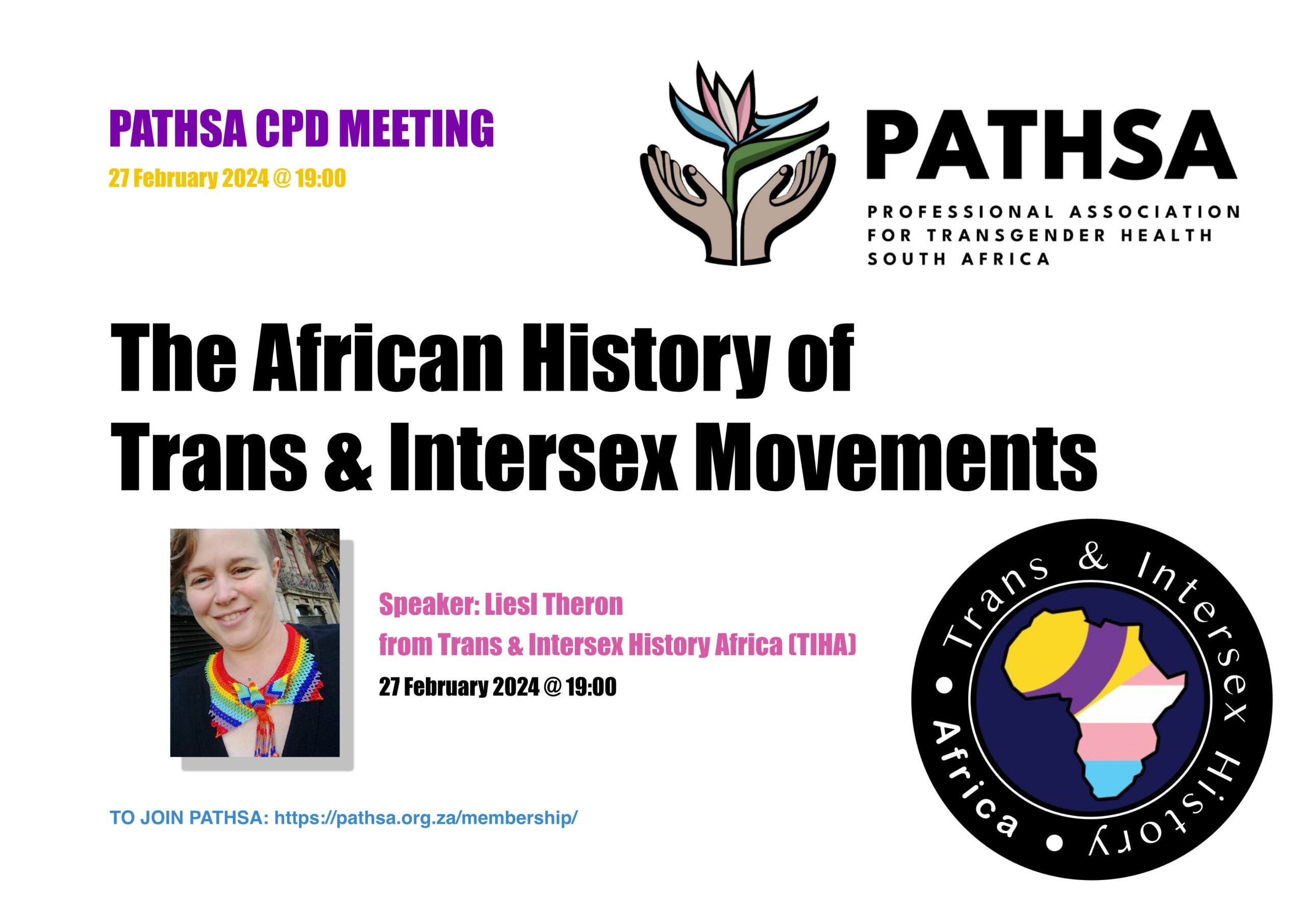
On 27 February 2024, Trans & Intersex History Africa (TIHA)’s co-founder, Liesl Theron, delivered a presentation to the Professional Association for Transgender Health South Africa (PATHSA) on the topic of the African history of trans and intersex movements. Liesl used the opportunity to highlight the work we do at TIHA in creating a first of its kind archive of trans and intersex movements in Africa and the African Diaspora. Watch the presentation on YouTube:
27 February 2024 — Trans & Intersex History Africa Delivers Presentation on Trans & Intersex African Movements to the Professional Association for Transgender Health South Africa (PATHSA), South Africa On 27 February 2024, Trans & Intersex History Africa (TIHA)’s co-founder, Liesl Theron, delivered a presentation to the Professional Association for Transgender Health South Africa (PATHSA) […]
Mars 2024 — Inclusion Togo Créé / March 2024 — Inclusion Togo Founded, Togo
Fondée en mars 2024 par Crespille Pige, Crépine Tossou, Joyce D’Almeida and Sephora Zouzou, Inclusion Togo s’adresse aux hommes transgenres, aux femmes transgenres, aux personnes queer et intersexuées. La principale mission de l’organisation est d’assurer le bien-être des personnes trans, queer et intersexes dans un environnement sûr.
Founded in March 2024 by Crespille Pige, Crépine Tossou, Joyce D’Almeida and Sephora Zouzou, Inclusion Togo caters to trans men and trans women, queer and intersex people. The main work of the organisation is to ensure the well-being of trans, queer and intersex people in a safe environment.
La vision / Vision
Un Togo inclusif et équitable ou toutes les personnes transgenres, queer et intersexe en particulier les plus vulnérables (travailleuses de sexe, personnes vivant avec le VIH, sans abri) vivent dans la dignité, jouissent de leurs droits fondamentaux et participant pleinement au développement social, économique et culturel.
An inclusive and equitable Togo where all transgender, queer and intersex people, especially the most vulnerable (sex workers, people living with HIV, the homeless), live in dignity, enjoy their fundamental rights and participate fully in social, economic and cultural development.
Mission
Œuvrer pour l’inclusion, la protection et l’autonomisation des personnes transgenres, queer et intersexe vulnérables au Togo, à travers des actions communautaires et des plaidoyers.
To work towards the inclusion, protection and empowerment of vulnerable transgender, queer and intersex people in Togo, through community actions and advocacy.
Objectifs / Objectives
Renforcer la prévention, la prise en charge du VIH chez les personnes trans, queer et intersexe, en promouvant l’autonomisation financière chez les plus vulnérables.
Strengthening HIV prevention and care for trans, queer, and intersex people, while promoting financial empowerment among the most vulnerable.
Domaines de travail / Areas of work
Renforcement des de la prévention et prise en charge chez les personnes trans, queer et intersexe dans un contexte ou la prévalence du VIH chez les personnes transgenres est de 35%.
Renforcement de l’autonomisation financière des personnes trans, queer et intersexe.
Renforcement de l’estime de soi des personnes trans, queer et intersexe.
Strengthening prevention and care for trans, queer, and intersex people in a context where the HIV prevalence among transgender people is 35%.
Strengthening the financial empowerment of trans, queer, and intersex people.
Strengthening the self-esteem of trans, queer, and intersex people.
Mars 2024 — Inclusion Togo Créé / March 2024 — Inclusion Togo Founded, Togo Fondée en mars 2024 par Crespille Pige, Crépine Tossou, Joyce D’Almeida and Sephora Zouzou, Inclusion Togo s’adresse aux hommes transgenres, aux femmes transgenres, aux personnes queer et intersexuées. La principale mission de l’organisation est d’assurer le bien-être des personnes trans, queer […]
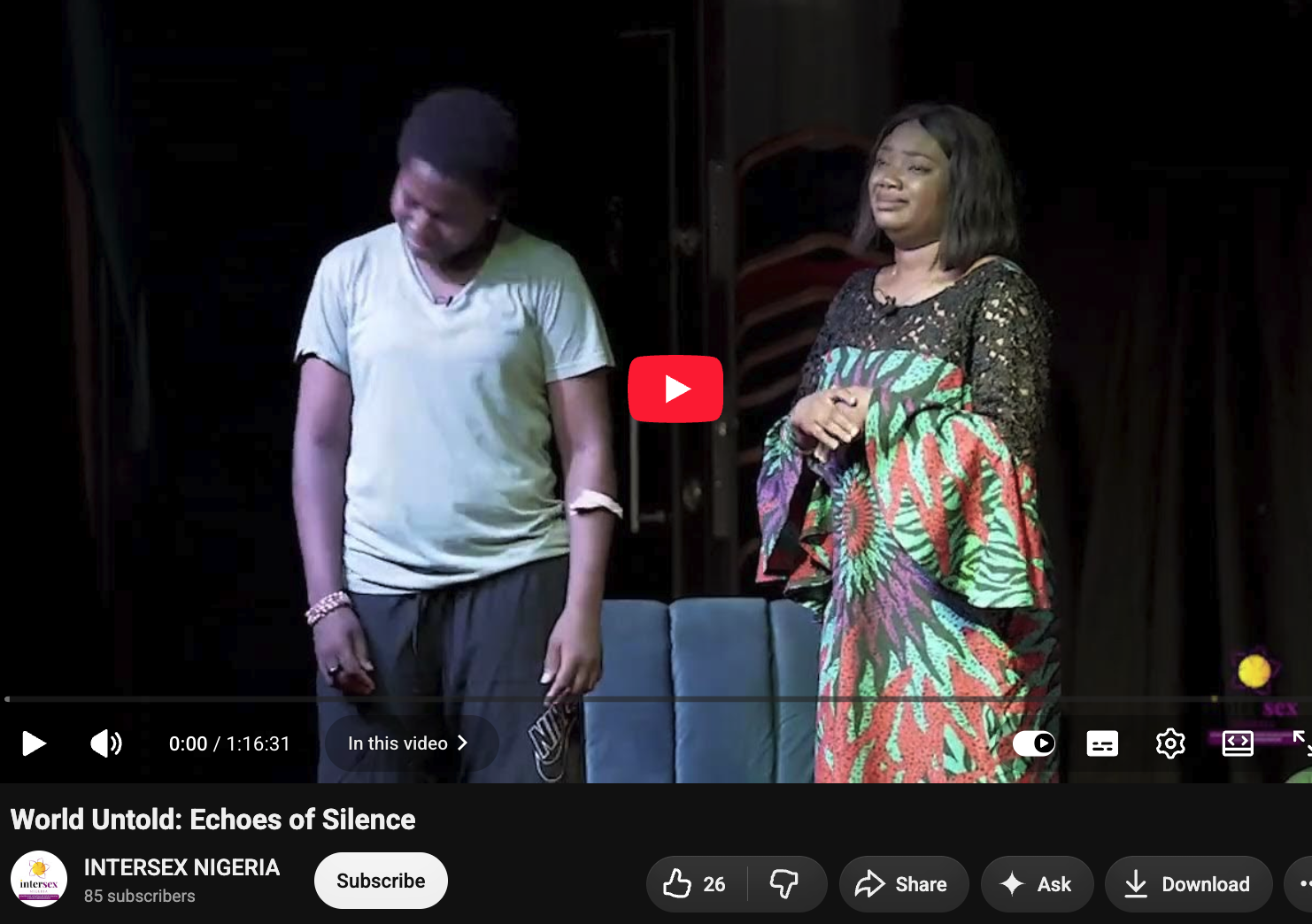
March 2024 — “World Untold: Echoes of Silence” Stage Production by Intersex Nigeria
Unlike the traditional advocacy that relies on reports, policy briefs or legal arguments, in March 2024, Intersex Nigeria employed storytelling to explore the realities of intersex people in Nigeria. The organisation transformed a theatre stage in Abuja into a commemorative site, resistance and public education. Through the debut of its stage production, “World Untold: Echoes of Silence”, audiences were invited to witness stories that have too often remained hidden behind stigma, secrecy and silence. More than a theatrical performance, the play marked an important moment in the history of intersex advocacy in Africa, demonstrating how art can preserve lived experiences while inspiring social change.
The choice of the title reflects realities the production brings to the stage. “World Untold” speaks to thousands of intersex stories that have gone overlooked or unheard, while “Echoes of Silence” reflects the lingering effects of secrecy, shame and exclusion experienced by many intersex people in families, communities and healthcare systems. The play challenges both by giving a voice to intersex experiences. It transforms untold stories into public testimony and replaces silence with dialogue, inviting audiences to witness intersex lives while questioning long-held assumptions and recognising the dignity and humanity of intersex people.
Throughout the show, audiences encounter themes of identity, family expectations, social exclusion, religion, resilience and self-determination. The performance illustrates how intersex persons navigate social pressures while seeking acceptance and dignity. The emotional burden carried by parents and families who are frequently influenced by misinformation, fear and societal expectations is neatly exposed on this stage. Viewers were not only dared to question cultural norms and medical practices that have historically marginalized intersex people but also reflect on the consequences of silence and stigma. All this is presented through relatable characters rather than abstract concepts.
The production was staged before an audience of approximately 700 people, bringing together a diverse audience including representatives of the government, members of the National Human rights commission, healthcare professionals, psychologists, human rights defenders, civil society organisations, intersex people and members of the wider public.
As organisations across Africa explore new approaches to advocacy, Intersex Nigeria’s World Untold: Echoes of Silence demonstrates that story telling can change hearts and minds as effectively as policy papers move institutions. It reminds us that history is not preserved only in official documents or legislation. It is also found in performances on stage like these. To experience the voices behind “World Untold: Echoes of Silence”, watch the full production here:
This review was written by our Intersex Content Contributor, Delphine Barigye
March 2024 — “World Untold: Echoes of Silence” Stage Production by Intersex Nigeria Unlike the traditional advocacy that relies on reports, policy briefs or legal arguments, in March 2024, Intersex Nigeria employed storytelling to explore the realities of intersex people in Nigeria. The organisation transformed a theatre stage in Abuja into a commemorative site, resistance […]
2024 — Yaoundé Gathering Marks Another Step Toward Intersex Visibility in Africa, Cameroon
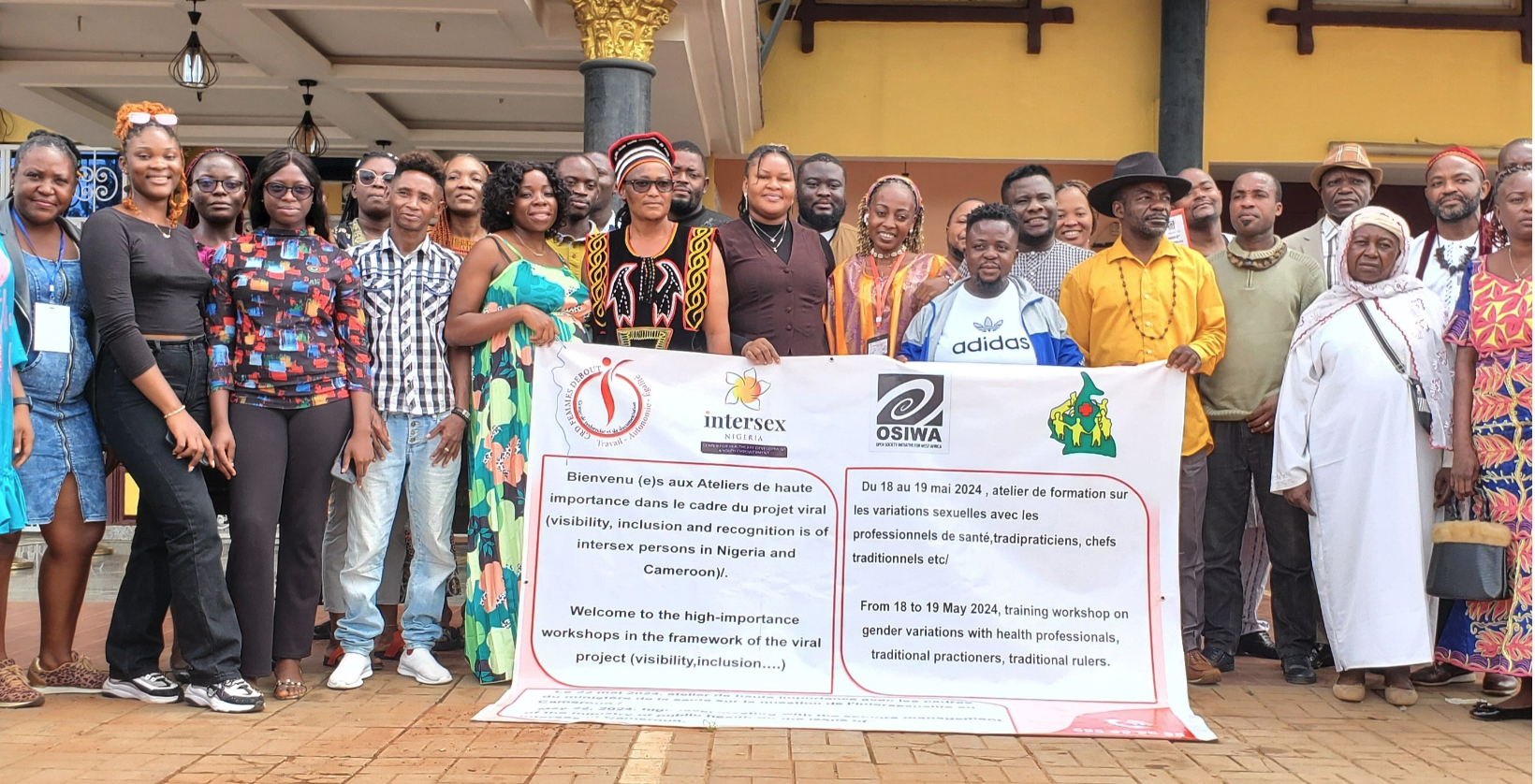
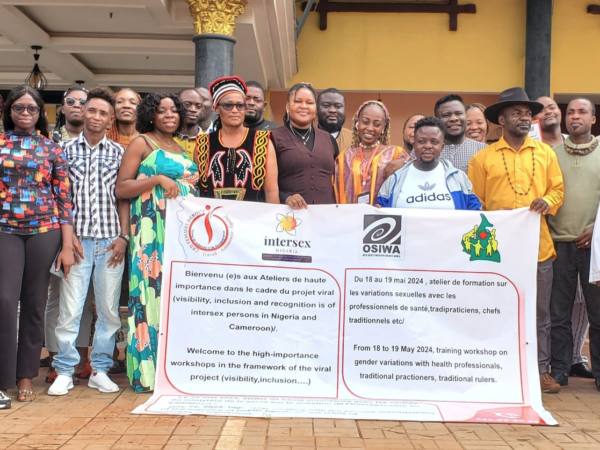
Out in Yaoundé, the capital of Cameroon, civil society organizations joined forces to speak openly about intersex lives with a goal of shifting how society understands differences in sex traits while also challenging the long standing myths and misconceptions. The conversation led by CRD Femmes Debout, in partnership with Intersex Nigeria, brought together health professionals, community leaders, and advocates to reflect on the realities faced by intersex people in Cameroon. The gathering was supported by Open Society Initiative for West Africa through the Visibility, Inclusion and Recognition of Intersex Persons (VIRAL) project, marking another step in growing efforts across Africa to build awareness and dialogue around intersex issues.
The conversation stressed how deeply rooted gender norms and limited awareness continue to shape the experiences of intersex people in Cameroon. Many continue to face secrecy, shame and harmful medical practices, particularly when decisions about their bodies are made without their informed consent. By bringing together different stakeholders including healthcare providers and traditional leaders the workshop created space for learning, reflection, and the gradual reshaping of narratives about intersex bodies and rights.
What stood out most was how the gathering lifted up real and personal stories from intersex individuals. This space gave room for listening and learning mostly from those affected the most. Their words showed tough realities around employment, and estranged families yet also illustrating resilience as activists. This meeting in Yaoundé became one point in a longer journey where African advocates push not for attention, but for truth to be seen clearly.
This reflection is based on the article: “CSOs raise awareness on intersexuality at Yaoundé confab” The Guardian Post Cameroon. Read the original article.
This reflection was written by Delphine Barigye, our Intersex Content Contributor.
2024 — Yaoundé Gathering Marks Another Step Toward Intersex Visibility in Africa, Cameroon Out in Yaoundé, the capital of Cameroon, civil society organizations joined forces to speak openly about intersex lives with a goal of shifting how society understands differences in sex traits while also challenging the long standing myths and misconceptions. The conversation led […]
2024 — Création d’EkiT, Maurice / EkiT Founded, Mauritius
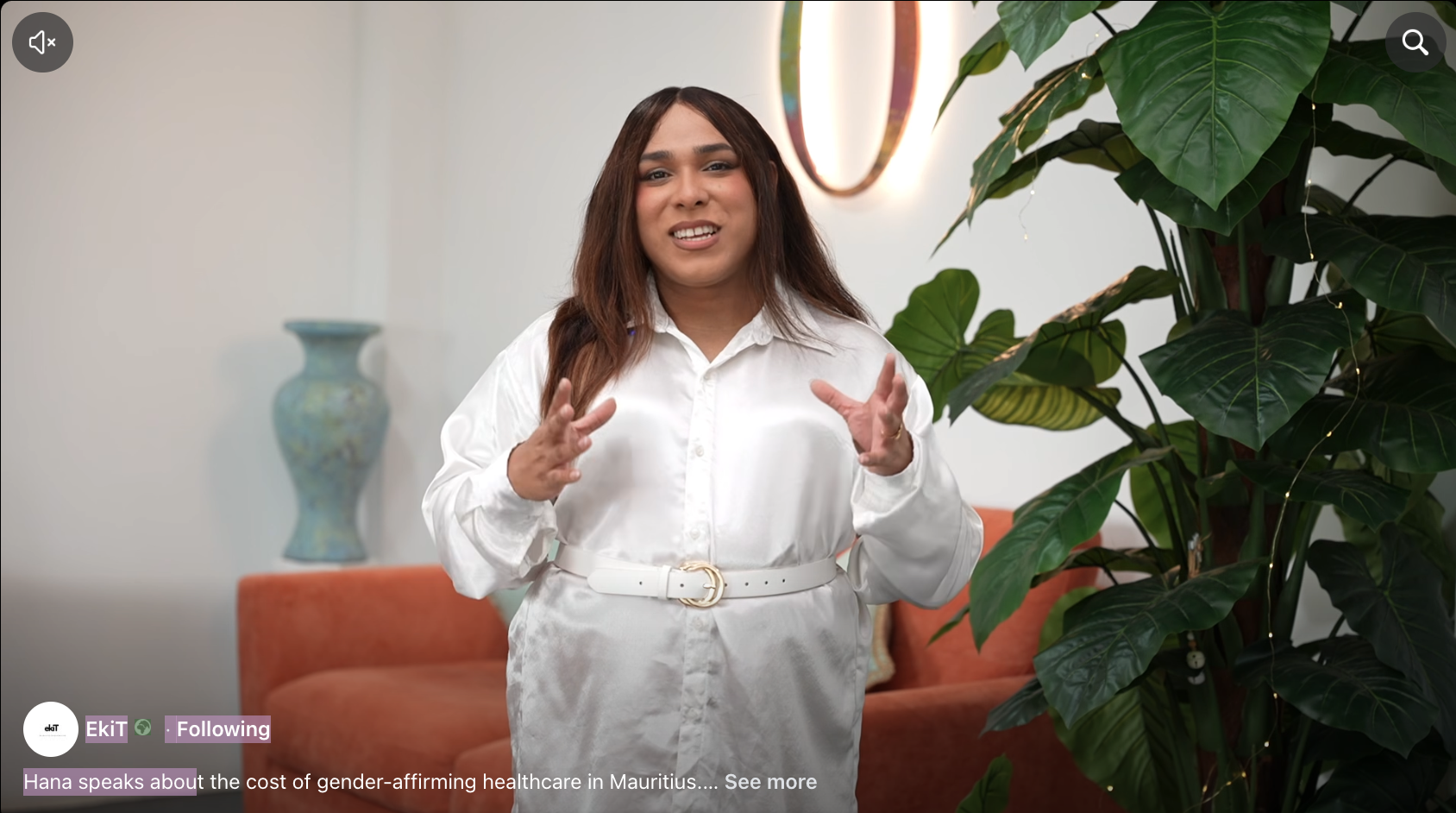
Fondée à Maurice en 2024 par Hana Telvave et d’autres personnes, EkiT œuvre principalement auprès des personnes transgenres et non binaires (TGNC) à Maurice, tout en collaborant avec la communauté LGBTQIA+ au sens large et ses alliés pour promouvoir l’inclusion et l’égalité. EkiT est une organisation dirigée par des personnes trans qui s’efforce de renforcer les droits, le leadership, la santé et la visibilité des personnes transgenres et non binaires à Maurice. Son action comprend le développement du leadership, le plaidoyer politique, la mobilisation communautaire, la sensibilisation du public, les initiatives de soins d’affirmation de genre, la communication stratégique et l’engagement institutionnel pour promouvoir l’égalité et la dignité. L’organisation a été enregistrée en 2026.
Founded in Mauritius in 2024 by Hana Telvave and others, EkiT primarily works with transgender and gender non-conforming (TGNC) people in Mauritius while collaborating with the broader LGBTQIA+ community and allies to advance inclusion and equality. EkiT is a trans-led organisation working to strengthen the rights, leadership, health, and visibility of transgender and gender non-conforming people in Mauritius. Their work includes leadership development, policy advocacy, community mobilisation, public education, gender-affirming care initiatives, strategic communications, and institutional engagement to advance equality and dignity. The organisation was registered in 2026.
La vision / Vision
La vision à long terme d’EkiT est de contribuer à la création d’un écosystème durable de bienveillance, de transmission du savoir, de dignité et de protection communautaire – un modèle de « village » ancré dans la solidarité, la sécurité, le bien-être collectif et l’entraide. À travers cette vision, EkiT aspire à un monde où les personnes transgenres et de genre divers, ainsi que d’autres communautés marginalisées, vivent dans la dignité, la sécurité, la visibilité, l’égalité et un accès réel aux soins, au leadership et aux opportunités. L’organisation souhaite également réaffirmer et honorer les rôles précoloniaux que de nombreuses personnes de genre divers ont historiquement tenus en tant que conteurs, protecteurs, guérisseurs, gardiens de la culture et guides spirituels au sein de leurs communautés.
The long-term vision of EkiT is to contribute to the creation of a sustainable ecosystem of care, storytelling, dignity, and community protection a “village” model rooted in solidarity, safety, collective wellbeing, and mutual care. Through this vision, EkiT seeks to contribute to a world where transgender and gender-diverse people, alongside other marginalised communities, live with dignity, safety, visibility, equality, and meaningful access to care, leadership, and opportunity. The organisation also aspires to reclaim and honour the pre-colonial roles that many gender-diverse people historically held as storytellers, protectors, healers, cultural custodians, and spiritual bridges within their communities.
Mission
Construire des systèmes de soins, de plaidoyer, de récits et de changement institutionnel pilotés par la communauté qui renforcent le bien-être, la visibilité, l’autonomie et la protection des personnes transgenres et des communautés marginalisées à Maurice.
To build community-led systems of care, advocacy, storytelling, and institutional change that strengthen the well-being, visibility, autonomy, and protection of transgender and marginalised communities in Mauritius.
Objectifs / Objectives
Renforcer le leadership transgenre et la pérennité organisationnelle
Améliorer l’accès à des soins de santé inclusifs et respectueux de l’identité de genre
Développer un plaidoyer stratégique et un engagement politique
Changer les discours publics néfastes par le biais de la communication et des médias
Créer des systèmes de soutien et de solidarité communautaires plus sûrs
Élaborer des structures de financement durables à long terme
Strengthen trans-led leadership and organisational sustainability
Improve access to inclusive and gender-affirming healthcare
Build strategic advocacy and policy engagement
Shift harmful public narratives through communications and media
Create safer systems of community support and solidarity
Develop long-term sustainable funding structures
Fondatrice et directrice générale, Hana Telvave / Founder and Executive Director, Hana Telvave
Domaines d’intervention / Focus areas
Le travail d’EkiT est axé sur le développement du leadership des personnes transgenres et non conformes au genre, l’accès aux soins de santé affirmant le genre, le plaidoyer politique et juridique, la mobilisation communautaire, les campagnes de communication et de visibilité, la sensibilisation institutionnelle et le renforcement de la résilience communautaire.
EkiT’s work focuses on transgender and gender non-conforming leadership development, access to gender-affirming healthcare, policy and legal advocacy, community mobilisation, communications and visibility campaigns, institutional sensitisation, and strengthening community resilience.
Fondatrice et directrice générale, Hana Telvave / Founder and Executive Director, Hana Telvave
2024 — Création d’EkiT, Maurice / EkiT Founded, Mauritius Fondée à Maurice en 2024 par Hana Telvave et d’autres personnes, EkiT œuvre principalement auprès des personnes transgenres et non binaires (TGNC) à Maurice, tout en collaborant avec la communauté LGBTQIA+ au sens large et ses alliés pour promouvoir l’inclusion et l’égalité. EkiT est une organisation […]
26 July 2024 — Founding of Direitos Humanos Intersexual Angola (DHIA), Angola
Founded on 26 July 2024 by Boomer Mateus, Luis Mário Seteco and Jéssica Sanga, Direitos Humanos Intersexual Angola (DHIA) works to make a meaningful difference in the lives of intersex people and their families in Angola. Direitos Humanos Intersexual translates to “Intersexual Human Rights” from Portuguese. Boomer is the current Executive Director and active members are Miriam Benilde, Elisandro Jorge, Vero Nicolau and Nelma da Cunha.
Vision
To create a world where all intersex people are valued, respected and celebrated for their diversity.
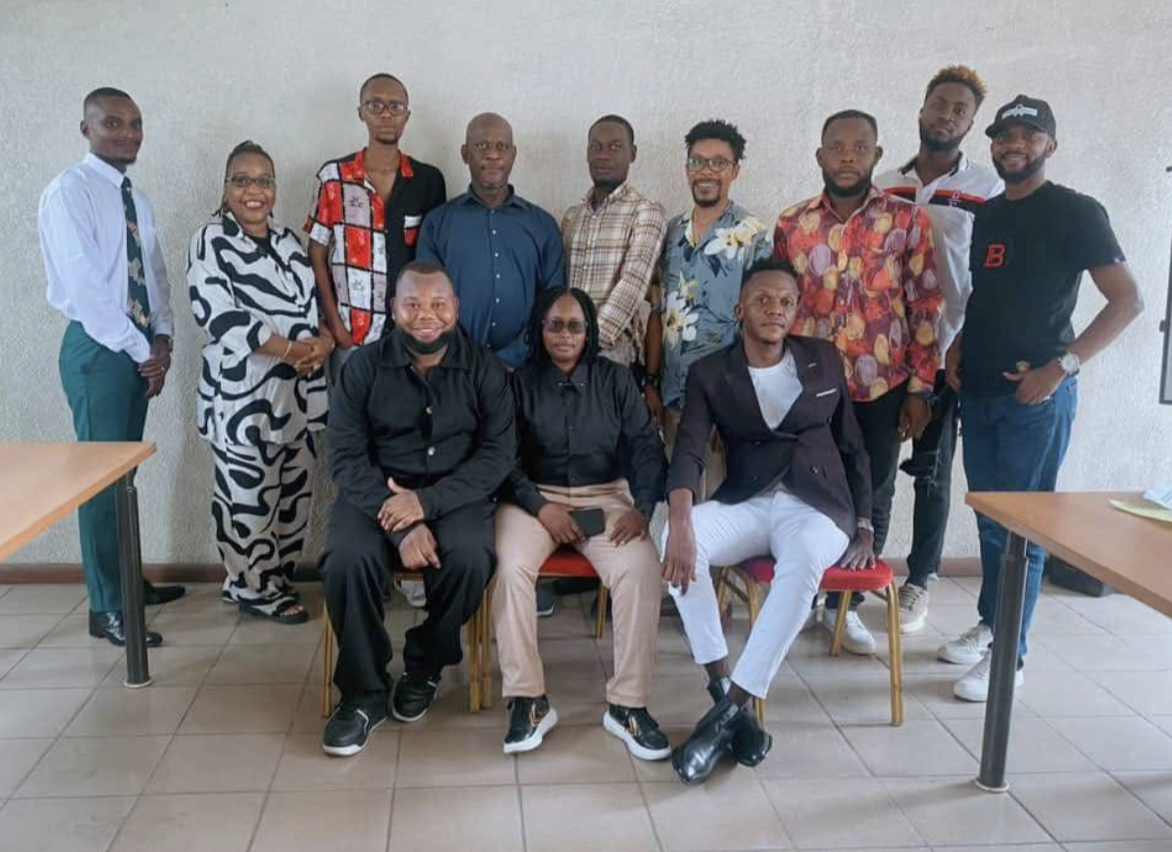
DHIA’s Founders
Mission
To promote awareness, acceptance and respect for intersex people by challenging stereotypes and combating discrimination.
Goal
To contribute to building a society where intersex bodies are not stigmatised and where their rights as individuals are respected, protected and upheld.
More about the reason for founding DHIA, by co-founder, Boomer Mateus
“As an intersex person and the founder of the first human rights organization for intersex people in Angola, my connection to this organization is deeply rooted in my personal life journey. Every step I take along this path is driven by lived experiences of struggle, resilience, and hope for a brighter future for all intersex individuals. This organization is not just a project; it is an extension of my dreams and the dreams of so many voices that have been silenced for far too long. It is a space where our stories find strength, where we transform pain into action, and where we build, together, a fairer and more inclusive world. Being part of this is the fulfillment of a greater purpose that guides me every single day.”
Projects
Images from the LGBTQIAPN+ Cultural Festival in September 2024
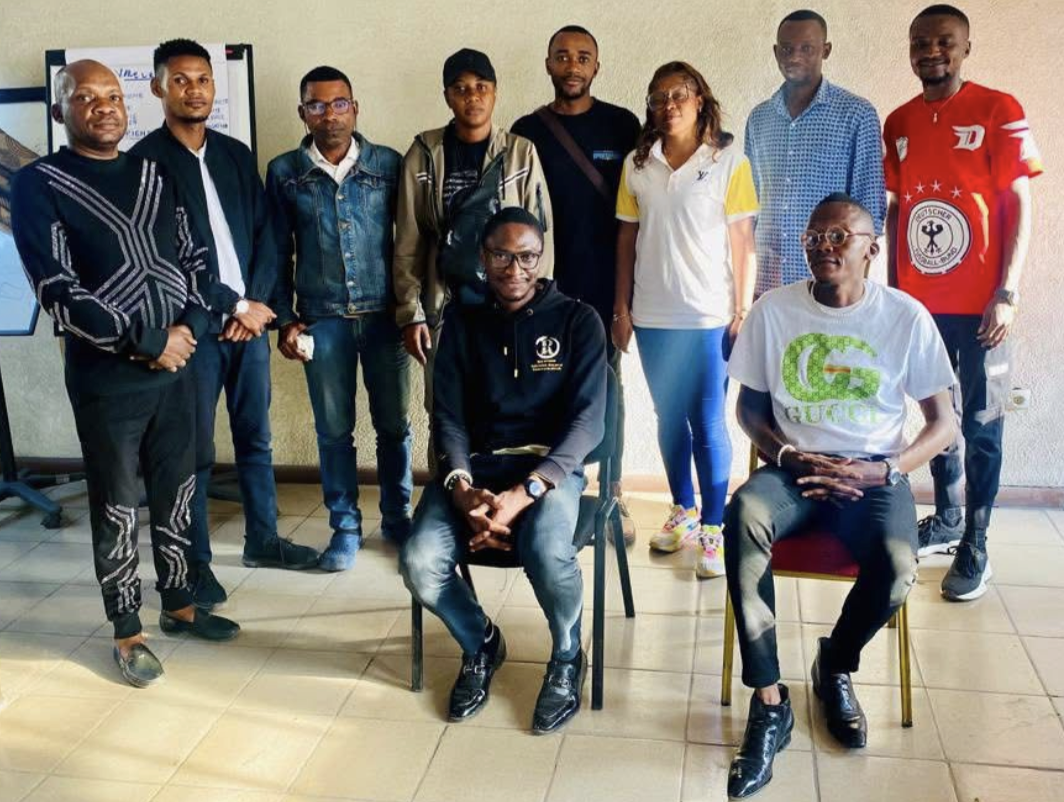
Images from a strategic training for healthcare workers facilitated by DHIA on October 23 and 24 2024, addressing crucial topics such as the diversity of biological sex. This initiative aimed not only to raise awareness but also to empower healthcare professionals to recognise and appropriately respond to the needs of the intersex population. During the sessions, DHIA explored principles of respect for diversity and inclusion in healthcare, promoting more equitable and inclusive practices.
The organisation’s approach focused on demystifying concepts and strengthening technical knowledge about innate variations in sexual characteristics, emphasising the importance of sensitive care grounded in human rights. DHIA encouraged partner organisations to join this mission of creating environments where every individual can have their voice heard, strengthening cohesion and the recognition of the specific needs of the intersex community within the healthcare system.
This was DHIA’s first workshop for a group of healthcare professionals.
26 July 2024 — Founding of Direitos Humanos Intersexual Angola (DHIA), Angola Founded on 26 July 2024 by Boomer Mateus, Luis Mário Seteco and Jéssica Sanga, Direitos Humanos Intersexual Angola (DHIA) works to make a meaningful difference in the lives of intersex people and their families in Angola. Direitos Humanos Intersexual translates to “Intersexual Human […]
12 September 2024 — Founding of Helping Education Regarding Orientation (HERO), Malawi
Founded on 12 September 2024 in Malawi by Shammah Solomon, Helping Educating Regarding Orientation (HERO) is a registered, community-based human rights advocacy organisation focusing on intersex persons, sexuality and orientation.
The context in Malawi for intersex people
According to HERO,
“Although sexual orientation and gender identity are integral to a person’s dignity, in Malawi there still exists much discrimination and abuse based on the sexual orientation and gender presentation of intersex people across the country. Several cases are reported every year that show that intersex people are physically assaulted, kidnapped, raped and even murdered. Along with the abuse and physical assault, intersex people in the country also face discrimination in their homes, workplaces, schools and colleges, housing and healthcare.Intersex children and adolescents often face bullying in school, do not always receive parental support at home and may even be thrown out of their homes by their parents. Some of the reasons that result in hatred towards intersex people include:
Lack of understanding of intersex issues
Religious practices
Traditional beliefs
Political beliefs
Some of the challenges that intersex people face include:
Having had prior surgery without their consent
Feelings of distrust
Ongoing side effects
Gendered treatment
Increased cancer risk
Gendered and discriminatory terms used
Taking hormones
Intersex people often experience prejudice and discrimination because their bodies do not conform to other people’s expectations about sex and gender.”
Vision
A Malawi where all people regardless of sexual orientation, gender identity, or expression feel seen, safe, valued, included, celebrated, equal and proud, and they can freely exercise their rights and enjoy the highest standard of health and well-being.
Mission
Raise awareness of intersex people’s existence by drawing attention to gender role construction and gender inequity and confronting interconnected “isms” (such as racism, sexism, heterosexism, etc.) To provide a safe and a supportive space for intersex people, empowering our diverse communities to realise their full potential everyday. Our services and activities are a lifetime for those in need.
Values
Passion – creating peaceful and inclusive spaces for intersex people and communities
Respect – celebrating what makes us unique and establish trust through inclusivity and
recognition
Empowerment – creating a space in which to grow and thrive
Integrity – holding ourselves accountable to the highest standards, doing what is right for the community
Objectives
To build and strengthen partnerships and alliances, understanding, solidarity and bridges between those working on human rights and intersex rights in particular, in Malawi and across the globe
To defend intersex people in Malawi and support their families and communities against all forms of discrimination, exclusion, violence and hate crimes
To promote intersex people’s sense of security and social cohesion
To address and respond to the economic struggles, unemployment and other class-based challenges of intersex people
To enhance collaboration and partnerships between CSOs, fellow human rights organisations and the Government of Malawi
To take on systems and practices which criminalise or seek to reinforce the criminalisation of intersex people, human rights organisations, knowledge creation, sexual and cultural self-expression(s), and organising for change.
Focus areas / Projects
Raising awareness about violence, discrimination and stigma towards intersex people
Advancing and upholding human rights-compliant laws
Supporting economic, cultural and societal inclusion of intersex people in Malawi
Supporting intersex people who face unique challenges during crises, conflicts and acute threats to their life
Strengthening national capability: contributing to having stronger, more resilient, inclusive and sustainable organisations with the technical and legal knowledge and skills
To make progress on intersex equality and inclusion, to increase their reach, effectiveness, and impact
Providing technical and legal support for human rights defenders, parliamentarians and government officials for the reform of laws and policies that discriminate against intersex people in Malawi
Increasing awareness and understanding of intersex rights among duty bearers, diplomats, the media, development and humanitarian workers, religious organisations, the business sector, government, cultural traditional leadership, and amongst parents and families of intersex people in Malawi
Organising workshops for intersex youth and adults in different regions
Advocacy, influencing parliamentarians, CSOs and supporting donors, multilaterals and national government to commit to intersex rights through sharing and collating evidence and data to build more coherent approaches to intersex rights, build political will nationally and at regional levels to prioritise intersex rights and scope;
Supporting influential thought leaders including faith leaders to advocate for local and global reform
Learning, evidence and advice on understanding the real ‘live’ situation in varied contexts, sharing information on the practical and most effective approaches that work to improve the lives of intersex individuals in Malawi.
12 September 2024 — Founding of Helping Education Regarding Orientation (HERO), Malawi Founded on 12 September 2024 in Malawi by Shammah Solomon, Helping Educating Regarding Orientation (HERO) is a registered, community-based human rights advocacy organisation focusing on intersex persons, sexuality and orientation. The context in Malawi for intersex people According to HERO, Vision A Malawi […]
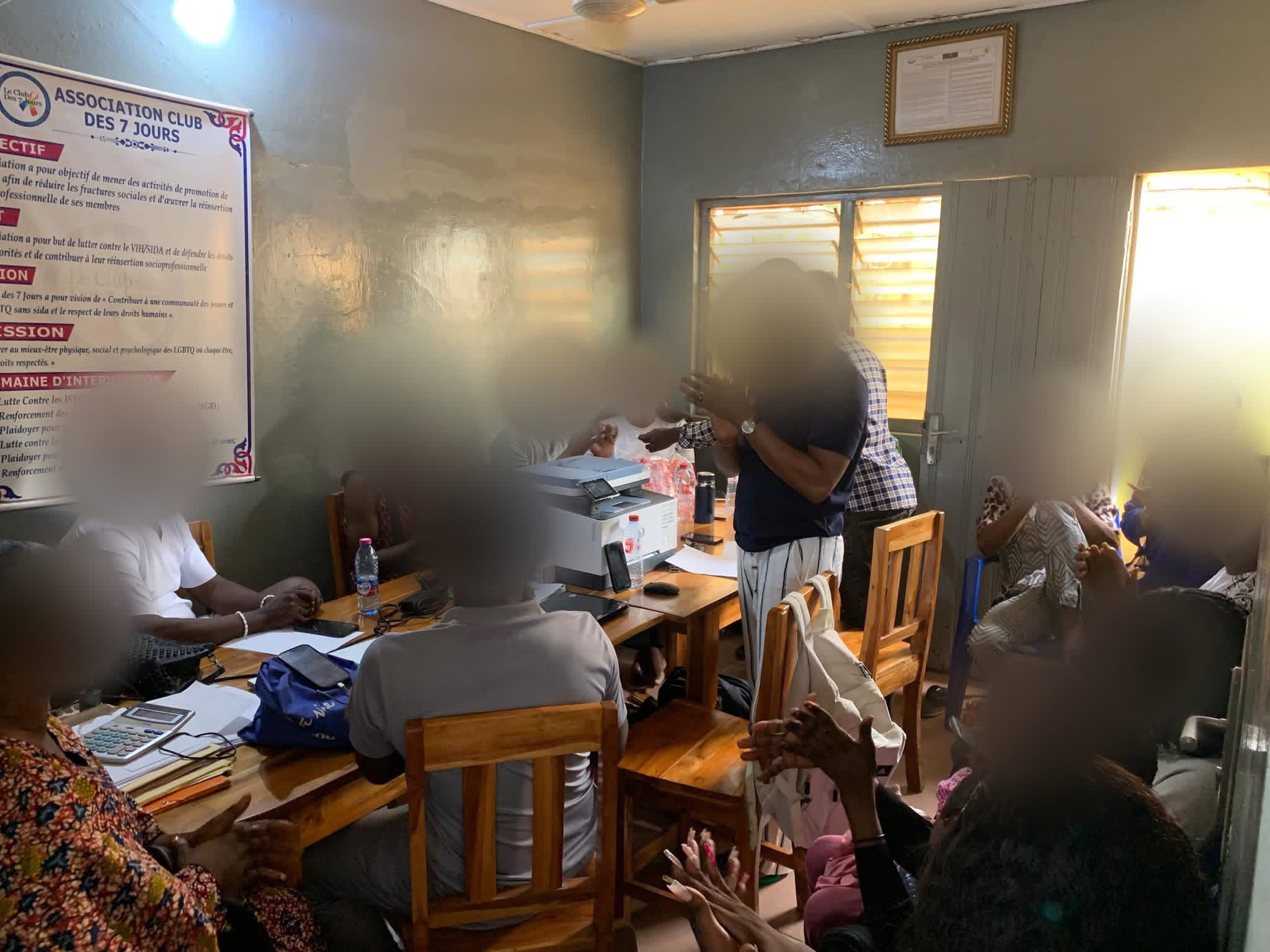
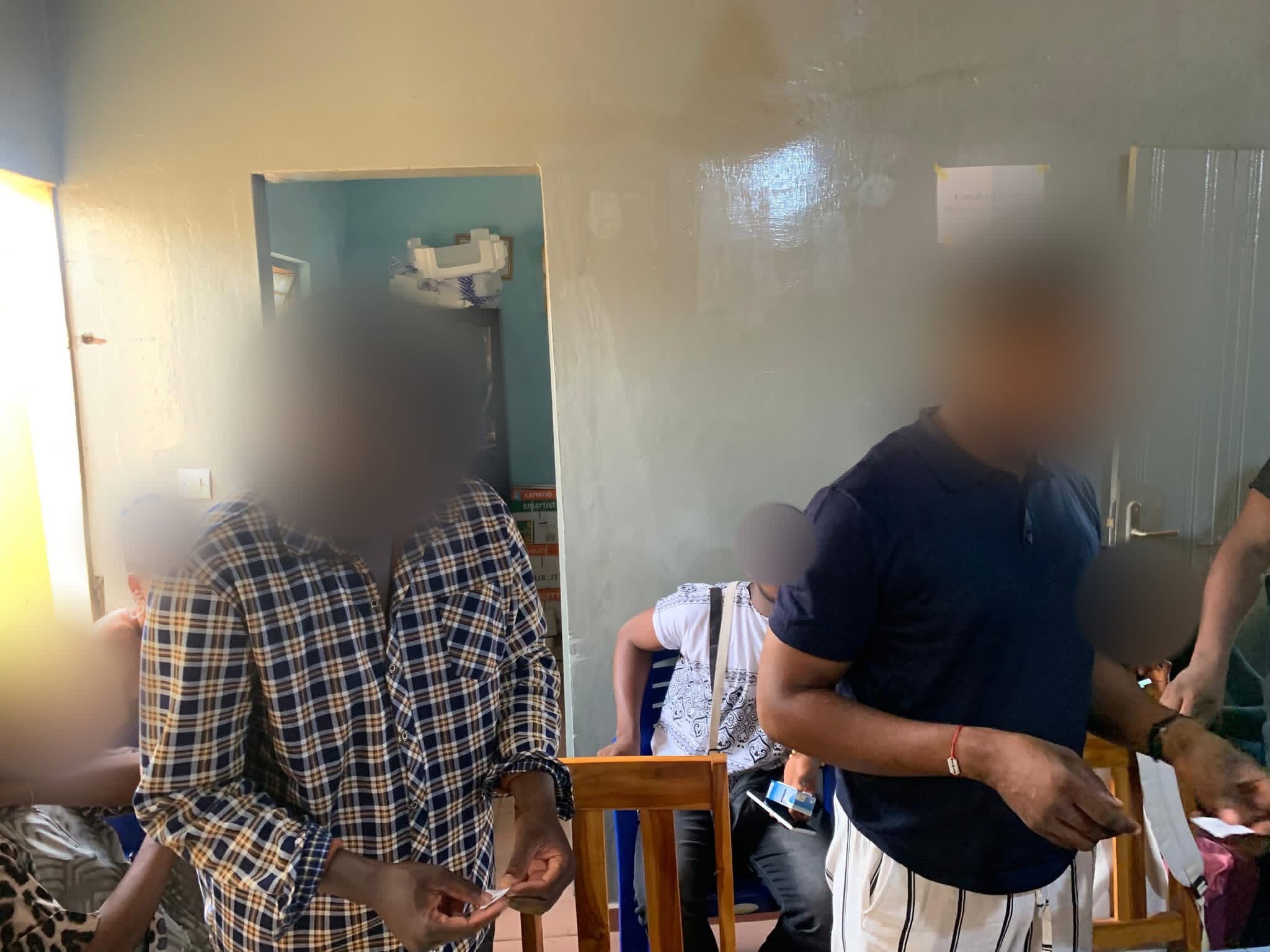
3 December 2024 — Santé Lisungi/ASBL fondé, République démocratique du Congo / Santé Lisungi/ASBL Founded, Democratic Republic of Congo (DRC)
Fondée le 3 décembre 2024, Santé Lisungi/ASBL est une association de défense des droits LGBTQIA+ en République démocratique du Congo (RDC), dont la priorité est la défense des personnes trans et intersexuées. L’objectif de leur travail est de faciliter l’accès inclusif aux soins de santé pour les personnes trans et intersexuées, ainsi que pour les autres minorités sexuelles et de genre. L’association n’est pas encore enregistrée.
Founded on 3 December 2024, Santé Lisungi/ASBL is an LGBTQIA+ advocacy organisation in the Democratic Republic of Congo (DRC), with trans and intersex advocacy as their main priority. The focus of their work is to facilitate inclusive access to healthcare for trans and intersex people, as well as other sexual and gender minorities. The organisation has not been registered yet.
La Vision / Vision
Devenir une référence en matière de soins de santé sûrs, inclusifs et équitables pour les minorités sexuelles et de genre en République démocratique du Congo.
To become a benchmark in safe, inclusive, and equitable healthcare for sexual and gender minorities in the Democratic Republic of Congo.
La Mission / Mission
Contribuer à améliorer la qualité de vie des minorités sexuelles et de genre en favorisant un accès inclusif aux soins de santé.
To contribute to improving the quality of life of sexual and gender minorities by promoting inclusive access to healthcare.
Objectifs de l’organisation / Organisational Objectives
L’association poursuit notamment les objectifs ci-dessous :
Promouvoir la santé et le bien être, l’inclusion et l’accès facile à une prise en charge médicale holistique de qualité dans un environnement inclusif et sécurisé ;
Sensibiliser les minorités sexuelles et de genre sur la santé sexuelle et reproductive en leur donnant des bonnes informations relatives aux différentes pathologies qui touchent à leur sexualité pour un accès équitable aux soins;
Renforcer les compétences des professionnels de santé de la structure et des alliés sur les notions de genre et prise en charge thérapeutique juste, équitable et inclusive pour mettre fin à la discrimination, stigmatisation, marginalisation, et toutes autres formes de violences basées sur l’orientation sexuelle, identité de genre, expression de genre, couleur de peau, handicap physique, état serologique, taille, age, maladie chronique dans le milieu hospitalier ;
Aider la cible à accéder à la santé positive et universelle ;
Développer le partenariat entre les acteurs nationaux et internationaux en vue de briser certains préjugés sociaux dans le milieu sanitaire liés à l’état sérologique, à l’orientation sexuelle, à l’identité du genre, à l’handicap physique, à la couleur de peau, à la taille, à l’âge, à la maladie chronique;
Conscientiser les décideurs politiques sur l’importance d’avoir une approche de santé inclusive qui prend en compte les minorités sexuelles et de genre, ainsi que d’autres personnes issues de groupes minoritaires dans les différents programmes du développement de pays et plaider en faveur des actions concrètes ;
Œuvrer en faveur d’une participation quantitative et qualitative aux manifestations et forums internationaux promouvant l’inclusion et la diversité, le genre et l’égalité des chances pour tous ; et, a long terme,
construire des hôpitaux propres à la structure dans toutes les provinces de la RD Congo en général et en particulier à Kinshasa au service de nos cibles;
assurer le suivi des malades, permettant la continuité de la prise en charge;
contribuer dans la réduction des violences sexuelles et basées sur le genre ainsi que de leurs conséquences.
The association’s objectives include:
Promoting health and well-being, inclusion, and easy access to quality holistic medical care in an inclusive and safe environment;
Raising awareness among sexual and gender minorities about sexual and reproductive health by providing them with accurate information on the various pathologies that affect their sexuality, ensuring equitable access to care;
Strengthen the skills of the organisation’s healthcare professionals and allies on the concepts of gender and fair, equitable, and inclusive therapeutic care to end discrimination, stigmatisation, marginalisation, and all other forms of violence based on sexual orientation, gender identity, gender expression, skin colour, physical disability, HIV status, height, age, and chronic illness in the hospital setting;
Help the target population access positive and universal healthcare;
Develop partnerships between national and international stakeholders to break down certain social prejudices in the healthcare setting related to HIV status, sexual orientation, gender identity, physical disability, skin colour, height, age, and chronic illness;
Raise awareness among policymakers about the importance of an inclusive health approach that takes into account sexual and gender minorities, as well as other people from minority groups, in various country development programmes and advocate for concrete actions;
Work towards quantitative and qualitative participation in international events and forums promoting inclusion and diversity, gender, and equal opportunities for all; and,in the long term
build hospitals of this structure in all provinces of the DRC in general, and in Kinshasa in particular, to serve our targets;
ensure patient follow-up, enabling continuity of care;
contribute to reducing sexual and gender-based violence and its consequences.
3 December 2024 — Santé Lisungi/ASBL fondé, République démocratique du Congo / Santé Lisungi/ASBL Founded, Democratic Republic of Congo (DRC) Fondée le 3 décembre 2024, Santé Lisungi/ASBL est une association de défense des droits LGBTQIA+ en République démocratique du Congo (RDC), dont la priorité est la défense des personnes trans et intersexuées. L’objectif de leur […]
20 December 2024 — Founding of Haven of Pride Africa, South Africa
Founded on 20 December 2024 by Frank Fabian Kagimu, Noah Venter and Rethabile Lebakeng, Haven of Pride Africa came about as a response to the growing crisis faced by LGBTQI+ displaced persons, particularly trans asylum seekers and refugees from Uganda and the broader East African region who flee their home countries due to persecution, seeking safety in South Africa, only to face new challenges in their pursuit of protection, dignity, and self-reliance. Recognising this urgent need, Haven of Pride was established to provide critical support, advocacy, and empowerment for LGBTQI+ asylum seekers and refugees.
Vision
A world where transgender refugees and queer displaced persons live freely and safely, with access to essential resources, acceptance and equality supported by a trusted community.
Mission
To provide safety, dignity, and empowerment for displaced transgender individuals by fostering inclusive support for their health and rights amidst persecution.
20 December 2024 — Founding of Haven of Pride Africa, South Africa Founded on 20 December 2024 by Frank Fabian Kagimu, Noah Venter and Rethabile Lebakeng, Haven of Pride Africa came about as a response to the growing crisis faced by LGBTQI+ displaced persons, particularly trans asylum seekers and refugees from Uganda and the broader […]
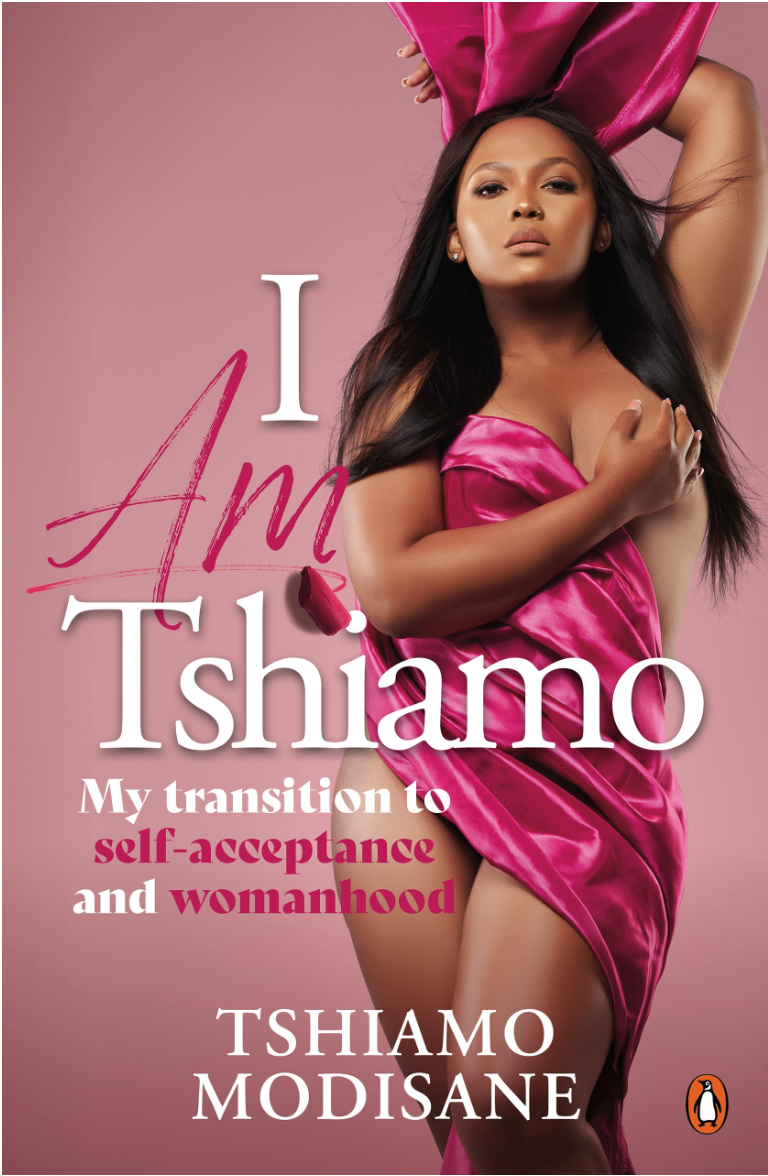
“Growing up as Kgositsile, meaning ‘king’, Tshiamo Modisane always knew that she was a girl despite her assigned birth gender. This talented child of a pastor from KwaThema and Daveyton townships near Johannesburg was expected to conform to conservative black culture’s expectations for a male, and would endure censure and even abuse from family, friends, peers and strangers into adulthood. Yet Tshiamo began making courageous choices at the age of five, a journey of both self-doubt and self-belief that culminated in gender-affirmation surgery in her thirties. With sass, faith and baked-in confidence from her family ties to the entertainment world, she successfully transitioned from male to female while navigating a career as an actress, celebrity stylist and Lux’s first gender-non-conforming brand ambassador. As admirable as it is affirming, this poignant memoir examines past hurts and present truths, and opens up a sorely needed discussion about unconditional acceptance.” (Source: Penguin Books)
Tshiamo Modisane is an award-winning producer, actress, and fashion and celebrity stylist. She began her career in entertainment as a wardrobe stylist intern, has worked for True Love, Move! and Drum magazines, written a lifestyle and entertainment column for The Citizen, and starred in television series African Dreams and House of Zwide. Accolades include being named the 2022 Sowetan SMag Woman of the Year in Fashion and Beauty, Hot Chick of the Year at the 2019 Feather Awards, and being the first gender-non-conforming brand ambassador for global brand Lux. Since her transition in 2018, Modisane has graced several magazine covers, produced her own podcast and, in 2021, after surviving being sexually assaulted, established the Linzy-Linsay Foundation to create a safe space for people like her to develop skills and make a greater contribution to society.
January 2025 — Publication of Trans Memoir, “I Am Tshiamo: My Transition to Self-Acceptance and Womanhood”by Tshiamo Modisane, South Africa Published in January 2025 by Penguin Books, Tshiamo Modisane’s “I Am Tshiamo: My Transition to Self-Acceptance and Womanhood”, became the fifth South African trans memoir to be published, after “Always Anastacia: A Transgender Live in […]
21 September 2025 — Sandra Dee Lentoor of the Fairy Godmother Project Receives 2025 Pride Heroes Award, South Africa
In 2025, Sandra Dee Lentoor was one of the activists awarded with the 2025 Pride Heroes Award. Sandra founded the Fairy Godmother Project in 2014. The Fairy Godmother Community Project is involved with community upliftment in Hanover Park, one of the most gang-frequented areas in Cape Town. One way the project makes a difference is as a vital outreach to elderly citizens of her community living in one of Cape Town’s most gang-riddled suburbs. At weekly events, these vulnerable community members get treated to special luncheons hosted by Sandra.
Sandra at a beauty pageant
Evan Tsouroulis, the Cape Town Pride Marketing, Sponsorship & Parade Coordinator, said this about the Awards:
“The Pride Heroes Awards are a way for Cape Town Pride as an organisation to shine the spotlight on the unsung heroes of our community as well as to honour and recognise their contributions.”
“Legendary Hanover Park activist and drag icon Sandra Dee (Sandra Lentoor) was honoured for her decades-long commitment to empowering youth and celebrating queer visibility through The Fairy Godmother Project. Founded a decade ago, the initiative provides underprivileged matric learners with dresses, hairstyling, and makeup for their Matric Ball, while also engaging local seniors as ‘Fairy Godmothers’ and mentors. A former resident of District Six, Sandra has survived violence, prejudice, and apartheid-era persecution to become a beacon of hope and glamour. Through fashion, mentorship, and joy, she continues to transform lives and uplift her community.”
21 September 2025 — Sandra Dee Lentoor of the Fairy Godmother Project Receives 2025 Pride Heroes Award, South Africa In 2025, Sandra Dee Lentoor was one of the activists awarded with the 2025 Pride Heroes Award. Sandra founded the Fairy Godmother Project in 2014. The Fairy Godmother Community Project is involved with community upliftment in […]
27—30 September 2015 — Regional ICD Conference Held, Focusing on Trans and Intersex Rights, South Africa
The Regional ICD (International Classification of Diseases) Conference in 2015 was a landmark summit hosted in Johannesburg, South Africa from September 27–30, 2015. Co-hosted by Iranti, GATE (Global Action for Trans Equality) and Gender Dynamix, the gathering brought together over 30 trans and intersex activists representing 12 countries across Africa.
The Conference focus and highlights centred around ICD-11 Revision Advocacy. The primary goal was to mobilise African voices and influence the WHO’s ongoing development of the ICD-11. Activists advocated for the depathologisation of trans identities. The aim of the conference was to create a collaborative space for engagement on developing an African advocacy strategy on ICD revision through discussions, expert presentations and group work. Read more. A video featuring the stories of trans participants from the Conference was published by Iranti in November 2015.
27—30 September 2015 — Regional ICD Conference Held, Focusing on Trans and Intersex Rights, South Africa The Regional ICD (International Classification of Diseases) Conference in 2015 was a landmark summit hosted in Johannesburg, South Africa from September 27–30, 2015. Co-hosted by Iranti, GATE (Global Action for Trans Equality) and Gender Dynamix, the gathering brought together […]
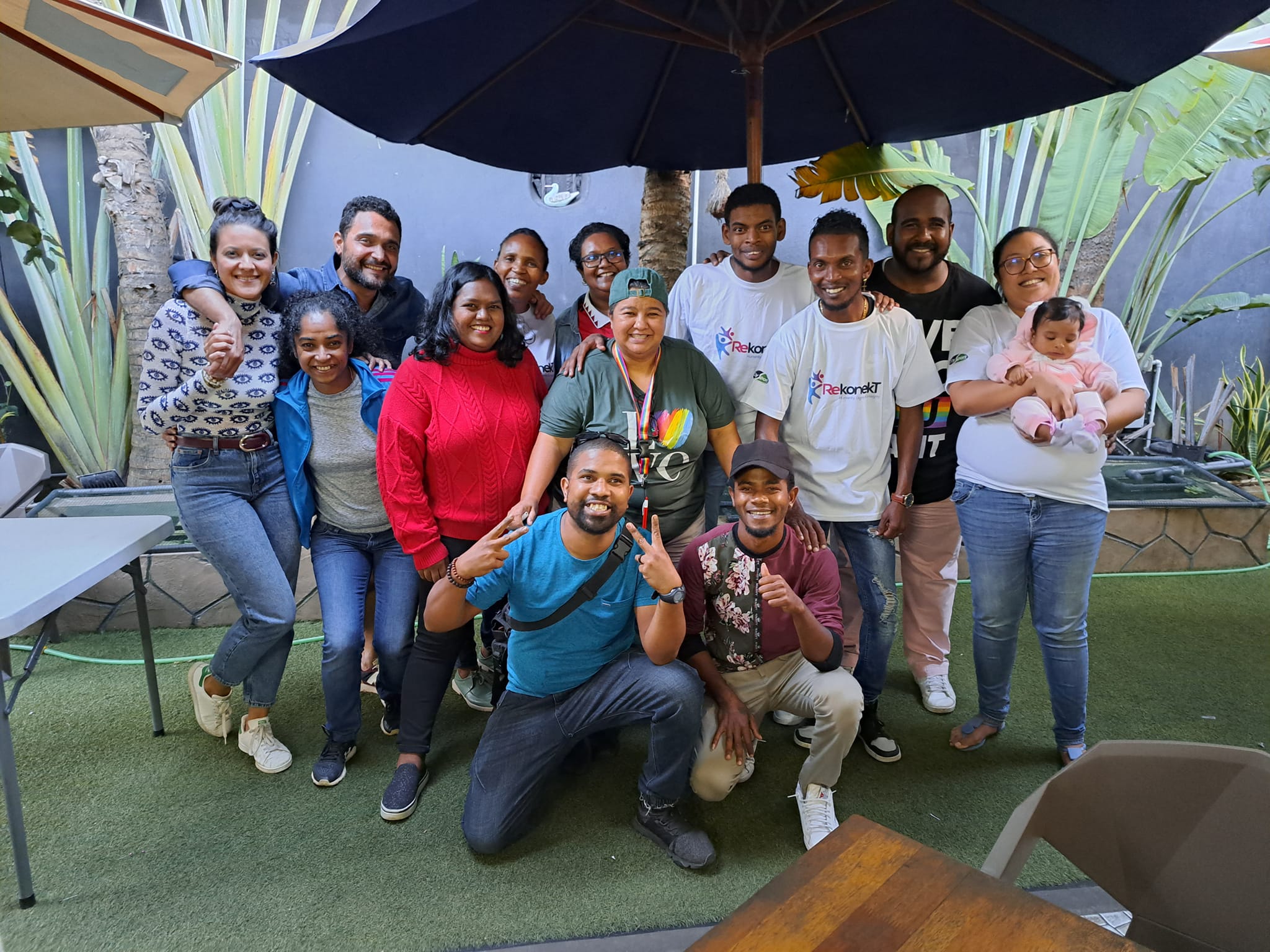
2020 — Création de RekonekT, Maurice / Founding of RekonekT, Mauritius
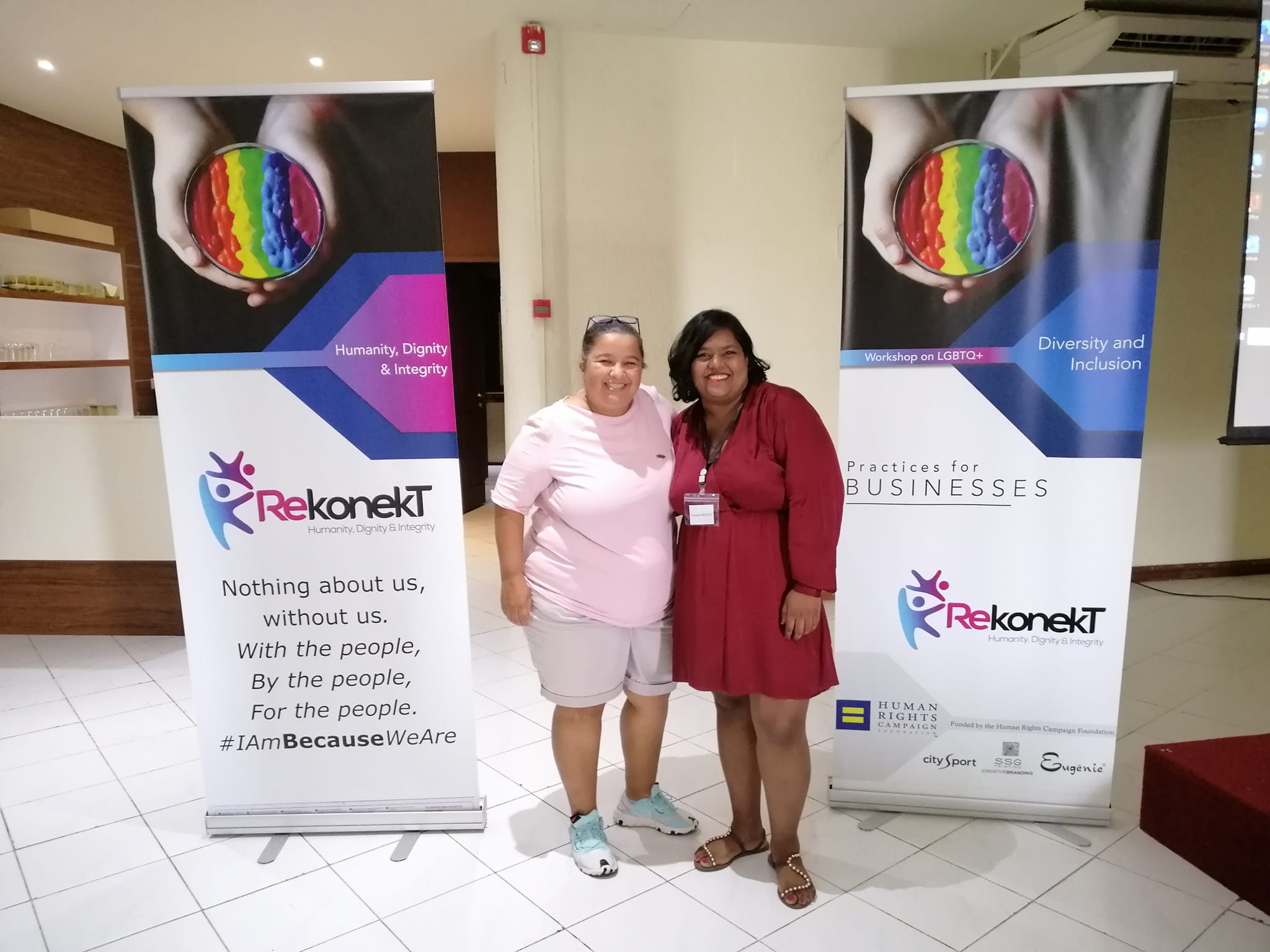
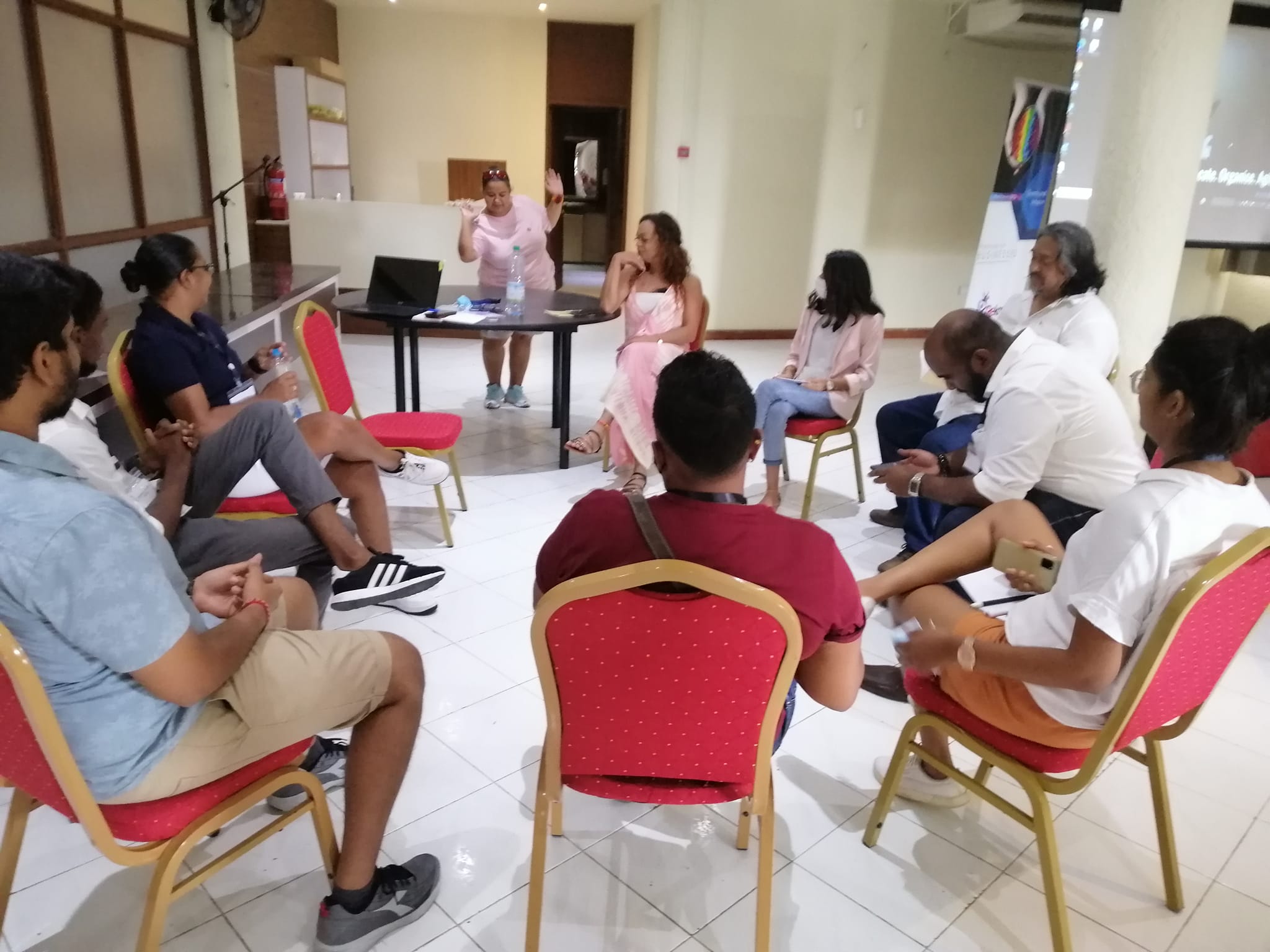
Créée à Maurice en 2020 par Caroline Fitz-Gibbon, Anjeelee Kaur Beegun, Didier Marcel, Valérie Uppiah, Patricia Madar Saib, Elodie Navette, Emmanuel Calisse, Bhavish Chamroo et Gael Henriette-Bolli, RekonekT œuvre principalement auprès des personnes transgenres et non binaires (TGNC), avec une attention particulière portée aux jeunes TGNC. Son action s’étend également aux communautés marginalisées au sens large, aux défenseurs des droits humains et aux professionnels ou institutions qui souhaitent créer des environnements plus sûrs et inclusifs. RekonekT axe ses actions sur le soutien communautaire, l’accompagnement psychosocial, la gestion de crise, la sécurité communautaire, la recherche participative, le renforcement des capacités et la création d’espaces inclusifs et valorisants pour les personnes TGNC et les autres communautés marginalisées de Maurice. En bref, l’organisation a pour vocation première le soin et l’accompagnement. RekonekT a été enregistrée en octobre 2021.
Founded in Mauritius in 2020 by Caroline Fitz-Gibbon, Anjeelee Kaur Beegun, Didier Marcel, Valérie Uppiah, Patricia Madar Saib, Elodie Navette, Emmanuel Calisse, Bhavish Chamroo and Gael Henriette-Bolli, RekonekT primarily works with trans and gender non-conforming (TGNC) persons, with a particular focus on young TGNC individuals. Their work also extends to broader marginalised communities, Human Rights Defenders (HRDs), and professionals or institutions seeking to build safer and more inclusive environments. RekonekT focuses on community support, psychosocial accompaniment, crisis response, community safety, participatory research, capacity strengthening, and the creation of inclusive and affirming spaces for TGNC persons and other marginalised communities in Mauritius. In short, the organisation’s main focus is care. RekonekT was registered in October 2021.
La vision / Vision
Contribuer à l’avènement d’une société où les personnes transgenres et de genre divers puissent vivre dans la dignité, la sécurité, l’autonomie et le plein accès à leurs droits, tout en étant reconnues comme des participants à part entière à la vie sociale, culturelle, économique et politique.
To contribute toward a society where transgender and gender diverse persons can live with dignity, safety, autonomy and full access to their rights, while being recognised as full participants in social, cultural, economic and political life.
Mission
Soutenir et renforcer les communautés TGNC à Maurice grâce à des systèmes de soutien communautaires, un accompagnement psychosocial, des approches participatives, l’éducation et des méthodologies décoloniales centrées sur les expériences vécues et l’autonomisation collective.
To support and strengthen TGNC communities in Mauritius through community-based support systems, psychosocial accompaniment, participatory approaches, education and decolonial methodologies that centre lived experiences and collective empowerment.
Caroline Fitz-Gibbon and Anjeelee Kaur Beegun
Objectifs / Objectives
Renforcer les systèmes de soutien psychosocial et communautaire pour les personnes transgenres et non binaires ;
Promouvoir des espaces plus sûrs et inclusifs pour les communautés marginalisées ;
Soutenir la résistance et l’autonomisation des communautés ;
Contribuer à la sensibilisation sociale et à l’éducation civique ;
Documenter les réalités vécues par le biais de recherches participatives ;
Favoriser l’accès aux droits, aux services et aux opportunités ;
Contribuer à la construction de mouvements ;
Renforcer les capacités des professionnels, des institutions et des acteurs communautaires.
Strengthening psychosocial and community support systems for TGNC persons;
Promoting safer and affirming spaces for marginalised communities;
Supporting community resistance and empowerment;
Contributing to social awareness and civic education;
Documenting lived realities through participatory research;
Supporting access to rights, services and opportunities;
Contributing to movement building;
Building capacities among professionals, institutions and community actors.
Domaines d’intervention / Focus Areas
Les travaux de RekonekT comprennent :
Accompagnement psychosocial et soutien communautaire ;
Intervention en cas de crise et soutien d’urgence aux défenseurs des droits humains ;
Dialogues communautaires et groupes de soutien ;
Recherche participative sur les réalités des personnes transgenres et non binaires à Maurice et à Rodrigues ;
Ateliers de renforcement des capacités et de sensibilisation ;
Éducation civique et pratiques anti-oppressives ;
Initiatives de sécurité communautaire ;
Initiatives d’autonomisation économique et de développement communautaire (actuellement en cours d’élaboration/de recherche de financement).
Ils mettent également en œuvre la première phase de notre initiative « Pratiques anti-oppressives pour la prise en charge des communautés marginalisées », qui a débuté par des ateliers axés sur le consentement et les pratiques de prise en charge communautaire.
RekonekT’s work includes:
Psychosocial accompaniment and community support;
Crisis response and emergency support for HRDs;
Community dialogues and support groups;
Participatory research on TGNC realities in Mauritius and Rodrigues;
Capacity building and sensitisation workshops;
Civic education and anti-oppressive practices;
Community safety initiatives;
Economic empowerment and community development initiatives (currently under development/funding stages).
They are also currently implementing the first phase of our “Anti-Oppressive Practice for Care with Marginalised Communities” initiative, which began with workshops centred around consent and community care practices.
2020 — Création de RekonekT, Maurice / Founding of RekonekT, Mauritius Créée à Maurice en 2020 par Caroline Fitz-Gibbon, Anjeelee Kaur Beegun, Didier Marcel, Valérie Uppiah, Patricia Madar Saib, Elodie Navette, Emmanuel Calisse, Bhavish Chamroo et Gael Henriette-Bolli, RekonekT œuvre principalement auprès des personnes transgenres et non binaires (TGNC), avec une attention particulière portée aux […]
2026 — An interview with Intersex Activist from Voie Divine, Niger
Valentin (middle name used to protect the activist) is a young Beninese person who was born and raised in Niger. His childhood was marked by stigma, misunderstandings, and many questions related to his experience as an intersex person. For a long time, he tried to understand who he was in a society where differences are often poorly understood. Over time, he learned to accept himself and transform his lived experience into a source of advocacy.
Today, his commitment is to raise public awareness about the reality of intersex people. He wants people to understand that being intersex is not a choice: it is how one is born. Through his testimony and his activism, he works towards greater understanding of human bodily variations, the fight against prejudice, and the respect for the dignity and rights of all intersex people.
To begin simply, could you tell me about yourself?
“My name is Valentin. I was born in Niger and grew up there, although my family origins are from Benin. My parents settled in Niger for professional reasons before I was born, and it is here that I have built my entire life. I am an intersex person, an activist, and the founder of Voie Divine, an organisation that raises awareness about intersex realities in Niger. My commitment was born from my personal experience. For a long time, I lived without truly understanding who I was. I faced stigma, mockery, insults, exclusion, and misunderstanding. Today, I work so that other intersex people can have access to the information, support, and acceptance that I sometimes lacked during my childhood and adolescence.”
When you look back, what are the earliest memories you have of growing up and understanding yourself?
“When I think back to my childhood, what I remember most is a feeling of being different that I could not explain. From a very young age, I noticed that certain things in my life were different from those of other children. I asked myself many questions about who I was, but I could not find answers. At that time, I knew nothing about being intersex. I only knew that there was something I did not understand about my identity and my body. This feeling of not being like others stayed with me throughout much of my childhood.”
As a child, how did you experience your body, your identity, and the way people around you responded to you?
“My childhood was marked by many questions about my body and my identity. I felt different without being able to explain why. I was simply looking to be accepted like other children, but this was not always easy. The way others looked at me had a significant impact on me. Some people saw me as different, and this sometimes resulted in mockery, insults, or rejection. As a child, I did not understand why this was happening to me. These experiences sometimes affected my confidence and pushed me to search for more answers about my identity.”
Were there moments in your early life that confused you, or made you feel different before you had words for it?
“Yes, several moments deeply marked my childhood and adolescence. Some memories remain particularly painful. I remember that some people tried to forcibly check what was underneath my clothes or underwear because they had doubts or questions about my body. These situations were extremely humiliating and traumatic for me. I did not understand why I had to go through this. I also remember being pointed at, insulted, or publicly identified as someone different. On several occasions, I experienced physical or verbal violence because of this difference that others perceived. Some people would hit me or mistreat me because they did not understand who I was. At that time, I did not yet have the words to describe what I was experiencing. I only felt confusion, sadness, and sometimes loneliness. These experiences deeply influenced my life journey.”
Who were the most important people around you growing up and how did they shape how you saw yourself?
“The most important people in my life were members of my family. Despite the difficulties I experienced outside, I was fortunate to have a family that accepted me as I am. Their love, support, and presence allowed me to continue moving forward even during difficult moments. They helped me understand that my value did not depend on the opinions or judgments of others. Without their support, it would have been much more difficult for me to face the discrimination and violence I experienced.”
At what point did you begin to understand that your experience had a name or meaning beyond your personal story?
“I began to truly understand my experience in 2023. For many years, I only knew that I was different, but I did not understand why. I had many questions that no one seemed able to answer. I then began my own research to understand who I really was. It was through this research that I discovered intersex variations. For the first time, I found information that matched my lived experience. I also started watching videos, listening to testimonies, and reading stories from intersex people from different countries. By listening to their experiences, I recognised myself in many of their stories. This helped me understand that I was not alone and that other people were living realities similar to mine. This discovery gave meaning to many experiences I had lived through since childhood but had never been able to explain.”
How did that discovery affect you emotionally at the time? Was it a moment of clarity, struggle, fear, or something else?
“This discovery represented a major turning point in my life. At first, I felt an immense sense of relief. After years of questioning, I had finally found answers. Understanding who I was brought me an inner peace that I had never experienced before. At the same time, this discovery made me reflect on all the difficulties I had gone through: the humiliations, insults, violence, and discrimination. It was painful, but it also helped me understand that these experiences did not define my worth. From the day I understood who I truly was, I developed greater confidence in myself. I stopped being ashamed of my difference. Today, I walk with my head held high. I am no longer afraid of other people’s opinions or judgments. On the contrary, this discovery gave me the strength to affirm myself, defend my rights, and transform my personal experience into a commitment to support others. It was this awareness that led me to create Voie Divine. Through this organisation, I want to enable other intersex people to find the information, support, and understanding that took me so many years to obtain.”
How did your identity as an intersex person influence that journey in any way?
“While growing up, I did not know that I was an intersex person, but I felt that I was different from others. For a long time, I searched to understand who I truly was. It was through my own research that I discovered my intersex variation. This reality influenced my life journey, especially because I experienced stigma, insults, mockery, and rejection from primary school through university. Despite these difficulties, I was fortunate to have a family that accepted me as I am.”
When you think of “home” now, what does it mean to you?
“For me, ‘home’ is above all a place where I feel accepted, respected, and safe. It is also the place where my family, my points of reference, and the people who support me are found. Although my family origins are from Benin, Niger is the country where I grew up and where I built my identity. Therefore, this is where I truly feel at home.”
Activism & Leadership Journey
When did you first begin to see yourself as an activist, not just someone living your own experience?
“I truly began to see myself as an activist in 2023, after discovering my intersex variation. Before that, I was mainly on a personal journey of understanding myself, without considering myself as an engaged advocate or activist. It was when I understood that my experience was not isolated and that other intersex people were living similar realities that I felt the need to take action. The creation of Voie Divine marked the concrete beginning of my activism, with the objective of raising awareness, providing information, and supporting intersex people in Niger.”
What does leadership mean to you in this context?
“For me, leadership is not about directing others, but about serving, listening, and opening pathways for understanding. It is the ability to transform a personal experience into collective action to improve the lives of others. In my context, leadership also means having the courage to speak about a subject that is highly taboo, carrying the voices of people who are often invisible, and creating a space where they can be recognised and respected. It is a commitment that requires responsibility, humility, and perseverance.”
What have been some of the risks or fears you have had to navigate?
“The risks are multiple and connected to the social and cultural context of Niger. The first is the strong stigma surrounding intersex variations, which remain very little known and often misunderstood. People engaged on this issue are sometimes automatically associated with the LGBT community, which leads to social judgment and prejudice. In this context, even though no law directly criminalises certain identities, social perceptions remain very negative. This can make awareness work difficult and limit opportunities for public action or official recognition. There is also a constant fear of being misunderstood, rejected, or reduced to a single label, whereas the work being carried out is primarily about human rights, dignity, and raising awareness about intersex variations.”
What keeps you going on difficult days?
“My main motivation comes from my own experience. I grew up without understanding who I was, living through confusion, stigma, and sometimes violence. I do not want other intersex people to go through the same suffering in silence. In 2023, I began connecting with international and regional organisations working on intersex issues. These encounters greatly strengthened my commitment. I particularly collaborated with AIM (African Intersex Movement), led by Obioma, as well as CIA, led by Loé Petit in France. These organisations supported me greatly in building my activist journey and in strengthening the structure of Voie Divine. AIM allowed me to participate in a research committee on intersex people in West Africa. As part of this work, we were invited to Nigeria for training on research methods and approaches adapted to intersex realities. This experience was very educational and helped me better structure my activism. Today, my motivation also comes from the belief that every person deserves to be informed, respected, and recognised in their human dignity. Every step forward, even a small one, represents a victory for the intersex community and for the awareness work we carry out through Voie Divine.”
Voie Divine
At what point did Voie Divine begin to take shape in your mind or in your life?
“Voie Divine began to take shape in 2023, shortly after my discovery of intersex variations. For many years, I had lived with questions about my identity without truly understanding what I was experiencing. In 2023, through my personal research, I finally discovered intersex variations and understood who I truly was. This discovery marked a turning point in my life. I began watching videos, reading testimonies, and following the journeys of other intersex people around the world. For the first time, I recognised myself in the experiences of others. I understood that I was not alone and that what I was experiencing had a name. At the same time, I realised that in Niger, very few people knew about this reality. I began asking myself how many other people were living in silence, confusion, or suffering without access to information. It was at this moment that the idea of creating an awareness-raising organisation began to emerge.”
Was there a specific moment, experience, or frustration that pushed you to create it?
“Yes. My personal journey was the main motivation behind the creation of Voie Divine. Since childhood, I had faced difficult situations. I experienced insults, mockery, stigma, and rejection because of my difference. Some people even tried to forcibly check what was underneath my clothes because they did not understand my body. I was also a victim of physical violence simply because I was perceived as different. For a long time, I had no explanation for what I was experiencing. When I discovered intersex variations, I understood how essential information is. I then promised myself that other people should not have to spend as many years as I did searching for answers about their identity. I decided to create Voie Divine in order to provide information to intersex people, raise awareness in society, and create a space where people concerned could come together, share their experiences, and support one another.”
Why the name “Voie Divine”—what meaning does it carry for you?
“The name “Voie Divine” reflects the fundamental values of our organisation. The word “Voie” (Path) symbolises the fact that we all have different paths in life. Every person is born with their own story, reality, and journey. Some people are born with particular characteristics, such as intersex variations, which influence their life experiences. This word therefore represents the different paths that each person takes to understand themselves, accept themselves, and find their place in society. The word “Divine” refers to faith. It expresses my belief that, despite our differences, we are all creations of God and made in His image. We do not choose the characteristics with which we are born. For this reason, every person deserves respect, dignity, and acceptance. Through this name, we want to share a message of hope, respect, and recognition of the value of every human being.”
When you first started, what did you imagine it would become?
“When I started, I primarily imagined a space for information and awareness raising. I wanted intersex people to have access to the information that I myself had struggled so much to find. I also hoped to create a community capable of bringing together intersex people in Niger so that they could exchange, share their experiences, and support each other. I dreamed of an organisation that would contribute to reducing prejudice, raising awareness among families, and promoting respect for the rights of intersex people. Even today, I hope to see Voie Divine become a recognised organisation that works with communities, institutions, and partners to improve understanding of intersex variations in Niger.”
What were those early days like when Voie Divine was just beginning?
“Voie Divine was officially created on 2 June 2023 in Niger, only a few months after my discovery of intersex variations. The beginnings were modest. We had few resources, but we had a lot of motivation. We started by sharing information, raising awareness among those around us, and organising awareness activities. Little by little, we began making our mission known and drawing attention to a reality that remains largely unknown in the country. Since the beginning, we have particularly focused on awareness activities in order to make the voices of intersex people heard and promote a better understanding of their realities.”
What challenges have you encountered?
“The challenges have been numerous and continue today. The first challenge is that intersex variations remain a very taboo subject in Niger. Many people do not know about this reality or prefer not to talk about it. Prejudices, misconceptions, and stigma make awareness work particularly difficult. Another major challenge concerns the formalisation of the organisation. Currently, Voie Divine continues to operate informally. We have begun steps to obtain official recognition, but we have encountered several obstacles. Some people consider intersex issues to be too sensitive or too delicate to allow the organisation to be formally recognised. This situation limits our possibilities for development and access to certain partnerships or funding opportunities. Financial difficulties are also a considerable challenge. To date, Voie Divine does not have stable funding. We often use our own personal resources to carry out activities. Every first Sunday of the month, we organise awareness activities using our own means. Despite our commitment, the lack of funding greatly limits our ability to reach more people and develop our programmes. Today, Voie Divine suffers greatly from a lack of financial resources, even though the need for information and awareness raising is significant.”
Did you ever doubt whether it would continue?
“Yes, I have had moments when I doubted several times. The financial difficulties, the lack of official recognition, and the many obstacles linked to prejudice can sometimes be discouraging. However, whenever I think about my own journey, the years of confusion I experienced before understanding my identity, and the suffering I went through, I find the motivation to continue. I also think about intersex people who are still living in silence, isolation, or misunderstanding. Knowing that our work can help someone better understand their reality or feel less alone gives me the strength to continue this mission. Despite the challenges, I remain convinced that Voie Divine has an important role to play in raising awareness, providing information, and defending the dignity of intersex people in Niger.”
If we were to understand Voie Divine today through your eyes, what would I see?
“Through my eyes today, we would see a complex reality, between difficulties and hope. On one hand, intersex variations remain very little known in Niger and are strongly surrounded by taboos. When the issue is discussed, it is often misunderstood and interpreted in different ways: some people talk about deformity, abnormality, a curse, or even a spirit depending on their beliefs. This lack of information contributes to strong stigma against intersex people. In this context, many intersex people live in silence and fear. Some hide themselves to avoid family or social rejection. Others have experienced very difficult situations from birth, ranging from abandonment to violence or violations of their dignity. Although these realities are rarely documented, they exist and reflect the vulnerability of intersex people within society. On the other hand, I also see gradual change through awareness raising. People are beginning to ask questions, seek understanding, and reconsider their perceptions. Voie Divine contributes to opening a space for dialogue, information, and recognition, even though the journey is still long.”
Who are the people you are mainly working with?
“Voie Divine is currently mainly carried by me, with the support of a few close people who share the vision of the organisation and accept me in my commitment. We also work through exchanges and collaborations with organisations and networks engaged on intersex issues at regional and international levels. Among them, I can mention the African Intersex Movement (AIM), led by Obioma, and CIA, led by Loé Petit in France. These relationships have played an important role in my activist journey, particularly in terms of training, research, and strengthening my engagement. The organisation is still informal, with a small team based on trust, personal commitment, and the desire to raise awareness.”
What kinds of support or interventions are most needed?
“Voie Divine needs several types of support in order to strengthen and develop its work. The first is financial support. Currently, the organisation operates with very limited resources and relies largely on personal contributions. We organise awareness activities every first Sunday of the month, but they are financed through our own resources, which limits their reach and consistency. The second is institutional support. At present, Voie Divine is not yet formally recognised, particularly because of the sensitivity of the issue within the Nigerien context. The process of formalisation is difficult, which limits opportunities for partnerships and development. There is also a need for capacity strengthening, particularly in awareness raising, research, and advocacy, in order to improve the impact of the work being carried out. Finally, social support is essential to reduce stigma and promote better understanding of intersex variations within society.”
Can you share a moment where you felt the work made a real difference for someone?
“One of the most significant moments in my journey happened during an awareness activity, when we were sharing stories and information about intersex variations. A person approached us and recognised themselves in the experiences that were being described. After several discussions and conversations, this person stated that they were intersex. This moment was very powerful because it showed the direct impact of awareness raising and the importance of creating spaces for listening and information. Sometimes, these spaces allow people to put words to what they have been experiencing silently for a long time. However, a few months later, this person returned and denied being intersex. I understood this situation as a possible consequence of social and family pressure, in a context where intersex variations remain highly stigmatised. This experience deeply affected me. It helped me understand the extent to which social pressure can influence people’s identity and their ability to speak about their experiences. It also showed me how difficult it can be for some people to accept and openly express their reality. Despite this, it strengthened my determination to continue awareness raising and to create safe spaces where people can express themselves freely, without fear or judgment.”
What kind of world are you hoping Voie Divine helps to build?
“We want to build a world where differences are no longer seen as abnormalities, curses, or reasons for rejection, but as a natural part of human diversity. A world where every child, including intersex children, is welcomed with respect, protection, and information. A world where no one is excluded because of their body, identity, or personal history. A world based on human dignity, acceptance, and social justice.”
Connection to the Wider Movement
How do you see Voie Divine fitting into the broader African intersex movement?
“I see Voie Divine as an emerging but essential initiative within the African movement for the defence of intersex people’s rights. Although the organisation is still young and operates informally, it represents an important voice from Niger in a space where intersex variations remain largely invisible and often misunderstood. Within the African movement, Voie Divine plays a grassroots role: documenting local realities, raising awareness among communities, and bringing forward the voices of intersex people in a context where they are often invisible. It is also a space of resistance and awareness raising in response to social and cultural taboos.”
How did you join the intersex movement? Are there connections or solidarities that have been important for you?
“My entry into the movement happened gradually in 2023, after discovering my own intersex variation. While searching to understand my identity, I began connecting with spaces for information and organisations working on intersex issues. It was through these searches and exchanges that I joined several activist networks. I was particularly in contact with organisations such as AIM, led by Obioma, and CIA, led by Loé Petit. These organisations supported me in understanding the issues and building my commitment. I also participated in research and training activities, particularly through a committee on intersex people in West Africa with AIM. A training organised in Nigeria allowed me to gain methodological tools and better structure my activism. At the same time, my personal journey, marked by difficulties accessing employment, financial insecurity, and experiences of stigma, strengthened my commitment to this movement.”
The Reality of Intersex Lives in Niger
Through your work and experience, what have you come to understand about the realities of intersex people in Niger?
“In Niger, I have understood that intersex variations are very little known as both a medical and human reality. When they are known, they are often misunderstood or incorrectly defined. Depending on the person, it may be perceived as a deformity, an abnormality, a curse, or sometimes even as a spiritual sign or a “spirit”. There are therefore several different perceptions, but very little reliable and scientific information. In reality, intersex people often live in silence and fear. The majority prefer to hide in order to avoid judgment, rejection, or violence. The lack of information creates strong stigma and prevents many people from openly living their reality.”
How are intersex children usually received in families or communities?
“The reception of intersex children is often marked by confusion and misunderstanding. At birth, families and communities may be shocked or disoriented when faced with sexual characteristics that differ from usual expectations. In some cases, this can lead to rejection, shame, or fear. Some families may be influenced by cultural or religious beliefs, which can increase stigma. However, there are also families who choose to protect and accept their child despite the lack of information.”
What happens when a child is born with variations in sex characteristics?
“When a child is born with variations in sex characteristics, the situation is often handled in silence and without appropriate support. There may be significant social pressure to quickly “normalise” the child or assign them an identity that conforms to society’s expectations. In some cases, medical or social decisions are made at a very early stage, sometimes without complete information or without the informed consent of the person concerned. This can have important consequences for their future life. There are also very difficult situations where children are abandoned at birth or hidden by their families because of fear of social judgment. In extreme cases, some people may experience serious violence or violations of their fundamental rights. These realities, although rarely officially documented, exist in certain contexts.”
What kinds of beliefs or myths exist around intersex people?
“Several myths still surround intersex variations in Niger. Some people believe that it is a curse, a divine punishment, or a supernatural phenomenon. Others describe it as a “deformity” or an “abnormality” without understanding that it is a natural variation of human sex characteristics. There are also beliefs that intersex people possess spiritual powers or are beings who are different from others. These perceptions, whether negative or based on mystification, all contribute to moving away from scientific reality and reinforcing stigma.”
What are the biggest forms of harm or exclusion you are seeing?
“Intersex people in Niger face several forms of exclusion. First, there is social exclusion, which appears through mockery, insults, rumors, and rejection within communities. This stigma pushes many people to live in secrecy. There is also family exclusion in some cases, when the birth of an intersex child is misunderstood or experienced as a source of shame, sometimes leading to rejection or isolation. On a medical level, some people may experience interventions or early decisions without adequate support or a complete understanding of their situation. Finally, there is significant psychological and identity-based exclusion, because the lack of information and experiences of rejection can deeply affect self-confidence, self-esteem, and the mental well-being of intersex people.”
Personal Reflection
What support do you need?
“I am currently facing a situation of significant vulnerability. As an intersex person, access to employment is very difficult. In my experience, even when I have managed to obtain professional opportunities, I have sometimes been dismissed once my identity became known or was suspected. This reality makes my professional integration unstable and fragile. Today, I am unemployed, and this directly affects my ability to meet my basic needs, including paying my rent and managing my daily living expenses. I often find myself in a situation where I have to survive with very limited resources. During these difficult moments, I have received support on several occasions from people and organisations committed to this cause, particularly CIA, led by Loé Petit, which provided me with important moral and human support. This support allowed me to continue moving forward despite the obstacles. For a long time, I hoped that my professional situation would improve quickly and that I would be able to access stable employment. However, until now, this remains difficult, and I continue to live with financial instability. The limited resources I manage to obtain are sometimes used for my personal needs, but also to support the awareness activities I carry out through Voie Divine. Despite the difficulties, I remain committed to this work because it is essential for intersex people who continue to live with misunderstanding and stigma. Today, my main need is sustainable financial support that would allow me to stabilise my personal situation and strengthen my advocacy and awareness activities.”
How has this journey changed you as a person?
“This journey has deeply transformed me. For a long time, I lived without understanding myself, with a feeling of being different without being able to name it. The discovery of my intersex variation in 2023 was a major turning point in my life. It allowed me to put words to my experience, but also to understand that I was not alone. I have also gone through difficult experiences marked by stigma, rejection, and sometimes violence. These challenges shaped me and pushed me to transform my pain into commitment and action. Today, I see myself not only as a person directly affected, but also as an actor of awareness and change through Voie Divine.”
What parts feel the most healing or empowering?
“The most empowering aspects of my journey have been awareness, resilience, and meeting other organisations and committed individuals. Discovering intersex variations allowed me to understand my identity and give meaning to my experiences. Resilience helped me continue despite social, economic, and personal difficulties. My exchanges with organisations such as AIM and CIA also allowed me to gain knowledge, open myself to other perspectives, and strengthen my activism. Finally, every person who becomes aware or begins to understand their own reality represents something meaningful and motivating for me.”
When you imagine the future for intersex people in Niger, what do you see?
“I imagine a future where intersex people in Niger and across Africa will no longer have to hide or suffer in silence. A future where they will have access to information, respect, and dignity from birth. I also hope to see Voie Divine become a structured, recognised organisation capable of working effectively on the ground in awareness raising, research, and support. On a personal level, I hope to achieve professional and financial stability that will allow me to live with dignity and continue my commitment.”
If a young intersex person were listening to this conversation, what would you want them to hear from you?
“To a young intersex person, I would like to say that they are not alone. What they are experiencing has a name, an explanation, and above all, human value. It is important not to be ashamed of yourself, even if society can sometimes be harsh or lack understanding. Difference is not a weakness; it is part of human diversity. I encourage them to seek reliable information, surround themselves with caring people, and not remain isolated. A better future is possible, even if the journey may be difficult.”
Thank you for sharing your story so openly. Before we close, is there anything you feel is important that we haven’t touched on?
“I would simply like to add that awareness raising work is essential, especially in contexts where intersex variations are still very little known. Silence and ignorance contribute to the suffering of the people concerned. This is why Voie Divine exists: to inform, raise awareness, and give a voice to those who do not have one. Despite the personal, financial, and institutional difficulties, I remain committed to this mission because it is necessary and urgent.”
This interview with Valentinwas conducted by our Intersex Content Contributor, Delphine Barigye.
2026 — An interview with Intersex Activist from Voie Divine, Niger Valentin (middle name used to protect the activist) is a young Beninese person who was born and raised in Niger. His childhood was marked by stigma, misunderstandings, and many questions related to his experience as an intersex person. For a long time, he tried […]
30 January 202326 May 2023June 202312 June 20237 September 2023202427 February 2024March 2024March 2024202426 July 202412 September 20243 December 202420 December 2024January 202521 September 202527—30 September 201520202026
You can include information about your African Organisation/Group
There are many African organisations and individuals who over the years have contributed in invaluable ways to the story of the trans, gender diverse and intersex movements who are not yet included on our Timeline.
We want to acknowledge and include all verifiable contributions.
The Timeline is about your stories and voices. You can find out more about how to contribute by visiting our Contact Us page here.